

Historical & Cultural SitesArchaeological Sites
Sebaste Antik Kenti
8
No ratings yet
Sign in to like and rate
Sebaste Ancient City
About Venue
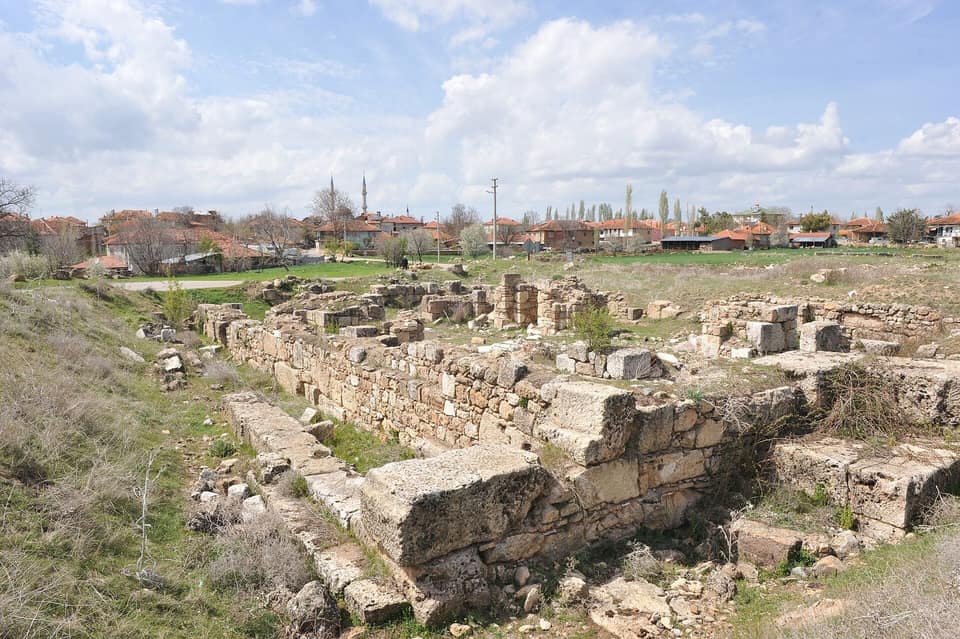
Sebaste is a Roman city whose remains lie at present-day Selçikler, about two kilometres southwest of the Sivaslı district of Uşak. The Uşak Provincial Directorate of Culture and Tourism states that the city is thirty-five kilometres from the centre of Uşak. The remains spread across a flat, wide plain right at the edge of the village houses. The Monumenta Asiae Minoris Antiqua project of the University of Oxford records that the city's name survives in the present-day name Sivaslı.
The city's foundation is linked to Rome's first emperor. The Ministry's sources write that Sebaste was founded under this name by the Roman emperor Augustus in 20 BC. According to articles by researchers from Uşak University, the city was the product of an idea to create a more central and larger city by bringing together the small settlements that existed in the region before the Roman period. In ancient literature this method is called synoikismos. The same articles report, on the basis of epigraphic documents, the view that Augustus founded the city during his journey in Asia after the Battle of Actium.
The Ministry presents Sebaste as one of the twelve important cities of the Roman period. Academic studies stress that the city was one of the central cities of Phrygia during the Roman Imperial period. Epigraphic, numismatic and ceramic finds show that the city lived its most splendid period in the second and third centuries AD. From the fourth century AD the region was divided in two again, and Sebaste remained within the borders of Phrygia Pacatiana. The Ministry writes that the city also enjoyed a brilliant period during the Byzantine era.
The settlement's past is far older than Rome. According to the article in the Trakya University Journal of the Faculty of Letters, recent surface surveys have shown that settlement continued without interruption from the Late Neolithic Age onwards. Finds pointing to the Phrygian and Lydian periods have been recovered from several areas in the centre of the city. Persian-period finds also appear in small numbers at Selçikler Höyük and at the Dedeballar-Sıktırma settlement.
The city's fertility comes from its geography. The articles describe Sebaste as founded on a wide plain stretching between high mountains. The river feeding the plain is today's Banaz stream, known in antiquity as the Sindros. This stream rises on Murat Mountain to the north and joins the Büyük Menderes in the south. The MAMA project also records that the city's territory reached as far north as the villages of Kabaklar and Kırka.
The first excavations at Sebaste took place between 1966 and 1978. According to academic articles, these rescue excavations were carried out over thirteen seasons by Dr. Fıratlı on behalf of the Istanbul Archaeological Museums. The Ministry writes that the city holds the remains of two churches from the Byzantine period, one large and one small. After the excavations ended in 1978 the city remained quiet for a long time, returning to attention in 2016 with the Uşak surface surveys. From 2017 intensive work began with the project Surface Survey of the Ancient City of Sebaste and its Surroundings.
The city's finds show the wealth of a Roman city. An article in the journal of Süleyman Demirel University publishes a marble table support with the figure of a winged Eros found during the rescue excavations and dates it to the middle of the second century AD. The article in the Trakya University journal examines a door-type grave stele found at Selçikler in 1995 during foundation digging. This stele dates to the second and third centuries AD and provides information about the life of wealthy families in the city. Work on these pieces was carried out in the stone artefacts depot of the Uşak Archaeological Museum and in the Sebaste archive.
The city's present situation is stated clearly in the official source. The Ministry states that expropriation work continues at the city and that excavations will be started by the Ministry of Culture and Tourism once expropriation is complete. The area has not been opened to visitors as a landscaped archaeological site. You can look at the remains from the edge of the village, but before entering the registered area ask the provincial directorate of culture and tourism about the current situation. Do not step on the stones and do not move the fragments on the surface.
The best way to understand Sebaste is to think of it together with the Uşak Archaeological Museum. The fact that works from the city are in the museum and its depot makes it easier to imagine what kind of city the walls at Selçikler once belonged to. Sivaslı is reached from Uşak by road, and Selçikler lies very close to the district centre. It is practical to add the city to a driving route that covers the Clandras Bridge and the Ulubey Canyon on the same day.
Comments
Loading...
Location - Sebaste Antik Kenti
Venue Info
AddressSelçikler, Sivaslı / Uşak
VenueSivaslı, Uşak
TypeHistorical & Cultural Sites