

Historical & Cultural SitesHistorical Sites
Sahabiye Medresesi
13
No ratings yet
Sign in to like and rate
Sahabiye Madrasa
İstasyon Caddesi ile Ahmet Paşa Caddesi'nin kesişimi, Kocasinan/Kayseri
Kocasinan, Kayseri
Get DirectionsApple MapsAbout Venue
Sahabiye Madrasa is a 13th century Seljuk madrasa standing in the centre of Kayseri, at a point where busy streets meet. Kültür Portalı writes that it was built in 1267, in the reign of the Seljuk Sultan Gıyaseddin Keyhusrev III. The person named as founder in the inscription is understood to be the famous Seljuk vizier Sahip Ata Fahreddin Ali. A 2024 article by Ayşegül Akşehirlioğlu of Erciyes University also gives the construction date as 1267-1268. As Kültür Envanteri explains, the madrasa's popular name comes from the name Sahip Ata gradually turning into Sahabiye. The TDV Encyclopedia of Islam likewise records Vizier Sahip Ata's Sahibiye Madrasa as dating from the Hijri year 666, that is 1267-1268. Because the name changed over time, the building appears in sources as the Sahibiye or Sahip Ata Madrasa.
The TDV Encyclopedia of Islam counts Sahabiye among the important madrasas of Kayseri that follow the classical Anatolian Seljuk madrasa plan. Seen alongside the city's other madrasas such as Kölük, Hunat Hatun and Hacı Kılıç, Sahabiye is one of the examples built towards the end of the Seljuk period. In 2014, together with important Seljuk madrasas in Sivas, Konya, Erzurum and Kırşehir, it was added to the UNESCO World Heritage Tentative List under the title Anatolian Seljuk Madrasas.
According to Akşehirlioğlu's study, the madrasa is a single-storey, four-iwan, porticoed building of cut stone with a rectangular plan. It is designed around an open rectangular courtyard. There are niches in the right and left walls of the entrance iwan, a large main iwan to the north, porticoes on three sides resting on square piers, side iwans and cells next to them. At the corners rise massive corner towers of simple form, in keeping with the Anatolian Seljuk tradition. Kültür Envanteri notes that the front facade looks like that of a medium-sized caravanserai.
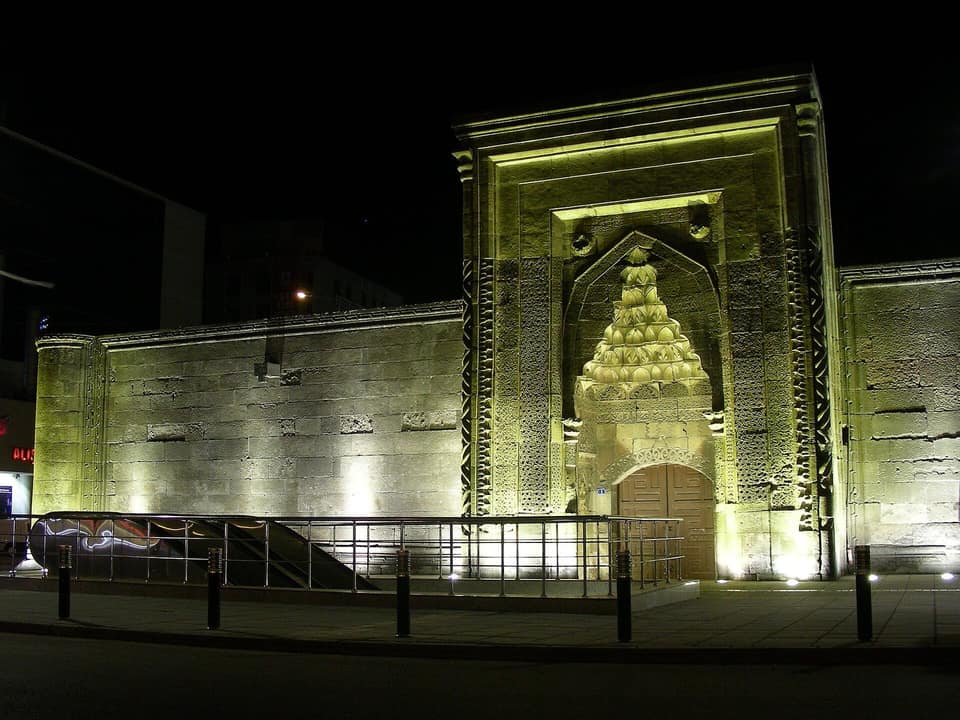
The building is entered through the monumental portal on the south facade. Projecting forward in a rectangular shape and rising above the height of the facade, the portal is the most ornate element of the building in its mass and height. Kültür Portalı regards the geometric carvings beside and above the door as among the finest examples of late Seljuk craftsmanship. Kültür Envanteri draws attention to the zigzag decoration at the edges and to the bull and lion figures on the gargoyles and around the door columns. Akşehirlioğlu states that the upper part of the portal was renewed during the maintenance and repairs the building underwent.
The madrasa owes its survival largely to the repairs it has undergone. According to archive records, the building was repaired in 1726 and 1909 in the Ottoman period. From the early 20th century, figures such as Albert Gabriel, Ali Saim Ülgen and Mahmut Akok documented the building, drew it and carried out small repairs. In 1970 the General Directorate of Foundations made a comprehensive repair, and many parts of the building were rebuilt. Another comprehensive restoration took place in 2010. According to Kültür Envanteri, because the surrounding square and roads rose over time, the building now lies below street level. The small mosque of the group was demolished, and its fountain was removed during road works and moved to its present place on the south facade of the madrasa. TDV's entry on Gevher Nesibe records a small but interesting link: the marble inscription of the Twin Madrasa was kept in this madrasa for many years before its restoration.
Today the madrasa is used as a bazaar; bookshops, second-hand booksellers and handicraft shops occupy the rooms behind the porticoes. Thanks to this use, as you walk around the courtyard you can easily see the porticoes and iwans. First view the portal as a whole from across the street, then go down the steps and pass through the entrance iwan into the courtyard. The carvings of the portal take on a different look under the evening lighting as well. The madrasa is a few minutes' walk from Kayseri Castle and Cumhuriyet Meydanı, and the Twin Madrasa links easily on the same walk. Since shop hours can vary, those who want to see the courtyard quietly may prefer weekday mornings.
Comments
Loading...
Location - Sahabiye Medresesi
Venue Info
Addressİstasyon Caddesi ile Ahmet Paşa Caddesi'nin kesişimi, Kocasinan/Kayseri
VenueKocasinan, Kayseri
TypeHistorical & Cultural Sites