

Religious & Spiritual PlacesMosques
Safa Camii (Parlı Camii)
No ratings yet
Sign in to like and rate
Safa Mosque (Parlı Mosque)
About Venue
Safa Mosque is an Akkoyunlu building inside the walls of Diyarbakır, in the Melikahmet quarter, about 300 metres west of the Great Mosque. Sources also call it Parlı, İpariye, İparla and Palo. Although its date and founder are not known for certain, it is accepted that it was built in the 15th century, in the reign of the Akkoyunlu ruler Uzun Hasan (1452-1478). The five-line Arabic inscription above the door is dated 1531-1532 and records that the building was repaired in those years by an architect from Amid. Evliya Çelebi mentions the mosque as İpariye and writes that its walls smelled of musk in rainy weather. The Provincial Directorate of Culture and Tourism also recalls the name İpariye, meaning fragrant, and relates the story that fragrant plants were mixed into the mortar of the minaret.
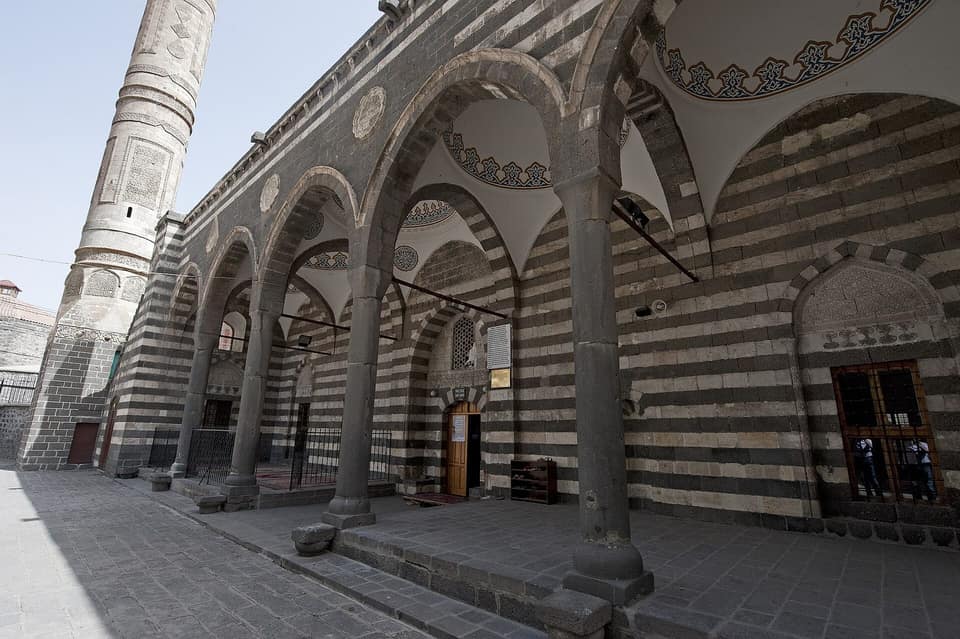
The mosque is not large, but its stonework and decoration make it one of the most striking buildings in Diyarbakır. The prayer hall is covered by a dome on squinches more than 12 metres in diameter, resting on four piers and on the mihrab and entrance walls. The niche of the stone mihrab is built with ten rows of muqarnas and is framed by geometric borders and inscription bands. The portico opens onto the courtyard with five arches on four columns, and the pediments above its windows are decorated with slender colonnettes and octagonal patterns.
The real highlight of the building is the single-balcony stone minaret that stands apart from the mosque. Its square base is of basalt and its shaft of light-coloured limestone. A panel of square Kufic script in a chequerboard pattern runs around the base with a band of tile plaques above it, and the shaft shows lotus, palmette, rumi and hatayi motifs together with bands of relief inscription. The underglaze tiles in navy blue, black and turquoise that rise to about 1.20 metres above the floor on the qibla wall are thought to have been made in a local workshop. On the exterior, the alternating courses of limestone and basalt give the familiar black and white look of Diyarbakır's mosques. The General Directorate of Foundations renewed the roof system and the painted decoration of the building in 1955. A master's thesis prepared at Hacettepe University notes that the mosque forms a small group of buildings together with a madrasa and other structures, and that the exact dates of these buildings are not known because there are no inscriptions.
A good order for a visit is to start in the courtyard and study the minaret slowly from its base up to its balcony, then look at the medallions of the portico and the window pediments. Because the mosque is open for worship, visits are not made during prayer times, shoes are taken off before entering and clothing that covers the shoulders and knees is preferred. As it lies among the narrow streets of the walled city, it is easiest to come on foot; the Great Mosque and the Cahit Sıtkı Tarancı Museum are a few hundred metres to the east and can be added to the same walk.
Comments
Loading...
Location - Safa Camii (Parlı Camii)
Venue Info
AddressMelikahmet Mahallesi, Melik Ahmet Caddesi, Sur, Diyarbakır
VenueSur, Diyarbakır
TypeReligious & Spiritual Places