

Historical & Cultural SitesHistorical Sites
Rumkale
12
No ratings yet
Sign in to like and rate
About Venue
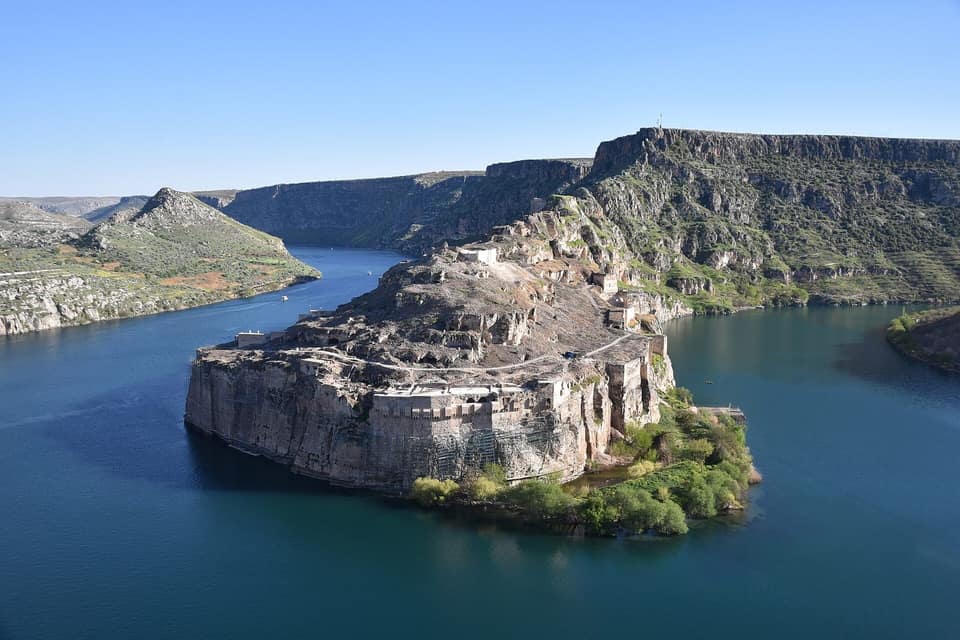
Rumkale is a castle built on steep rocks where the Merzimen Stream meets the Euphrates, in the Yavuzeli district of Gaziantep. Gaziantep Metropolitan Municipality places the castle about 62 kilometres northeast of the provincial centre. With the formation of the dam lake, the castle has been surrounded by water on three sides, and today it looks like a peninsula. The Kültür Portalı reports that from antiquity to the present the structure has been known by different names such as Shitamrat, Hromklay, Ranculat, Qalat al-Rum, Qalat al-Muslimin and Kale-i Zerrin. The municipality also writes that the castle was first known as Hromgla and was later named Rumkale.
Human traces in the area go back a long way. According to the municipality, flint tools found along the Euphrates show that there has been settlement around Rumkale since the Palaeolithic period. The first information in ancient sources concerns the settlement of Shitamrat captured by the Assyrian king Shalmaneser III, and it has been suggested that this place was Rumkale. Because of its strategic location, the area was also inhabited in the Median, Persian, Hellenistic and Roman periods. The structures visible above ground in the castle date from the 12th to the 14th centuries. The castle passed into Ottoman hands in 1516. In the 17th century Evliya Çelebi described the castle as a solid structure on a hilltop, with a caravanserai, a bathhouse and a small market outside it. Katip Çelebi also stressed the abundance of gardens and fruit here.
The castle was built in two layers. The first layer is a natural rampart formed by cutting the natural rock vertically on the east, north and west. The second layer is a curtain wall of hard cut limestone raised on top of this natural rampart. On the northern and eastern walls there are seven rectangular towers, and in the north there are many arrow slits. In the 12th century the rocky spur to the south was carved into a moat 30 metres deep and 20 metres wide, cutting the castle's direct link with the land. According to the municipality, the castle covers an area about 120 metres wide and 200 metres long.
The castle is entered through a gate passage made up of walls and chambers on the slopes that rise sheer from the banks of the Euphrates and the Merzimen. The municipality notes that four tower-like gates were built along the road on the western side at intervals of about 20 metres, which made defence easier. The lower town lies at the foot of the castle. According to the municipality, the castle has two main entrances, one on the east facing the Euphrates and the other on the west facing the Merzimen Stream. A bridge, of which only the pier remains today, provided the castle's link with the land, and from there a path climbs to the entrance gate. Many parts of the buildings in the castle were obtained by carving and levelling the bedrock. Inside the castle there are cisterns, many building remains whose function has not been fully determined, and a large well. This well, about 8 metres wide, descends to the level of the Euphrates by a spiral staircase carved into the rock, and its depth is said to reach 75 metres. The walls use large cut stone facing over a rubble core, while the arches use cut stones shaped to look like brick.
Because Rumkale stands on a peninsula and its link with the land was cut by the moat, the Kültür Portalı describes access by boat. Boats leave from the village of Kasaba, about 25 kilometres from Yavuzeli, or from the Halfeti district of Şanlıurfa. Seeing the castle walls perched on steep rocks from the water during the boat trip is one of the most striking parts of the visit. According to the municipality, Gaziantep Governorship and the Metropolitan Municipality built a glass viewing terrace about 150 metres high at a point from which the castle can be seen in detail. Since boat access, the condition of the paths and access to the terraces may change with the season, check the current situation with official sources before you go. The paths inside the castle are steep and stony, so it is wise to wear non-slip shoes, take water with you and avoid summer middays. Reaching Kasaba village from the city centre by public transport is difficult, so coming by car is the most practical option.
Comments
Loading...
Location - Rumkale
Venue Info
AddressYavuzeli / Gaziantep
VenueYavuzeli, Gaziantep
TypeHistorical & Cultural Sites