

Historical & Cultural SitesArchaeological Sites
Roma Havuzu
6
No ratings yet
Sign in to like and rate
Roman Pool
About Venue
The Roman Pool is an ancient water basin built over a spring in the Köşk area north of the town of Bahçeli in the Bor district. The Kültür Portalı notes that the pool lies about 3 kilometres from the town centre. It is the starting point of the system that carried water to the ancient city of Tyana at Kemerhisar, and the two places make most sense when seen together.
Construction
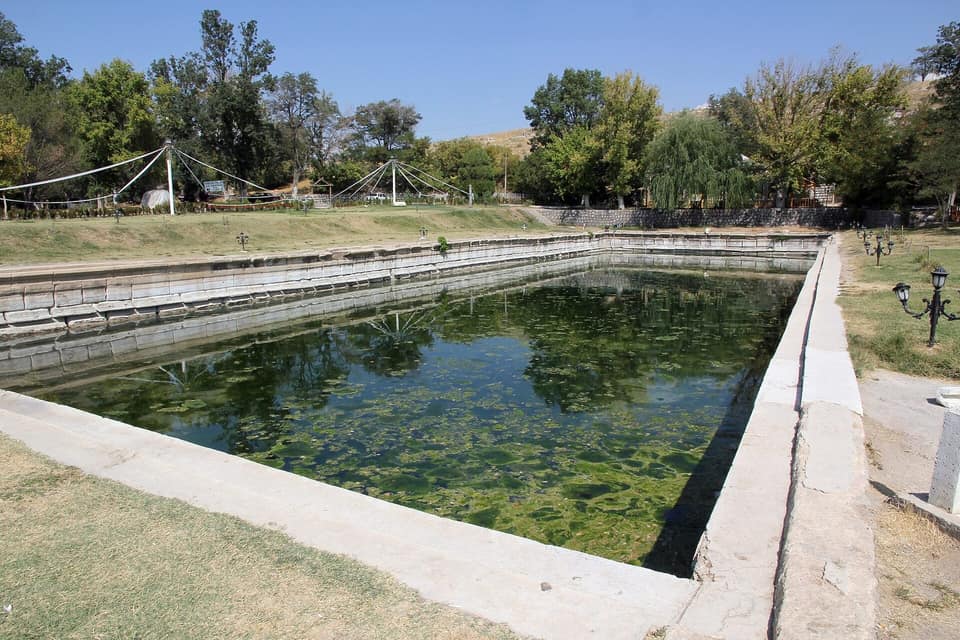
According to the Kültür Portalı and the provincial directorate's inventory record, the pool was built in the Roman period, under Trajan and Hadrian, in the 2nd century AD. It is built of neatly cut stone blocks, has a rectangular plan and measures 65 by 22.5 metres. The tourism master plan states that the pool was built directly over the spring. A cycling route description in the plan also describes the pool as a structure carved into the natural rock and completed with cut stone and marble blocks. The water welling up from beneath the pool was carried to ancient Tyana through the aqueducts. The Kültür Portalı records that the structure has been repaired from time to time but has largely kept its original character. According to the inventory record, the pool was registered as a cultural asset in 1988 and is still used as a pool today.
The head of the water channel
The provincial directorate's Tyana brochure explains that the name Kemerhisar comes from the Roman aqueducts that carried the spring water feeding this pool. According to the same brochure, the aqueducts lie underground along the stretch from the pool to the inner parts of Kemerhisar. Standing at the edge of the pool and thinking about where the water flowed is therefore a way of starting the story of the arches you will see in the town. The family cycling route in the tourism master plan follows this link as well, setting out from Niğde, pausing at the Roman Pool and reaching Tyana along the aqueducts. A second route in the plan runs the other way, from Niğde through Bor to Tyana, and ends at the Roman Pool. The master plan also lists among its recommendations the uncovering of the buried section of the aqueducts between the pool and the ancient city.
Köşk Höyük
On the rocky slope east of the pool lies Köşk Höyük, described on the provincial directorate's page on archaeological sites. Excavations carried out here since 1981 by the Archaeology Department of Ankara University and museum archaeologists have shown that the earliest farming and herding community of the Bor plain settled here between 6050 and 4911 BC. Of the five layers of the settlement, the first four belong to the Late Neolithic and the latest to the Early Chalcolithic period. The Neolithic period shows small multi-roomed buildings enlarged as needed, while in the Chalcolithic period houses were built in rows along streets. It has been established that the people of this period buried their dead beneath the floors of their houses. The mound is known for a burial practice in which the faces of some of the dead were modelled in clay and painted with red ochre. This is a reminder that the surroundings of the pool were inhabited thousands of years before the Romans.
Today
According to the tourism master plan, the surroundings of the pool have been laid out by the municipality as a recreation area. The whole area is public property, and there is a car park and an information board for visitors. The plan notes that the pool is visited less for tourism than as a local place for rest and picnics. Surrounded by trees, the area is pleasant for a cool break in summer. Take care when walking on the edge stones of the pool; do not enter the water and do not damage the stone blocks.
Getting there and suggestions for a visit
According to the Kültür Portalı, the pool is 24 kilometres from the centre of Niğde and 8 kilometres from Bor. It can be reached by private car or by public transport running to the town of Bahçeli from central Niğde and from Bor. A good order of visit is to walk along the long side of the pool to study the stonework up close, then photograph the whole pool from its corners with the reflections on the water. The visit can be completed by continuing south to Kemerhisar to see the aqueducts and the excavation area. For current arrangements, check the announcements of the provincial culture and tourism directorate.
Comments
Loading...
Location - Roma Havuzu
Venue Info
AddressKöşk Mevkii, Bahçeli Kasabası, Bor/Niğde
VenueBor, Niğde
TypeHistorical & Cultural Sites