

Historical & Cultural SitesArchaeological Sites
Rhodiapolis Antik Kenti
No ratings yet
Sign in to like and rate
Rhodiapolis Ancient City
About Venue
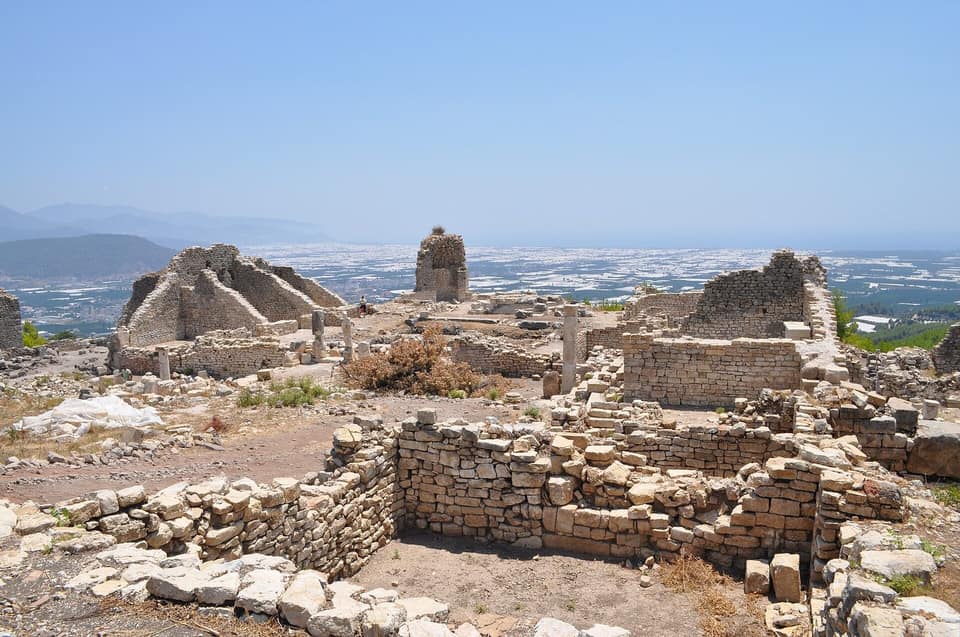
Rhodiapolis Ancient City stands on a hill near the village of Sarıcasu in the Kumluca district. Because of its name it is regarded as a city founded by Rhodians, and it is one of the few Rhodian colonies in the region, alongside Gagai, Phaselis, Korydalla and Olympos. According to the ancient author Theopompos, the city takes its name from Rhodos, the daughter of Mopsos. All the cities of the region were members of the Lycian League, and on the coins of Rhodiapolis and Gagai they are described as "Lycian". One of the city's most famous figures is the benefactor Opramoas, who lived in the time of Antoninus Pius (AD 138-161). The first office Opramoas held in the Lycian League was arkhiphylakia, and in the honours between AD 114 and 131 he received a bronze statue, a gilded icon and a golden wreath. There is almost no city in all of Lycia that he did not help. Excavations at Rhodiapolis began in 2006 on behalf of Akdeniz University and the Ministry of Culture and Tourism, continued from 2009 under Prof. Dr. İsa Kızgut, paused in 2012 and restarted in 2022 under the direction of the Antalya Museum. While the excavations take the history of the settlement back to the 8th century BC, the earliest remains known in the city are rock tombs of the Classical period. Among them, a rock tomb with a Lycian inscription and the Hellenistic tower north of the theatre stand out.
The most striking feature of the city is the many structures, built of small stones with or without mortar, that still stand today; many of them are houses belonging to private individuals. The small, Greek-plan theatre in the city centre faces south and has a capacity of roughly 1,500. Its cavea mostly leans against the slope, and six wedges lie between seven stairways. The fully circular orchestra has a diameter of 10.52 metres. The upper part of the stage building, which runs along an east-west axis, has collapsed and only its ground floor survives, with five doors opening from the proskene facade. The Opramoas Monumental Tomb stands southwest of the theatre, behind the stage building. Its walls are covered with inscriptions, and it consists of sixty-four documents setting out Opramoas's official relations. In the city centre the agora and the stoa form one whole, and the stoa makes up the covered western part of the agora. Above the theatre, toward the west, a structure of which only the apse has survived catches the eye. The last public building on the eastern edge of the settlement is a Roman bath, which with its overall plan has the character of an Anatolian bath-gymnasium. Among the public buildings reported by the excavation team are the theatre, cenotaph, agora, bath, Opramoas Monument and Hadrianeum, together with an Asklepieion and library buildings, which are not found everywhere. The necropolis is concentrated to the east, southeast and north of the city, and most of it consists of Roman-period sarcophagi.
Rhodiapolis can be reached from Kumluca by private vehicle. Because the settlement on the hilltop sits on sloping ground, comfortable shoes are needed. A sensible order for the visit is to begin at the theatre and agora, follow the main street to the Asklepieion buildings, and then move on to the bath and the necropolis. The city is among the "Ancient Cities of Lycian Civilisation" (2009) proposed for the UNESCO World Heritage List. For visiting hours and entry conditions, check the current information on muze.gov.tr and the pages of the Antalya Provincial Directorate of Culture and Tourism.
Comments
Loading...
Location - Rhodiapolis Antik Kenti
Venue Info
AddressRhodiapolis Antik Kenti, Sarıcasu, Kumluca / Antalya
VenueKumluca, Antalya
TypeHistorical & Cultural Sites