

Historical & Cultural SitesMuseums
Rakoczi Müzesi
10
No ratings yet
Sign in to like and rate
Rákóczi Museum
Ertuğrul Mahallesi, Barbaros Caddesi, Hikmet Çevik Sokak No:21, Süleymanpaşa / Tekirdağ
Süleymanpaşa, Tekirdağ
Get DirectionsApple MapsAbout Venue
The Rakoczi Museum is a small house museum set up in an old Turkish house overlooking the sea on Barbaros Caddesi in Süleymanpaşa. The house is devoted to the Tekirdağ years of Francis II Rákóczi, Prince of Transylvania (1676-1735), who spent the last part of his life here. The Hungarian name of the city is Rodostó, and in Hungary that name is still remembered together with this story of exile.
The historical frame of the story is clearly set out in the sources. From 1703 onwards Rákóczi stood at the head of an uprising against Habsburg rule. The presentation prepared for the museum by the Hungarian National Museum writes that the prince never accepted, until the end of his life, the Treaty of Szatmár that ended this war fought between 1703 and 1711. The prince went first to Poland, then to France, and in the autumn of 1717 he came to Ottoman lands at the invitation of Sultan Ahmed III. According to a review in ABAD, a journal published by Namık Kemal University, the Hungarian group first settled in Gelibolu and then stayed in Edirne and Istanbul.
An article published in the journal of Süleyman Demirel University states that after the Treaty of Passarowitz Rákóczi was sent to Tekirdağ in 1720. According to the presentation of the Hungarian National Museum, the sultan set aside for the prince buildings surrounded by large gardens on the edge of town, by the sea. Twenty-three spacious houses in the neighbouring quarter were allocated to his retinue. The prince died in Tekirdağ on 8 April 1735.
The most vivid witness of these years of exile is the prince's chamberlain, Kelemen Mikes. According to the review in ABAD, his Letters from Turkey, written in Hungarian, consist of 207 letters addressed to an imaginary "aunt". In his letter dated 24 April 1720, Mikes describes their arrival in Tekirdağ and their settling into the houses allocated to them. According to the TDV Encyclopedia of Islam, Mikes described the city as a fairly large and beautiful town on the edge of Europe. The same review recounts the prince's days spent reading and writing and notes that he took up carpentry as a personal pastime. Mikes remained in Tekirdağ after the prince's death and died here in 1761.
The houses of the Hungarian colony fell into ruin towards the end of the 19th century. According to the Hungarian National Museum, in 1906 the remains of the prince and his fellow exiles were solemnly taken to Hungary. In the same year the wooden interior decorations of the house, which were still in good condition, were moved to the city of Kassa, today Košice in Slovakia.
Hungarian sources refer to the present museum building as the prince's dining house. According to the Kültür Portalı, the building was arranged as a museum by the Hungarian Government and opened to visitors on 25 September 1982. The museum, together with the objects inside it, is the property of the Hungarian Government. The Hungarian National Museum writes that the building was restored by Hungary in 2007 and that from 2010 a new multilingual exhibition presenting the prince, his family and life in exile was installed.
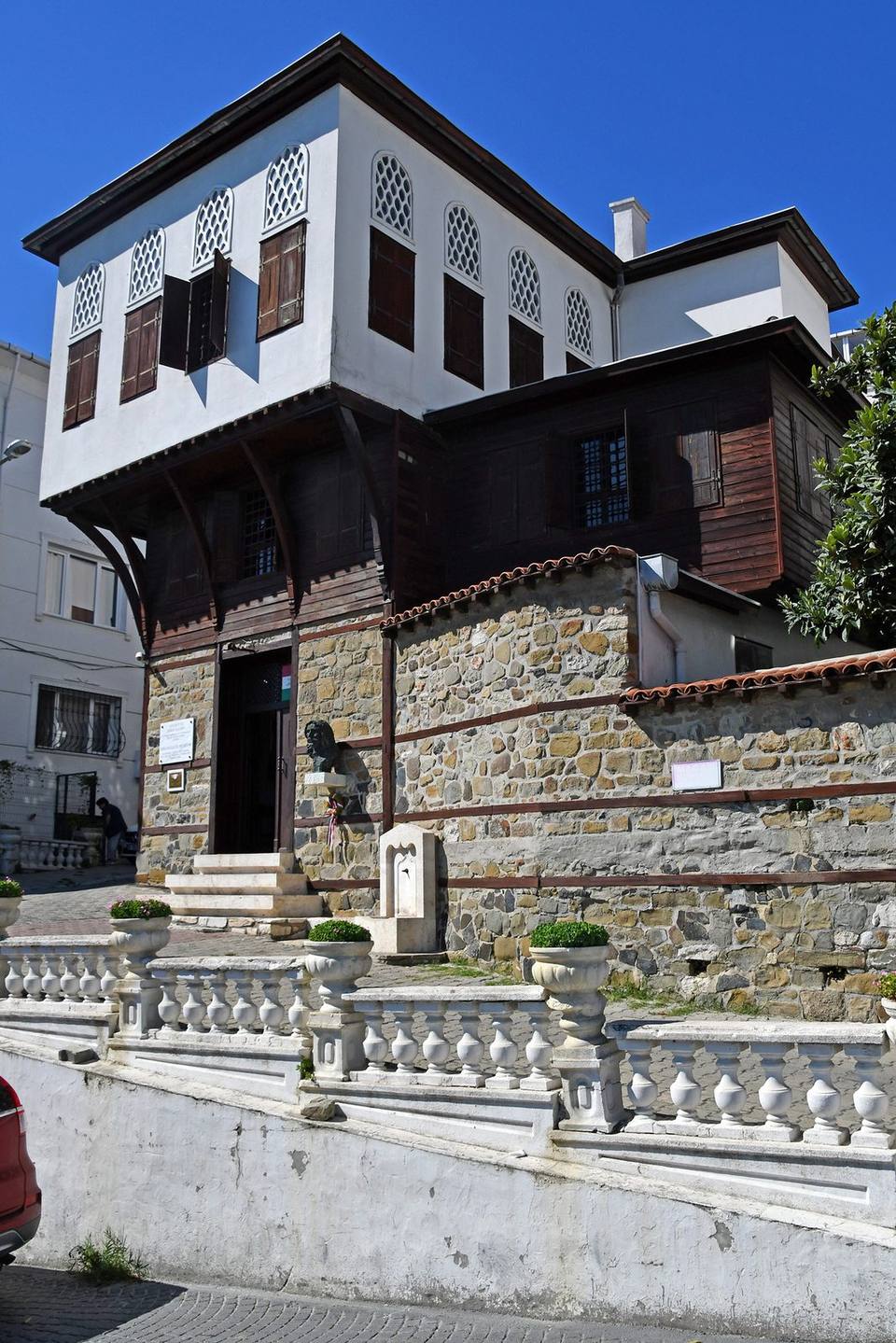
The TDV Encyclopedia of Islam gives an interesting detail about the site of the house. In the city, the steep drop between the coastal avenue and Hükümet Caddesi is formed by cliffs that rose at the shore before the sea was filled in. With the land reclamation these cliffs were left inland and became what is called a dead cliff, and Rákóczi's house stands on top of such a dead cliff. Today the terrace with its balustrade in front of the house still lets you sense this old shoreline.
Seen from outside, the house has a stone ground floor and a whitewashed upper floor with wooden shutters and a projecting upper storey. Beside the door stand a bronze bust of the prince and a small fountain. The Kültür Portalı notes that the exhibition includes works symbolising Turkish-Hungarian relations and the common ground of the two peoples' folk arts. Personal belongings of Rákóczi and his family are also on display.
While you walk through, the most rewarding way is to read the house as the daily life of an exiled community that lived in an Ottoman coastal town. The prince's correspondence, Mikes's letters and the arrangement of the house are parts of the same story. The Hungarian National Museum has prepared a multilingual guide system for the exhibition, and you can download the text and the audio guide in advance from its official website.
The Provincial Directorate of Culture and Tourism and the Kültür Portalı state that the museum is closed on Mondays and that taking photographs inside is forbidden. Those who want pictures can easily photograph the facade and the terrace in front of it from the street. For opening hours and admission conditions, check the current information on the museum's official page. The museum is in the city centre, a few hundred metres west of the Tekirdağ Museum, and the two museums can comfortably be visited in the same morning. After the visit you can walk east along Barbaros Caddesi and go down to the seafront and the old market around the Rüstem Paşa Bedesteni.
Comments
Loading...
Location - Rakoczi Müzesi
Venue Info
AddressErtuğrul Mahallesi, Barbaros Caddesi, Hikmet Çevik Sokak No:21, Süleymanpaşa / Tekirdağ
VenueSüleymanpaşa, Tekirdağ
TypeHistorical & Cultural Sites