

Historical & Cultural SitesArchaeological Sites
Pınara Antik Kenti
No ratings yet
Sign in to like and rate
The Ancient City of Pınara
About Venue
Pınara Ancient City is a Lycian city located behind the village of Minare in the Seydikemer district, on the foothills of the mountain called Kragos in ancient sources. The city's name is read as Pinale in Lycian inscriptions and is said to mean round in the Lycian language. The ancient writer Stephanus relates that when the population of Xanthos grew, a group of elders founded this city on a high summit of the mountain. The fact that the upper acropolis, where the early remains are found, really is a round rock mass makes this account plausible. The name of today's Minare village is also thought to come from this minaret-shaped rock bearing rock tombs.
According to Strabo, Pınara was one of the six cities with three votes in the assembly of the Lycian League. The city opened its gates and surrendered to Alexander, was later attached to Rome, and was rebuilt in this period. The city was badly damaged in the earthquakes of 141 and 240 and is said to have been abandoned in the 9th century AD.
Hundreds of tombs carved into the rock on the steep eastern slope of the upper acropolis are the first sight to catch the eye as you approach the city. As most of the tombs are house-shaped, they also give an idea of Lycian civil architecture. One of the house-type tombs is especially important because the reliefs on its pediment and side wall show a walled city, and it is thought to have belonged to a prince.
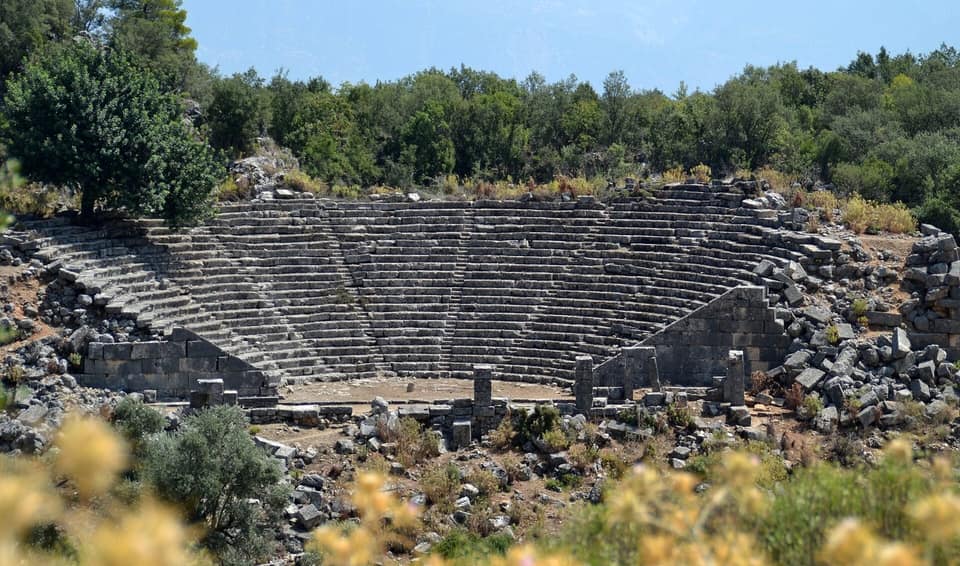
The lower acropolis, which is easier to reach, holds an odeon, an agora, a temple and pillar tombs. Despite its steep slopes, the lower acropolis was laid out with a terrace and strengthened with city walls. When you enter through the gate on the south side of the wall, the odeon set against the slope and the agora on the flat ground in front of it form the focus of the city. The spring at the lower part of the lower acropolis gave life to the city, and around it stand pillar tombs largely destroyed by earthquakes. Outside the walls are a Roman bath of a kind seen in many Lycian cities and a theatre set against the natural slope that reflects the features of the Hellenistic period. Pınara was also added to the UNESCO World Heritage Tentative List in 2009 as part of the Ancient Cities of Lycian Civilization.
Since the remains are spread over a wide and sloping area, you need to take your time, wear sturdy shoes and carry water. The site is reached via Minare village by the road branching off the highway between Fethiye and Kaş; check the current visiting information on the official museum website.
Comments
Loading...
Location - Pınara Antik Kenti
Venue Info
AddressMinare köyü yakını, Seydikemer
VenueSeydikemer, Muğla
TypeHistorical & Cultural Sites