

Historical & Cultural SitesHistorical Sites
Palu Taş Köprü
No ratings yet
Sign in to like and rate
Palu Stone Bridge
About Venue
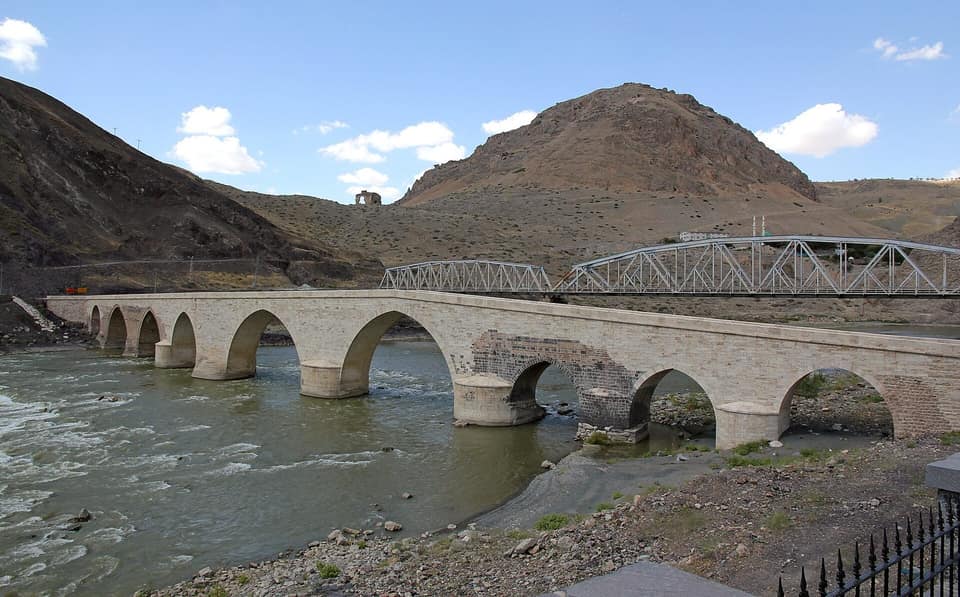
Palu Stone Bridge is a historic bridge over the Murat River in Palu, joining the two banks of the river at the foot of Palu Castle, which dates back to the Urartian period. Because it has no inscription, its construction date is unknown and there are different views on this. Türkiye's official promotional sources state that the bridge was built in the Roman period and renewed in the Seljuk and Artuqid periods, while the municipal inventory records it as a Seljuk and Artuqid work of the early 13th century. An archival study carried out at Fırat University stresses that none of these views is supported by a written document. According to the same study, the Boz-Ulus Law Code of 1540 shows that nomads crossed the Murat at Palu not by bridge but on rafts called kelek. The existence of the bridge becomes certain only with a foundation deed of 1748, which mentions a sheep-head shop and a small bathhouse at the bridgehead.
The bridge was the crossing point of the road linking Diyarbakır through Palu to Erzincan and Bayburt, and from there to the Black Sea ports. In the 19th century it lay on an important route used by travellers and flocks of sheep going to and from Iran and Baghdad. The river's floods damaged the bridge again and again; documents record that it was close to collapse in 1853 and that in 1862 its wooden parts and masonry piers were damaged by floodwater. The major repair carried out after the floods of 1886-1888 was completed in 1891, with part of the cost met from municipal revenue and the rest from donations by the townspeople. Over time a neighbourhood known as Köprübaşı also grew up around the bridge. The same promotional sources note that the 156-metre bridge is referred to in historical sources as the bridge connecting Istanbul to Baghdad. The archival study records that the bridge was recently rebuilt in cut stone.
Today, when you look at the bridge, the conical castle hill rising behind it and the flow of the river fit into the same frame. Walking across the bridge to see both banks and then moving on to the old Palu fabric at the foot of the castle is a good start for a short visit. The bridge is in the open air and can be seen in every season, but keep in mind that the river rises in spring and that the banks can be slippery. Visited together with Palu Castle, the Urartian rock inscription and the historic buildings of old Palu, the district's long past is easier to read.
Comments
Loading...
Location - Palu Taş Köprü
Venue Info
AddressMurat Nehri üzeri, Palu Kalesi eteği, Palu
VenuePalu, Elazığ
TypeHistorical & Cultural Sites