

Historical & Cultural SitesMonuments & Squares
Nasrullah Meydanı ve Nasrullah Köprüsü
No ratings yet
Sign in to like and rate
Nasrullah Square and Nasrullah Bridge
About Venue
Nasrullah Meydanı is the heart of Kastamonu's historic centre and opens right on the bank of Karaçomak Deresi, the stream that divides the city in two. Kastamonu Municipality describes the square as the largest in the city and counts it, with its mosque, madrasa and bridge, among the city's symbolic places. The square takes its name from Nasrullah Camii and its ablution fountain, which stand here. According to the municipality, the mosque and the fountain were built in the 16th century, during the reign of Bayezid II, by Nasrullah Kadı. The same source writes that the mosque originally had six domes and was later enlarged to nine domes.
The second building that gives the square the look of a complex is Münire Sultan Medresesi. The municipality states that the madrasa was built in 1746 by Hacı Mustafa Efendi, a Kastamonu native who served in the Ottoman administration, and that it has 21 student cells. Since 2002 the building has been used as a handicrafts bazaar; walking around the arcaded courtyard in front of the cells is a good way to see how an old educational building lives on in its present use. Read together, the mosque, fountain, bridge and madrasa show how the square took shape layer by layer over the centuries.
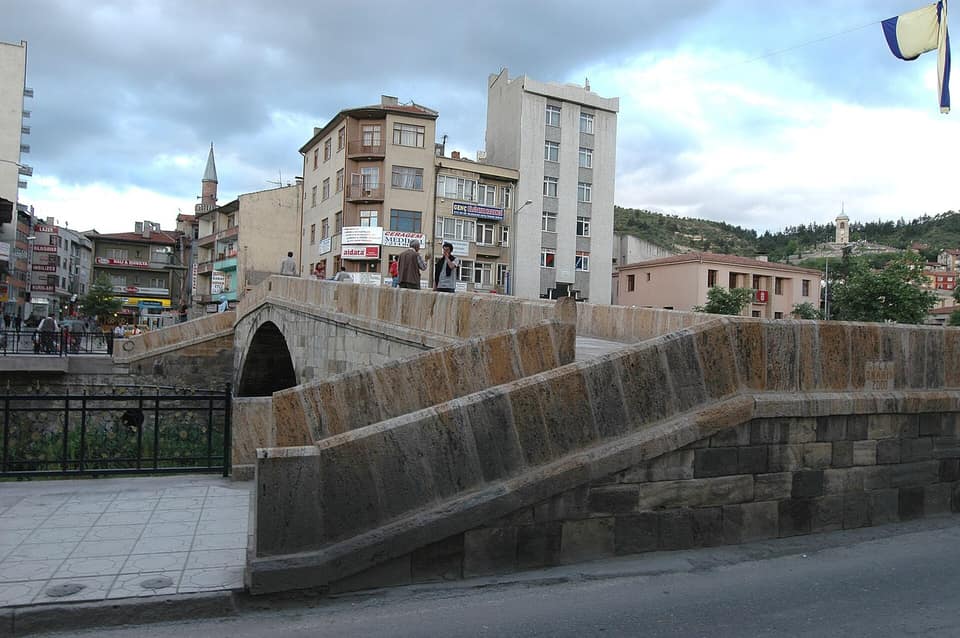
The most photographed part of the square is Nasrullah Köprüsü. The municipality writes that this bridge is the first historic structure seen when walking from Cumhuriyet Meydanı to Nasrullah Meydanı. The bridge stands over Karaçomak Deresi, right next to the mosque, and is known locally as Kambur Köprü, the Hunchback Bridge. The inventory record on Kültür Portalı describes the bridge as a cut stone structure with two arches and notes a cutwater on the central pier. According to the municipality, the bridge originally had three arches, but its third arch was demolished out of necessity. The municipality therefore explains that the bridge lost its symmetry, became humped and took its nickname from this.
The sources do not give the same detail about the date of the bridge. The municipality writes that the bridge was built in 1501 together with the mosque, while the inventory record on Kültür Portalı gives no date. According to the municipality, the bridge was first repaired by Dursun Usta and then restored in 1703 and finally in 1946. During the last repair, stairs were added to both ends of the bridge. When you climb onto the bridge you see these stairs, the preserved stone parapets and the stream flowing under the two arches together.
The surroundings of the square are full of the buildings of Kastamonu's old commercial life. The municipality notes that Kurşunlu Han, Cem Sultan Bedesteni and Penbe Han can all be reached on foot from the square. According to the municipality, Kurşunlu Han is a two storey, square planned inn with 51 rooms, built as a charitable foundation in the middle of the 15th century by Kemaleddin İsmail Bey, the last ruler of the Candaroğulları. Cem Sultan Bedesteni is attributed to Cem Sultan, the son whom Mehmed the Conqueror sent to Kastamonu as district governor in 1469; it is covered by nine domes resting on four square piers. The municipality adds that after a fire in the early 1800s the covered market came to be called Karanlık Bedesten, the Dark Bazaar. Penbe Han is an inn built in the reign of Bayezid II and is thought to take its name from the cotton trade; because of the honey trade it is also called Balkapanı Hanı.
Folk tales about the square also appear on the municipality's page. According to one of them, anyone who drinks water from the fountain will visit Kastamonu seven times in their life or will settle in the city. A similar belief is told about the bridge: it is said that the wishes of those who passed between the two votive stones that once stood on the bridge would come true, and that people who did not live in the city would return to Kastamonu. These tales show that the square is not only a place of passage but also a meeting point of the city's memory.
The best way to start is to walk along the stream from the Cumhuriyet Meydanı side and approach the bridge. First look at the bridge from the stream bank, from an angle where you can see both arches and the central cutwater, then cross it and walk down into the square. Because the inns and the covered market around the square are used for different purposes today, decide whether you can go inside according to the situation at the door. As the square is in the city centre, it is easy to reach from anywhere in the city on foot or by minibus. The walk from here along Cumhuriyet Caddesi to the Archaeological Museum, and on to the Government House and the Clock Tower, is the most natural order for getting to know the historic centre.
Comments
Loading...
Location - Nasrullah Meydanı ve Nasrullah Köprüsü
Venue Info
AddressHepkebirler Mahallesi, Kastamonu Merkez
VenueKastamonu Merkez, Kastamonu
TypeHistorical & Cultural Sites