

Historical & Cultural SitesArchaeological Sites
Myus Antik Kenti
No ratings yet
Sign in to like and rate
Myus Ancient City
About Venue
Myus is the site of a small Ionian city near the village of Avşar in the Söke district, to the northwest of Lake Bafa. In antiquity the city was a harbour settlement founded on the southern shore of the gulf into which the Büyük Menderes (Maeander) flowed into the sea.
The geographer Strabo names Kydrelos, son of the Athenian king Kodros, as the founder of Myus and counts the city among the members of the Ionian league that gathered at the Panionion. According to the historian Herodotus, the Persian fleet anchored off Myus in 499 BC. The same author reports that the city took part in the sea battle of Lade in 494 BC with only three ships.
The city enjoyed its most brilliant period in the 6th and 5th centuries BC. In the Hellenistic period it lost its importance as the gulf filled with river silt and as neighbouring Miletus grew stronger. In the end the people left the city and settled in Miletus. In the Roman imperial period the buildings of Myus began to be dismantled and their stones were reused in Miletus. These stones, found around the theatre of Miletus, were the first clue that drew researchers' attention to Myus.
Theodor Wiegand carried out the first excavation in 1908 and found a frieze of marble reliefs showing chariot races; these panels are now in Berlin. Excavations led by Hans Weber continued in 1964 and 1966, and the finds were handed over to the Aydın museum.
The hill at the northern tip of the city steps down towards the former shore in two terraces. On the lower terrace, traces of the foundations of an Ionic peripteral temple built in the middle of the 6th century BC and measuring about 30 by 17 metres were identified. Like the temples of Artemis at Ephesus and Magnesia, this temple faced west rather than east. On the upper terrace, fragments of a larger temple from the early 5th century BC were found. The Ministry of Culture and Tourism states that the white marble temple of Dionysus mentioned by ancient writers came to light during the excavations.
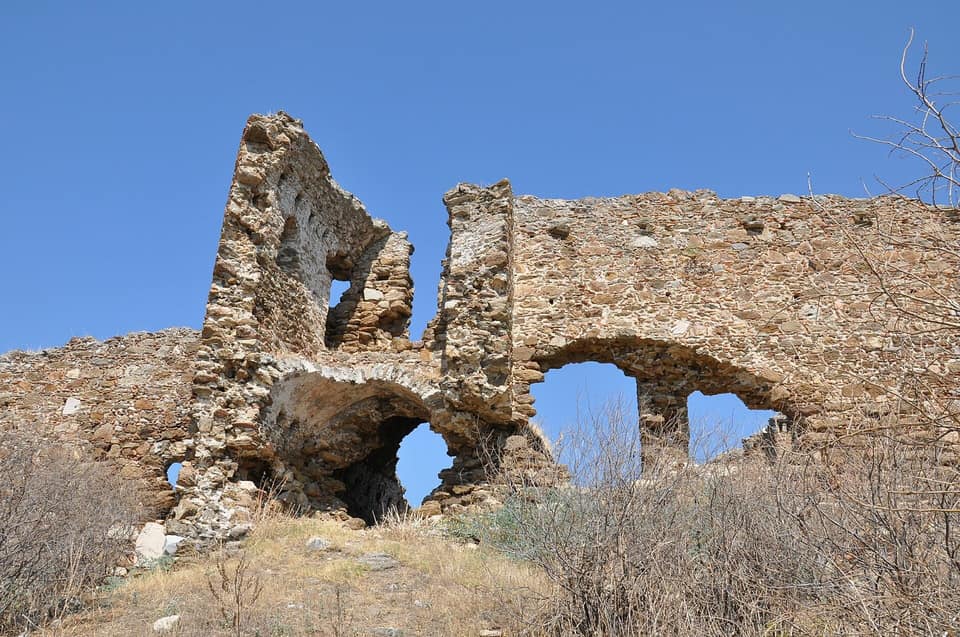
On the summit of the hill stand the rubble stone walls and arched openings of a castle from the Byzantine period. Today the temple remains, city walls of the Archaic period and the ruins of this castle can be seen on the site. Most of the houses have disappeared through stone robbing, and only ground floor walls cut into the rock and some flights of steps remain.
The site is reached from the Söke side by the road between Sarıkemer and Avşar. Since the remains are scattered over a scrubby hill, it is a good idea to wear sturdy shoes, take water with you and avoid hot summer middays. It is advisable to check the current situation with the Aydın Provincial Directorate of Culture and Tourism before visiting. When combined on the same day with Priene, Miletus and the shore of Lake Bafa, it becomes easier to understand how the silt carried by the river left the cities of this coast stranded on land.
Comments
Loading...
Location - Myus Antik Kenti
Venue Info
AddressAvşar yakını, Sarıkemer - Avşar yolu, Söke, Aydın
VenueSöke, Aydın
TypeHistorical & Cultural Sites