

Historical & Cultural SitesCastles & Palaces
Mere Kalesi
9
No ratings yet
Sign in to like and rate
Mere Castle
About Venue
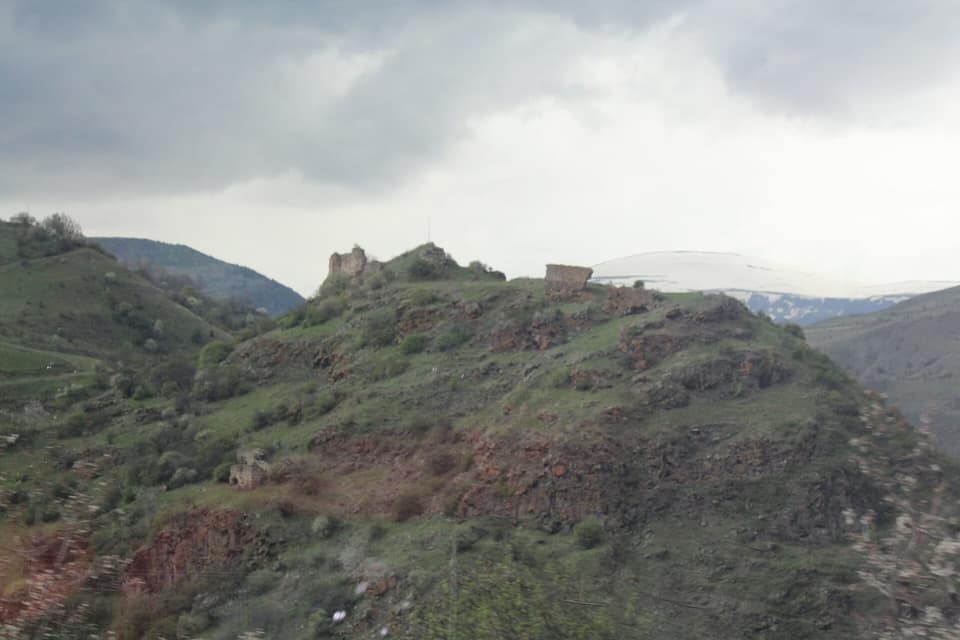
Mere Castle is a medieval fortress in the Posof district of Ardahan, on the road running from Ardahan to Posof, about 5 kilometres southeast of the district centre. The Serhat Development Agency's guide to Ardahan states that the exact date of the castle's construction is unknown, but that its name appears in historical sources. Most of the castle has collapsed, and today it is recognised by a few sections of wall still standing on top of a green ridge.
To understand the castle, it helps to look first at the name Posof itself. According to the history page of the Posof District Governorship, Posof is in fact the name of the water now called the Posof Stream. The valley the stream carves as it rises in the uplands west of the district and flows east was also called Poshov or Poshof. In the words of the District Governorship, Posof is therefore the name of a region rather than of a settlement.
Different castles served as the administrative centre of the valley in different periods. The District Governorship's history writes that in the 9th century the centre of the region was Kol Castle. An article by Ayşe Ayçiçek published in the journal İRTAD states that the administrative centre of the Posof valley later moved to the castles of Dghvari and Mere on the road between Akhaltsikhe and Ardahan. According to the article, the reason was that the main roads shifted towards other centres, and the old centre lost its importance as a result. Because Mere Castle still stands right beside the Ardahan-Posof road today, this link between the castle and the road is easy to see.
The best documented moment in the castle's history belongs to the summer of 1578. According to the District Governorship's history, in the Ottoman eastern campaign that began that year, the army of the commander Lala Mustafa Pasha reached Ardahan at the beginning of August. Abdurrahman Bey, governor of the Ardahan sanjak, and Bekir Bey, regimental commander of Bayburt, crossed Mount Ulgar on 8 August and arrived in Posof. The history states plainly that at that time the centre of the Posof region was Mere Castle. The castles of Mere and Vale were taken without a fight, and soldiers were stationed in them. The next day Akhaltsikhe and other castles in the area were also captured, and so the last lands of the Atabeg country in the region passed under Ottoman rule. In the same month Lala Mustafa Pasha established the Çıldır Province centred on Akhaltsikhe, and Posof became a sanjak.
In the following centuries the borders of the region changed several times. According to the District Governorship, after the war of 1828 Akhaltsikhe was ceded to Russia, while Posof remained inside the border drawn by the Treaty of Edirne. The same history states that the Turkish-Georgian border that runs through Posof today was drawn by a border commission in the summer of 1830. Posof was designated a district centre in 1923, after the proclamation of the Republic.
Posof also differs from the rest of Ardahan in its climate. A study by Hürriyet Çimen of Ardahan University's Çıldır Vocational School writes that while the provincial centre and the other districts lie above 1900 metres, Posof was founded at about 1500 metres. According to the study, Posof, ringed by mountains, has a microclimate of its own. The same study gives the degree of continentality as 47.5 percent in the provincial centre and 34.1 percent in Posof. This difference in climate is also why the landscape changes as you descend from the high plains of Ardahan into the Posof valley.
The Serhat Development Agency states that other building remains, now badly damaged, also lie on the southwestern slope of the castle. The official sources give no visiting arrangements, entry point or marked walking route for the castle. So if you plan to climb the hill, check the current situation with the Posof District Governorship or the Provincial Directorate of Culture and Tourism before you go. Because the remains are ruined, going close to the foot of the walls or stepping on loose stones is risky both for you and for the structure. Viewing the castle from the road and the surrounding slopes is the easiest way to see the wall fragments on the ridge together with the mountains behind them.
Posof is reached from Ardahan by road, and because the castle lies on this road it can be seen as you enter the district or on your way back. For those who want to combine a trip to Posof with the district's other castles, the Serhat Development Agency also lists the castles of Kol, Savaşır and Cak. Kol Castle stands on a fairly high hill east of Kol village, about 6 kilometres west of the district centre. Savaşır Castle was built on a sharp, tongue-shaped hill surrounded by valleys on three sides. Cak Castle lies beside the Cak stream, which marks the border between Turkey and Georgia. The District Governorship's history also relates that the family known in Georgian histories as the Jakeli lived in this castle as local lords. Of all these castles, Mere is the easiest to see because it stands right on the Ardahan road.
Comments
Loading...
Location - Mere Kalesi
Venue Info
AddressArdahan-Posof yolu üzeri, Posof, Ardahan
VenuePosof, Ardahan
TypeHistorical & Cultural Sites