

Historical & Cultural SitesArchaeological Sites
Mastaura Antik Kenti
No ratings yet
Sign in to like and rate
The Ancient City of Mastaura
About Venue
The ancient city of Mastaura lies in a narrow valley just north of the centre of Nazilli, stretching between the Bozyurt and Eycelli neighbourhoods. Founded on the southern slopes of the Aydın Mountains, known in antiquity as the Messogis, at the edge of the Büyük Menderes plain, the city was an important stop on the old road that linked the Aegean coast with the interior of Anatolia. The Mastavra stream, called Khrysaoris in antiquity, flows through the middle of the valley and turns both the city and its surroundings into well-watered, fertile land.
Because it stands where the regions of Caria and Lydia meet, Mastaura carries the cultural traces of both. The ancient author Strabo lists the city among the settlements along the Büyük Menderes, while Pliny names it among the cities belonging to the judicial district of Ephesus. Stephanus of Byzantium links the name of the city to the Lydian goddess Ma, and this interpretation is still the most widely accepted explanation. In the Byzantine period the city was a bishopric, and its name appears in council lists from the 5th to the 8th century.
In modern times the first travellers to record Mastaura were Richard Pococke in the 18th century and William Hamilton in 1836. Hamilton wrote that in the valley he saw walls built of large blocks, arches, vaults and an amphitheatre covered with trees. In 2007 the city and its surroundings were declared a first- and third-degree archaeological site and placed under protection.
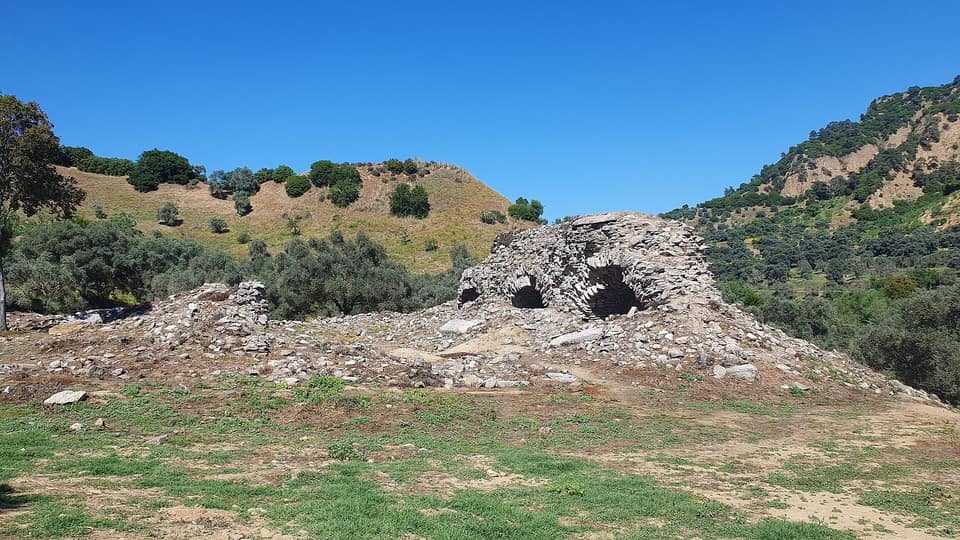
In 2020 and 2021 Aydın Adnan Menderes University carried out surface surveys, and in 2022 excavation, conservation and landscaping work began under the direction of the Aydın Archaeological Museum. The most striking remain of the city is the elliptical amphitheatre, whose northern side leans against a sloping hillside while the seating on its other three sides rises on vaults. Researchers think that a Hellenistic theatre stood here first and that in the Roman Imperial period the area was transformed into a monumental amphitheatre. East of the amphitheatre, just west of the stream, lies a large Roman bath whose arches are still standing. South of the bath are the Great Terrace Wall, about 30 metres long and 5.5 metres high, and a building where remains of mosaics can be seen.
On the slopes beside the stream, sewer outlet tunnels about 2 metres high have been documented. Traces of aqueducts and clay pipes that brought water to the city from the mountains to the north and from springs to the south have also been found. In the Middle Ages the population withdrew to the high hills northeast of the valley, where a Byzantine fortress was built.
Today visitors can see the amphitheatre, the arches of the bath and the terrace wall on the western side of the valley with a short walk. As the area is an active excavation site, the sections open to visitors and the visiting conditions may change from season to season; check the current situation with official sources before you go. Visitors setting out from Nazilli can add the ruins of Nysa in the Büyük Menderes valley to their programme on the same day.
Comments
Loading...
Location - Mastaura Antik Kenti
Venue Info
AddressBozyurt ve Eycelli mahalleleri arası, Nazilli, Aydın
VenueNazilli, Aydın
TypeHistorical & Cultural Sites