

Historical & Cultural SitesMuseums
Manisa Müzesi
9
No ratings yet
Sign in to like and rate
Manisa Museum
Akmescit Mahallesi, Mimar Sinan Bulvarı No:159, Yunusemre / Manisa
Yunusemre, Manisa
Get DirectionsApple MapsAbout Venue
Manisa Museum is an archaeology and ethnography museum that gathers the history of the province, from Lydia to the Ottomans, under one roof. According to the museum portal of the Ministry of Culture and Tourism, since 17 May 2025 the museum has been serving in its new building on Mimar Sinan Boulevard in Akmescit Mahallesi, Yunusemre. This move opens a new chapter in a museum history of more than eighty years. Its former home was the Muradiye Külliyesi in the city centre.
The museum's story begins with a storeroom. As the Manisa Provincial Directorate of Culture and Tourism relates, finds collected from the region were first gathered in the madrasa section of the Muradiye Külliyesi. As the objects multiplied, the madrasa was turned into a museum on the initiative of the local administrators of the time and opened to visitors on 29 October 1937. The museum portal notes that the complex was built in the name of Murad III between 1583 and 1592. When the madrasa in turn proved too small, after the restoration of 1972 the soup kitchen section was given to the archaeological finds and the madrasa section to the ethnographic collection. So the collection you see today in the new building is a body of material that was displayed in two separate historic buildings for half a century.
The centre of gravity of the collection is Sardis. The provincial directorate stresses that the finds from the excavations carried out since 1958 at the Sardis archaeological site, the capital of the Lydian Kingdom, are displayed in this museum. Stopping here before or after visiting Sardis means coming face to face with the belongings of a city whose foundations are all you see at the site. The archaeological collection extends from the Bronze Age to the end of the Byzantine period. Sarcophagi, gravestones, mosaics, pottery, statues and busts are the large pieces of this collection. Glass and ivory objects are smaller but stand out for their fine workmanship. The provincial directorate also writes that the mosaics recovered from Sardis, gold jewellery of antiquity, silverware and game sets hold a special place in the collection. Gold, silver and bronze coins ranging from antiquity to the Ottoman period are also among the museum's highlights. If you remember that Lydia is known as the kingdom that struck the first state-guaranteed coinage, you will easily see why the coins carry a special meaning in this museum.
One branch of the collection also reaches Mount Spil. According to the Ministry's national park description, the Dulkadin caves on Spil were once used as dwellings, and some of the remains from that period are on display in Manisa Museum. In this way the museum also opens a window onto the prehistoric past of the mountain rising right behind the city.
The ethnography collection tells the daily life of the people of the region from the period of the Anatolian principalities to the Ottomans. Among the objects listed by the provincial directorate are costumes, weapons, palace objects and examples of tile art. Manuscripts and writing sets from the seventeenth and eighteenth centuries are also part of this section. The most striking example of woodwork is the pulpit door of the Ulu Cami, made in the kündekari technique and decorated with carving and ivory inlay. Kündekari is the technique of creating a surface by fitting small pieces of wood into one another without nails or glue; it is worth standing in front of the door for a few minutes to follow its geometric order closely.
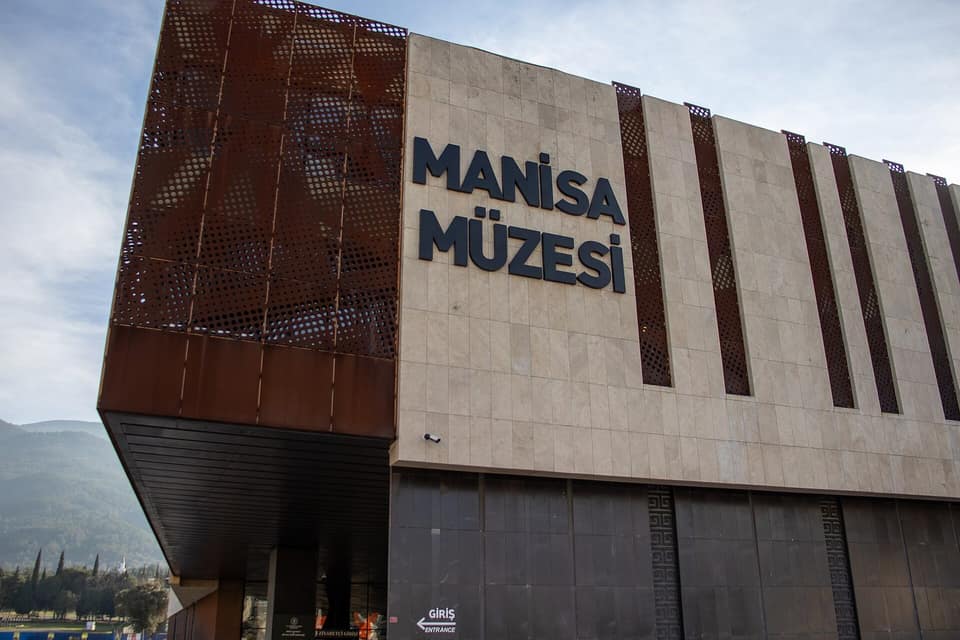
The facade of the new building combines stone cladding with perforated rust-coloured metal panels and is easy to pick out from the boulevard. The museum is attached to the Manisa Museum Directorate, and as the provincial directorate states, the Akhisar Museum also operates under this directorate. Set aside at least an hour and a half for your visit; if you want to look closely at the Sardis finds, the time easily grows longer. Reading the labels as you go shows how differently the ancient cities of the coastal and inland parts of the same province lived.
The museum stands on Mimar Sinan Boulevard in Yunusemre and is easily reached by city buses or by private car. Check the current information on the museum portal for visiting days, opening hours and admission conditions. After the museum, crossing into the city centre to see the Hafsa Sultan Darüşşifası in the Sultan Külliyesi is a good way to continue the day in a natural historical order. If the weather is clear, you can devote the afternoon to Mount Spil.
Comments
Loading...
Location - Manisa Müzesi
Venue Info
AddressAkmescit Mahallesi, Mimar Sinan Bulvarı No:159, Yunusemre / Manisa
VenueYunusemre, Manisa
TypeHistorical & Cultural Sites