

Historical & Cultural SitesArchaeological Sites
Liman Tepe Höyüğü (Limantepe)
No ratings yet
Sign in to like and rate
About Venue
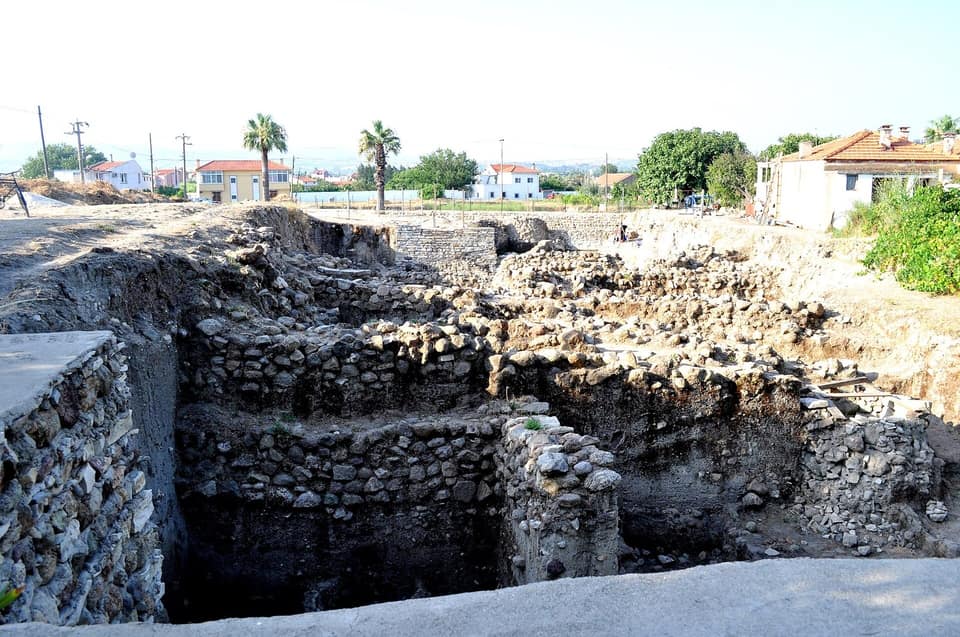
Liman Tepe is a prehistoric harbour settlement in the İskele neighbourhood of Urla, investigated both on a mound resting against the shore and on the seabed in front of it. The mound was discovered in 1979, and archaeological excavations showed that life here goes back to around 4000 BC. With its uninterrupted occupation from the Middle Chalcolithic to the end of the Late Bronze Age, the settlement stands out as one of the most important centres of the Aegean world. Obsidian tools found from the 5th millennium BC onwards show that Liman Tepe held a critical position in the circulation of obsidian from both the island of Melos and Central Anatolia. Evidence of mining from the same periods also indicates that this coastal settlement played an important role in prehistoric Anatolian and Aegean metallurgy. In the 3rd millennium BC, Liman Tepe had an Aegean-type settlement plan made up of long houses arranged in blocks separated by streets and surrounded by monumental walls. In the middle of this millennium, under the influence of the Anatolian Trade Network, the walled area grew and was strengthened with a monumental bastion. While public buildings rose in the citadel, a lower town where the population lived developed outside the walls. At the end of the 3rd millennium BC the collapse of this trade network caused an economic shock, but the settlement was never completely abandoned. In the 2nd millennium BC seafaring regained momentum with the use of sailing technology, and Liman Tepe remained an important harbour town until the end of the Late Bronze Age. In the Iron Age the settlement turned into Klazomenai, one of the Ionian cities. The most distinctive side of the site lies under the sea, because the first underwater excavations and research in Türkiye were carried out here. The underwater work that has continued since 2000 is aimed at investigating harbour installations that now lie below the sea. Among the finds presented by the excavation directorate are a sunken breakwater from the 6th century BC, a krater from the Mycenaean period and a gold find from the Early Bronze Age. Stone wall remains can be seen in the area opened on land, and the structures presented include a central building from the Early Bronze Age. The ancient city of Klazomenai spreads to the foot of the hills west of Liman Tepe, and the two sites together tell a story of thousands of years along the same stretch of coast. Liman Tepe is still an active excavation site, so check the current announcements of the İzmir Provincial Directorate of Culture and Tourism for access to the site and visiting conditions. Its registered address is on Neyzen Tevfik Street in the İskele neighbourhood, and the site is reached on a short walk from the Urla İskele waterfront.
Comments
Loading...
Location - Liman Tepe Höyüğü (Limantepe)
Venue Info
Addressİskele Mahallesi, Neyzen Tevfik Caddesi, Urla/İzmir
VenueUrla, İzmir
TypeHistorical & Cultural Sites