

Historical & Cultural SitesMonuments & Squares
Kuşkayası Yol Anıtı
6
No ratings yet
Sign in to like and rate
Kuşkayası Road Monument
About Venue
The Kuşkayası Road Monument is one of the most striking historical stops on the old route between Bartın and Amasra.
The monument stands about 4 kilometres from Amasra, near the Amasra-Bartın highway.
According to the official record on the Culture Portal, it was commissioned by Gaius Julius Aquila.
The name also appears as Aguilla in some sources.
The commission was made in the name of the Roman Emperor Tiberius Germanicus Claudius and dates to between AD 41 and 54.
For this reason the structure is neither a fortress nor a temple, but the memorial of a road opened in the emperor's name.
The monument consists of three main elements.
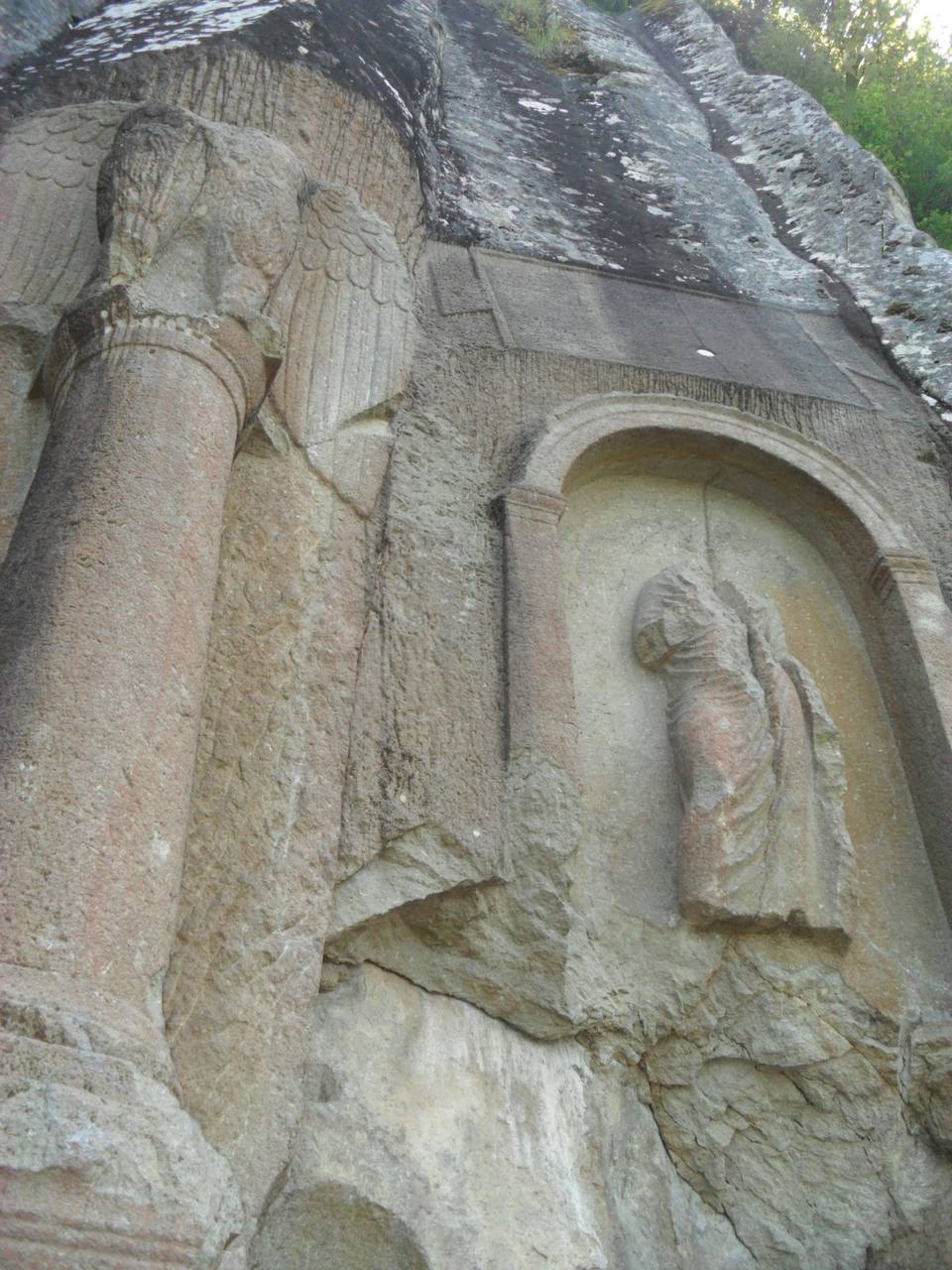
The first is a headless sculpture of a human figure carved into the rock.
The second is a Roman eagle figure symbolising sovereignty.
The third is a pair of inscriptions.
The official record gives the content of the inscriptions in Turkish translation.
According to this text, Aquila cut through the mountain and built a resting place in the name of peace and friendship between states and in memory of the emperor's rule.
The same text notes that he paid for it from his own funds.
Because the source gives no measurements for the road, the phrase about cutting through the mountain is best read only as the inscription's own account.
The missing head of the figure reminds us that the monument is a document worn down over the centuries.
The Roman Road that passes in front of the monument carries the real story of the visit.
The record on the Culture Portal says that the Kemerdere Bridge in the Cevizlik Valley can be reached 1 kilometre below this road.
The monument is therefore understood not as an isolated relief but as a stop along a road line.
Roman roads were in general the infrastructure that tied distant regions together, and Kuşkayası shows that idea on a single rock face.
Before setting out on foot, ask local sources about the current condition of the path to the bridge in the valley.
To reach the monument, turn left at the Taşköprü locality on the Bartın-Amasra highway.
The directions then note that the villages of Kaman and Kazpınar are passed.
According to the directions, the monument lies on the left after descending 700 to 800 metres towards Amasra from the starting point.
For the exact starting point and the final stretch, read the How to Get There section on the Culture Portal.
Use these directions together with an up-to-date map.
Because the monument is beside the road, leave your vehicle at a safe spot where it does not block traffic.
Carved reliefs show up best in raking light.
For this reason, morning or late afternoon may suit photography better.
First shoot the rock face with a wide frame, then take close shots of the eagle figure and the inscriptions.
Not touching the reliefs and not stepping on the surface matters for the survival of the monument.
Take your time with the inscription surface, because this text, summarised in the official translation above, is the real document of the monument.
Since the monument is an open-air point carved into the rock, ask the Amasra District Governorship or the Bartın Provincial Directorate of Culture and Tourism for current visiting information.
Wearing shoes with a good grip suited to the weather is wise for a visit beside the road.
For those who want to combine the monument with a trip to Amasra, the Amasra Museum is a good complement.
According to the Provincial Directorate of Culture and Tourism, marble works and statues from the Roman period are displayed in its galleries.
Looking at Kuşkayası after seeing these works lets you compare the stonework of the same era at two different scales.
It is possible to plan the monument on the same day as Bartın's coastal and river stops.
Setting aside 30 minutes for this stop is enough for photographs and reading.
Comments
Loading...
Location - Kuşkayası Yol Anıtı
Venue Info
AddressAmasra/Bartın
VenueAmasra, Bartın
TypeHistorical & Cultural Sites