

Historical & Cultural SitesArchaeological Sites
Kremna Antik Kenti
6
No ratings yet
Sign in to like and rate
Kremna Ancient City
About Venue
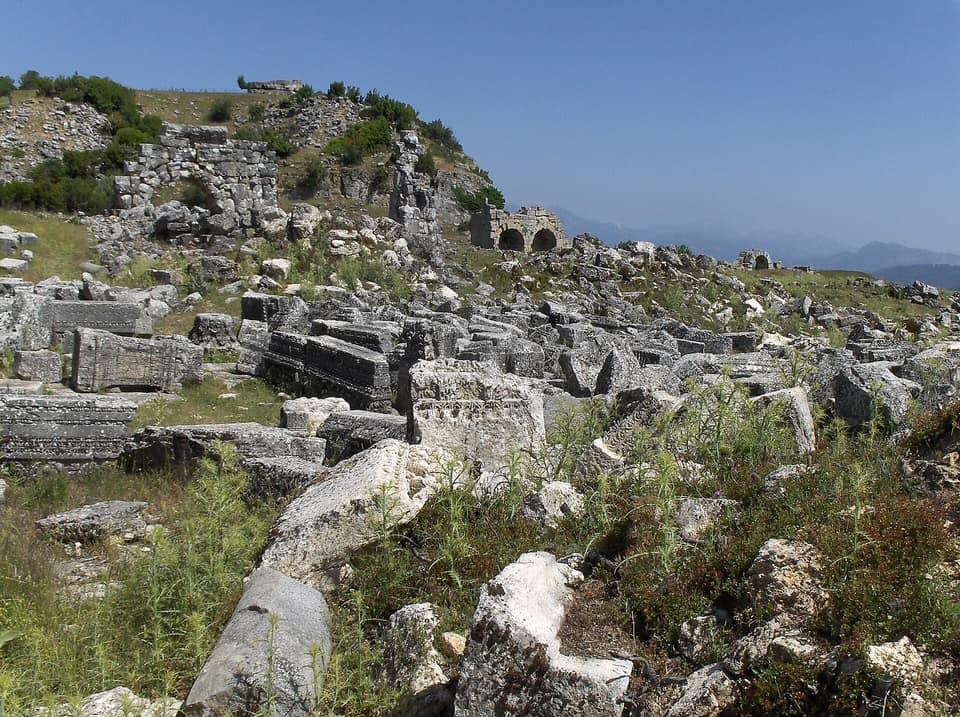
Ancient Kremna lies in Çamlık, a town attached to Bucak district of Burdur. According to the Culture Portal, Çamlık is 10 kilometres east of Bucak, and the site's address is registered as Hacıbağ, Çamlık, Bucak. The city was built on a dominant hill surrounded by cliffs in the Aksu valley. Founded by the Pisidians, the city had its brightest period in the 2nd century CE. This location shows that you should expect a climb up from the valley and a wide view as you approach the ruins.
Official texts describe a long chain of rulers. Kremna was taken by the Lydians in the 6th century BCE, by the Persians in 546 BCE and by Alexander the Great in 333 BCE, and came under Macedonian rule. It then passed under the rule of Antigonos, the Seleucids and the Kingdom of Pergamon in turn, and under Rome in 60 BCE, Galatia in 36 BCE and Rome again in 25 BCE. After the division of the Roman Empire it came under Eastern Roman rule, and with the arrival of the Turks in Anatolia at the end of the 11th century CE it came under Turkish rule. In short, the ruins are the last link of a many-layered past, and works of the Roman era still stand today.
The city is surrounded by walls 2 metres wide and 7 to 8 metres high. These measurements are given in the same form in the guide of the Bucak Municipality and on the Culture Portal. The city was laid out on a grid plan; that is, streets cross each other at right angles and buildings are lined up in regular blocks. The Acropolis, or Upper City, of Kremna contains the Forum, meaning the square, the Basilica, meaning the court hall, an arched structure and the Library. In addition there are the Propylon, the monumental entrance gate, and the Nymphaeum, the monumental fountain building. This list turns the visit into a line of orientation: look first at the gate, then at the square and the public buildings around it.
The first detailed study of the ancient city was made in the 1880s by the Austrian researcher Graf von Lackoronski, who also produced the plan showing the general condition of the ruins. The scientific excavation was carried out between 1971 and 1973 by Professor Jale İnan of the Archaeology Department of the Faculty of Letters of Istanbul University. This excavation uncovered the library building. The nine marble statues and other works found in the excavations are displayed today in the Burdur Museum. The Culture Portal takes its record of these works from the Bucak Municipality's text, so the two sources give the same information.
The link between the museum and the site is the most important clue for a visit to Kremna. The third section on the entrance floor of the Burdur Museum is devoted to the nine marble statues from the Kremna excavation. If you see the statues in the museum first and then climb to the library and square ruins of the city, you can imagine the setting the finds came from more easily. On site, think together about the thickness and height of the walls and the natural defensive character of the hill. To understand the city's grid plan, looking from the square outward and following the direction of the streets is a good method. In this sense Kremna is a fitting stop for those who want to read the planned layout of a city rather than the grandeur of single buildings.
Sturdy, comfortable footwear is needed for the visit; you will walk on stone, earth and sloping ground. Shade may be limited, so a hat, sunscreen and enough water matter in summer. Morning and late afternoon suit both protection from the heat and softer light for photographs. The visiting hours and fee of the site do not appear on the Culture Portal page or in the provincial directorate's 2026 visiting-hours list. For this reason, check the current status and entry conditions of the site from official sources before setting out. Çamlık is reached by vehicle from the Bucak town centre; the sources contain no public transport information, so plan for a vehicle. If you place Kremna on the same day as Sagalassos and İnsuyu, giving the longest walk of the day to Sagalassos and a calmer pace to Kremna makes a balanced plan.
Comments
Loading...
Location - Kremna Antik Kenti
Venue Info
AddressHacıbağ, 15300 Çamlık/Bucak/Burdur
VenueBucak, Burdur
TypeHistorical & Cultural Sites