

Historical & Cultural SitesHistorical Sites
Kleopatra Kapısı
11
No ratings yet
Sign in to like and rate
Cleopatra's Gate
Gözlükule Mahallesi, İsmet İnönü Bulvarı üzeri, Tarsus / Mersin
Tarsus, Mersin
Get DirectionsApple MapsAbout Venue
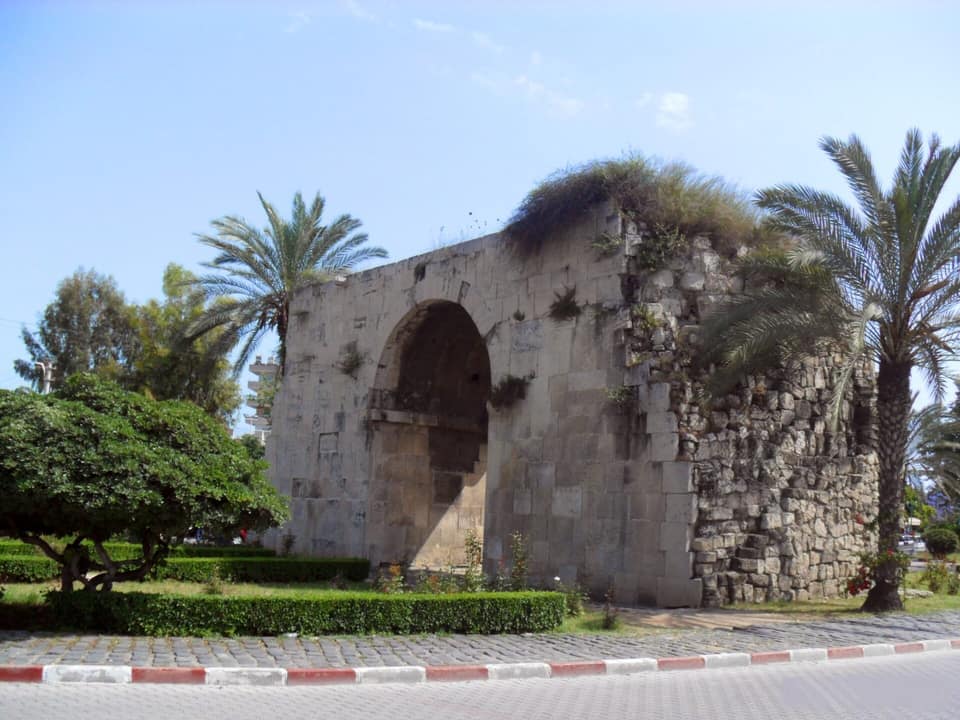
Cleopatra's Gate is a single-arched city gate standing on İsmet İnönü Boulevard in the Gözlükule neighbourhood of central Tarsus. Its original name is the Sea Gate, and according to the Culture Portal it is one of the three gates of the city walls built around ancient Tarsus in the Byzantine period. The Mersin Provincial Directorate of Culture and Tourism lists these three as the Mountain Gate, the Adana Gate and the Sea Gate. In his Book of Travels, Evliya Çelebi called this gate the Harbour Gate when describing Tarsus.
The gate's present name comes from a story. According to the portal, it is said that in 41 BC the Egyptian queen Cleopatra came to Tarsus by ship to meet the Roman general Antony, was welcomed with ceremonies at Gözlükule, the harbour of the time, and entered the city through the Sea Gate. For this reason the Sea Gate is also known as Cleopatra's Gate. It is worth keeping one distinction in mind here. The sources link the standing structure to the Byzantine walls, while the name Cleopatra rests on a story that has settled into the city's memory about the old passage at this spot. When you visit, it is more accurate to see it not as a building of the 1st century BC but as a medieval gate that carries that story.
The three-gated walls of Tarsus were in fairly good condition until the end of the 18th century. According to the portal, these walls were demolished in 1835 by Ibrahim Pasha of Egypt, and only the single-arched Sea Gate rising on two piers has survived. The edge of the arch has a horseshoe shape. Cut stone and Khorasan mortar were used in its construction. The Provincial Directorate of Culture and Tourism gives the height of the gate from the ground as 6.17 metres and its depth as 6.18 metres.
The sea in the gate's name can no longer be seen. The distance between Gözlükule, remembered as the city's old harbour, and the coast has grown over time. The Culture Portal notes that the alluvium carried by the Berdan River, the ancient Kydnos, played an important role in forming the Çukurova Delta. So when you stand in front of the gate you see not a shore where ships once moored but a city set in the middle of the plain.
Today the gate stands within a landscaped green area, with palm trees on either side. The best way to visit is to walk around it and look at both of its faces. Look at the gate from a little distance, straight on, to see the horseshoe shape of the arch. Then step under the arch and feel the thickness of the piers and the depth of the passage. Traces of repairs made over the centuries can be picked out in the courses of cut stone. For photographs, afternoon light shows the texture of the stone surface in warmer tones.
The gate is a good starting point for exploring Tarsus. The portal states that the structure is in the district centre and can be reached by city public transport. The Gözlükule mound, which gives its name to the neighbourhood around the gate, is in the same area and according to the portal contains settlement layers from the Neolithic to the Islamic period. The portal states that this settlement, founded about nine thousand years ago, served as the harbour of Tarsus in antiquity. Excavations on the mound also uncovered seals from the Hittite period and a tablet written in cuneiform. The finds from Gözlükule are now displayed in Adana Museum. Tarsus Waterfall and the Justinian Bridge in the north of the city are also stops reached after a short journey. Because the gate stands in the open it can be seen at any time of day, but access to its immediate surroundings may change because of landscaping or restoration work.
Comments
Loading...
Location - Kleopatra Kapısı
Venue Info
AddressGözlükule Mahallesi, İsmet İnönü Bulvarı üzeri, Tarsus / Mersin
VenueTarsus, Mersin
TypeHistorical & Cultural Sites