

Historical & Cultural SitesCastles & Palaces
Kilitbahir Kalesi
6
No ratings yet
Sign in to like and rate
Çanakkale Fortress (also known as Kilitbahir Fortress)
About Venue
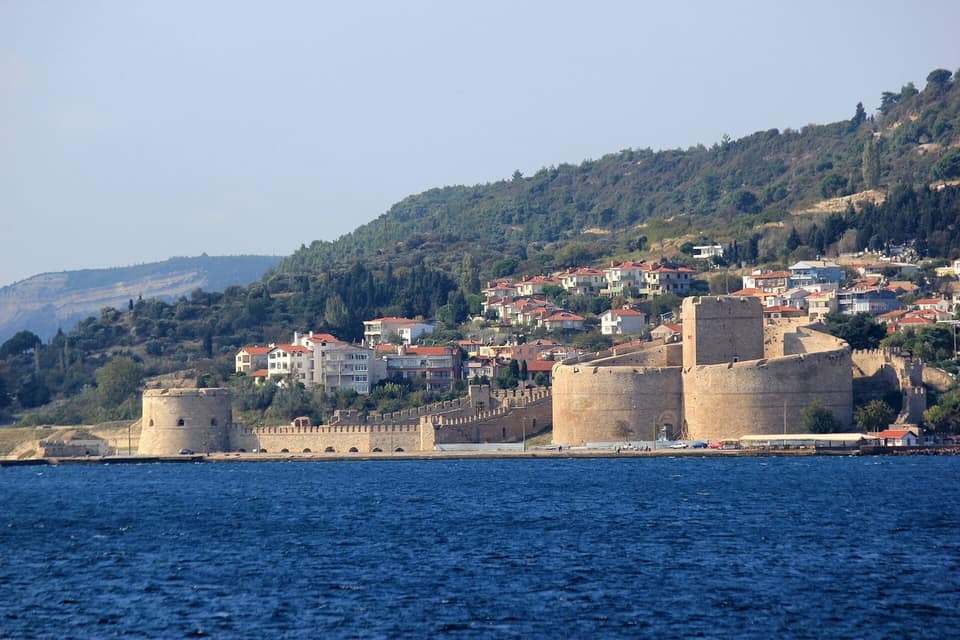
Kilitbahir Castle stands on a slope overlooking the narrowest point of the Dardanelles, on the European side, in the village of Kilitbahir in the district of Eceabat. According to the Culture Portal, the castle was built by Sultan Mehmed the Conqueror together with Çimenlik Castle to keep the sea passage under control. Its name, written Kilidü'l-bahr in the old spelling, means the lock of the sea. Its position directly opposite Çimenlik was chosen so that the two castles could together keep the strait under fire.
Information on when the castle was built comes from historians of the period. According to the Culture Portal, Tursun Bey writes that after the conquest of Istanbul two castles were built facing each other at the narrowest point of the strait, at a place called Eceovası, and that they were named Kilidü'l-bahr and Sultaniye. The same source relates that Kritovoulos, describing the events of 1463, states that the fleet commander Yakub Bey, governor of Gelibolu and Bolayır, was given the task of building the castles, and when describing the years 1464-1465 states that construction had been completed. The Provincial Directorate of Culture and Tourism, for its part, gives 1462 as the year of construction. The building inscription of the castle has not survived, but historical sources state firmly that the structure dates from the reign of Mehmed the Conqueror.
What makes Kilitbahir special among Ottoman castles is its plan. According to the provincial directorate, unlike the classic castles with rectangular or square plans, it was laid out to fit the topography. Inside a thin outer wall there is an inner castle with a three-leaf clover plan, and in the middle of that stands a tower. All of the castle's defensive strength was concentrated in this clover-shaped inner court. The embrasures of the structure, built on a slope, were placed to suit cannon fire towards the sea. The outside of the wall was surrounded by a moat, and the castle was entered through gates on the north and south by bridges thrown across the moat.
The castle was enlarged in the sixteenth century. According to the Culture Portal, in the reign of Süleyman the Magnificent the castle was repaired, surrounded by walls and the Yellow Tower was added. The two-line inscription above the door of the tower shows that the structure was completed in 1541. The provincial directorate writes that a second courtyard from the same period and a cylindrical tower at the far end were added on the south side of the castle. The known repairs of the castle begin with the Ottoman repair of 1541-1542 and continue in the Republican period in 1955-1956, 1967-1968 and 2002.
The tower in the middle of the inner castle is the most striking structure of the fortress. According to the Culture Portal, this triangular inner keep was the building to be used last in a defence. The tower has seven floors, was used for shelter and storage, and is twenty-seven metres high. Beneath the entrance there is a triangular cistern. A stone staircase leads to the first floor, while the stairs linking the other floors are of wood. Each floor has fireplaces and toilets built on the same axis. The large arched openings on the floors turn into narrow loopholes on the outer faces of the tower. Part of the tower was damaged in 1915, but it regained its original form through a restoration carried out in the 1960s.
Today the castle is visited as the Kilitbahir Castle Museum and presents Ottoman castle life. According to the Culture Portal, the museum sections are the Yellow Tower, the late period courtyard, the Piri Reis section and the inner keep. In the Yellow Tower, Ottoman castle architecture, the structural equipment of castles, the organisation of the garrison, engravings of Ottoman castles in Europe, defensive weapons, trade and daily life are presented with reconstructions. In the late period courtyard, added as a forward defence area during the repairs of Süleyman's reign, there are the remains of a headquarters building and an artillery reconstruction. The section devoted to the sailor Piri Reis, who served at Kilitbahir for a time, shows the navigational instruments of the period and his famous world map compared with a modern map.
The floors of the inner keep have also been turned into exhibition spaces. On the ground floor, the building of the castle, its repairs and additions are explained with engravings and coins of the period. On the upper floors, defence, food culture and the commercial life that developed around the castle are presented with reconstructions. One floor is devoted to the finds from the excavations carried out while the exhibition was being arranged. The keep is entered from the eastern courtyard through a door with a flat arch; the stairs are narrow and steep, so do not hurry as you climb.
Allow an hour and a half to two hours to visit the castle. From the top of the clover-shaped walls and from the upper floors of the keep, a wide view opens over the strait and the city of Çanakkale opposite. In the afternoon the sun is behind you, which makes these hours a good time to photograph Çimenlik on the opposite shore. According to the Culture Portal, the castle is reached by the ferries that run from Çanakkale to the village of Kilitbahir; the pier is right in front of the castle. The village can also be reached by road from the direction of Eceabat. As ferry services and museum opening hours can change, check the current information from official sources.
Comments
Loading...
Location - Kilitbahir Kalesi
Venue Info
AddressKilitbahir Köyü, Eceabat / Çanakkale
VenueEceabat, Çanakkale
TypeHistorical & Cultural Sites