

Historical & Cultural SitesHistorical Sites
Kesikköprü ve Kervansarayı
11
No ratings yet
Sign in to like and rate
Kesikköprü and the Caravanserai
About Venue
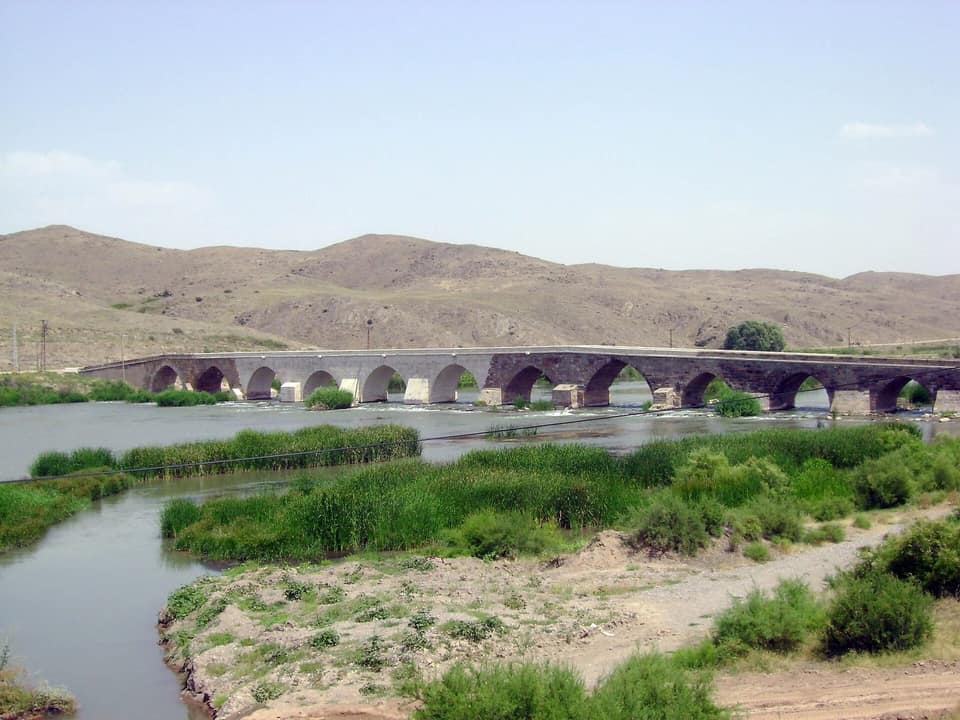
Kesikköprü is a place south of Kırşehir known for a Seljuk bridge that crosses the Kızılırmak and the stone caravanserai beside it. Both buildings now lie within the village of Kesikköprü, which bears the same name. The Kırşehir Provincial Directorate of Culture and Tourism also presents the caravanserai under the name Cacabey Han. The ministry's promotion portal GoTürkiye describes the bridge as the most famous of the Seljuk bridges in Central Anatolia. Together, the bridge and the inn mark the point where the caravan road running south from Kırşehir crossed the river in the Seljuk period.
History and inscriptions
The two buildings are dated differently in the sources. The provincial directorate writes that both the bridge and the caravanserai were built in 1248 by Nureddin Caca, the emir of Kırşehir. In a study published in Belleten, the journal of the Turkish Historical Society, Tahsin Özgüç and Mahmut Akok of the Kültepe excavation team read two separate inscriptions. According to this study, the three-line marble inscription of the bridge states that it was built in 1248 by Kadı İzzeddin Mehmed during the reign of Kaykaus II. The same study, relying on the four-line inscription of the inn, states that the caravanserai was built in 1268 by Nureddin Cebrail bin Caca. The Kırşehir entry of the TDV Encyclopedia of Islam also dates the inn to 1268-69 and writes that the old name of the bridge was probably Tırtıklıköprü. According to GoTürkiye, the name Kesikköprü, meaning cut bridge, took hold in the 17th and 18th centuries because of bandits who cut off the caravans crossing the bridge.
The bridge
According to the study in Belleten, the bridge is one of the most monumental Seljuk bridges in Anatolia and crosses the river on thirteen pointed arches. The upstream faces of the piers are reinforced with sturdy cutwaters. The marble inscription of the bridge had at some point fallen from its place, and the team found it in 1956 right at the edge of the river. The bridge lies about 300 metres from the caravanserai. Seen from the bank, the rhythm of the arches and the piers between them give the best sense of the size of the structure.
The caravanserai
The provincial directorate highlights the portal, built of stones in two different colours, for its fine stonework. According to the survey published in Belleten, the inn consists of a courtyard and a covered hall. The courtyard gate faces south, while the gate of the covered hall faces east. The depressed arch of the courtyard gate is decorated with carved and relief geometric motifs, and the place of the inscription above the gate is empty today. The small prayer room at the western end of the gate passage, with its deeply carved stone decoration, is described as the best preserved part of the building. The projecting door of the covered hall has two lion reliefs on the springers of its arch. Inside, ten stone piers divide the building into three long naves, and the middle nave is wider and taller than the others. The main building stone is andesite, which is easy to work, with a small number of limestone and basalt blocks among it. Towers acting as buttresses stand at the corners of the outer walls. The team concluded that the front courtyard section was added to the covered hall later, though not long after the first phase.
Visiting
Start at the caravanserai and look closely at the two-coloured stones of the portal and the geometric patterns on its arch. Then search for the lion reliefs on the door of the covered hall, one of the most rewarding details of the building. Walking around the inn shows more clearly how the corner towers are bonded to the walls. Afterwards walk to the bridge and watch the arches from a point on the bank where you can see them together with the riverbed. The riverbank can be muddy in places, so sturdy shoes are a good idea. Because the site lies outside the provincial centre in a rural area, it is usually reached by car. Check the current condition of the buildings and the visiting conditions on the page of the provincial directorate of culture and tourism.
Comments
Loading...
Location - Kesikköprü ve Kervansarayı
Venue Info
AddressKesikköprü köyü, Kırşehir Merkez
VenueKırşehir Merkez, Kırşehir
TypeHistorical & Cultural Sites