

Tourist Streets & SquaresOld Town District
Kemaliye Tarihi Kenti
6
No ratings yet
Sign in to like and rate
Kemaliye, a historic town
About Venue
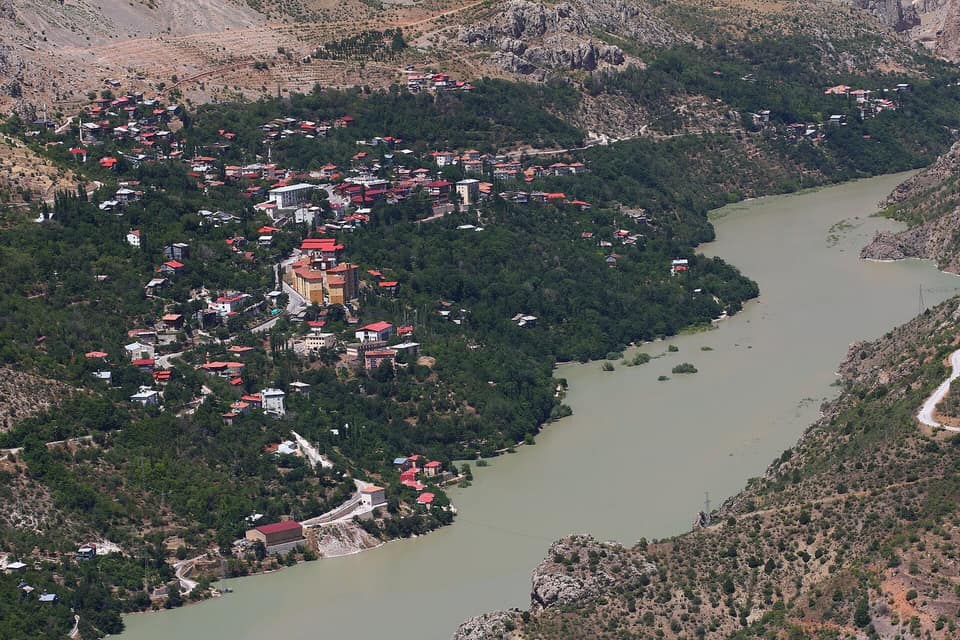
Kemaliye, formerly Eğin, is a small historic town in south-western Erzincan, built on the western side of the Karasu (Euphrates) valley, which is deeply sunk between the western end of the Munzur Mountains and the Sarıçiçek Mountains. The Culture Portal writes that the settlement consists of three main terraces rising from the Euphrates and that the river directly shaped the spatial layout and architecture of the town. The Historic Town of Kemaliye was added to the UNESCO World Heritage Tentative List in 2021, and in 2022 it joined Türkiye's slow cities network. Before that, in 2005, the district centre had been declared a protected site.
The TDV Encyclopaedia of Islam explains the choice of site through two geographical conditions. While the eastern slope of the valley drops steeply to the river, Mount Hotar on the west recedes in steps and at a gentler gradient, leaving room for a small town. The second condition is the abundant spring called Kadıgölü, which rises in the upper parts of the town and, according to the encyclopaedia, was the lifeline of the settlement for centuries. The same entry notes that the name Eğin itself derives from a word meaning spring or fountain. The town's present name was given by a decision of the Council of Ministers dated 21 October 1922.
The town has a long and layered history. According to the Provincial Directorate of Culture and Tourism, the area lay within Byzantine territory from the fourth century, then came under the rule of the Anatolian Seljuks, the Ilkhanids and the Akkoyunlu, and was joined to the Ottoman state in the reign of Çelebi Mehmed. The TDV Encyclopaedia of Islam relates that in the seventeenth century Katip Çelebi and Evliya Çelebi described Eğin as a town of vineyards and gardens producing plenty of fruit. The German field marshal Moltke, who passed through in 1839, compared the town with Amasya and found its mountain more imposing and its river more important. In the nineteenth century the production of fine cotton cloth, silk weaving, printed scarves and handkerchiefs spread in the town, and towards the end of the century carpet weaving and the carpet trade developed. According to the encyclopaedia, the caravan route running from Arapkir through Eğin and Şebinkarahisar to Giresun played a large part in this trade.
Today the town's real treasure is its traditional housing. The Culture Portal states that the district centre and its settlements have largely preserved the local architecture. According to the academic study that compiles Kemaliye's cultural heritage, sixty-eight monumental and one hundred and seventeen civil architectural examples had been registered in the district by 2011. The same study writes that the houses were set in steps against the slope, following an axis system called mag. The houses usually have three floors, and the stone-walled lower floor is given over to service spaces such as the cellar and the woodshed. The main floor, built as a timber frame with mud-brick infill, holds the divanhane, the sofa and the kitchen, while the upper floors are given to bedrooms. The flat roof at the very top is an open workspace where produce is processed and dried.
The doors of the houses are a cultural document in their own right. GoTürkiye and the academic compilation describe two separate knockers on the outer doors, one large and one small. The deep sound of the large knocker announces that the caller is a man, the thin sound of the small one that the caller is a woman, and the guest is welcomed by the man or the woman of the house accordingly. The snake figures framing the keyholes are also counted in the compilation among the striking details of the doors. Looking at these knockers and door ornaments while walking the streets is one of the most enjoyable pastimes of a visit to Kemaliye.
The town's neighbourhoods are separated from one another by small streams and, according to the TDV Encyclopaedia of Islam, stretch in a green strip ten to twelve kilometres long running south to north. The business and administrative centre lies where the Taşdibi, Gençağa and Dörtyolağzı neighbourhoods are found, and here the town spreads over heights between eight hundred and fifty and a thousand metres. The Orta Mosque on the edge of Kadıgölü is, according to the Provincial Directorate of Culture and Tourism, a building thought to date from the seventeenth or eighteenth century, with a dome resting on four main piers. The academic compilation also records that the Lower Bath in the Dörtyolağzı neighbourhood stands restored. The area around Kadıgölü, with its shaded stream bank and the old buildings around it, is a good place to start a walk through the town.
Daily life in Kemaliye has its own character too. The TDV Encyclopaedia of Islam writes that the town today sends to the big cities dried mulberries made from a small, seedless mulberry that grows only within the Euphrates bend and its surroundings. The encyclopaedia also notes that the small population is explained by the town's tradition of working away from home, with the male population traditionally employed in the big cities. Although carpet weaving has lost its former importance, the Culture Portal relates that a carpet festival is held in the district every year. In the Dilli Valley, four or five kilometres north-west of the town, there are, according to the official source, petroglyphs and tamga marks of importance for early Turkish cultural history.
The best way to see Kemaliye is to leave the car in the centre and walk between the terraces. Comfortable shoes are essential because the slopes are steep and the streets narrow, and walking in the cool of the morning is more pleasant. People still live in most of the houses, so you should wander like a quiet visitor, without entering courtyards or photographing windows at close range. The Dark Canyon and the Stone Road begin just north of the town, and the town and the canyon can be visited as two parts of the same day. Kemaliye is reached by road from the directions of Erzincan, Sivas, Malatya and Elazığ, and since public transport is limited a private car is the most practical option.
Comments
Loading...
Location - Kemaliye Tarihi Kenti
Venue Info
AddressKemaliye ilçe merkezi, Erzincan
VenueKemaliye, Erzincan
TypeTourist Streets & Squares