

Historical & Cultural SitesCastles & Palaces
Kayseri Kalesi ve Arkeoloji Müzesi
8
No ratings yet
Sign in to like and rate
Kayseri Castle and Archaeology Museum
About Venue
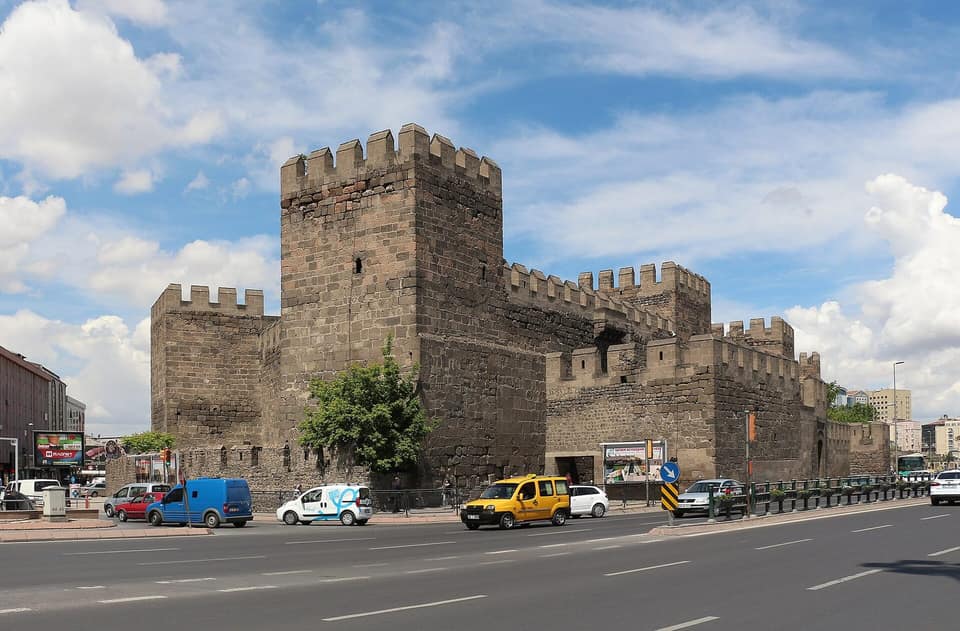
Kayseri Castle is a medieval fortress that rises in the very centre of the city and defended it for centuries. Kültür Portalı writes that the castle was first built in the Roman period in the 3rd century and narrowed in the Byzantine period in the 6th century. It took its present form in the time of the Seljuk Sultan Alaeddin Keykubad I. The castle was later repaired twice, under the Karamanids and under the Ottomans. The TDV Encyclopedia of Islam explains that the city was founded where the northern foothills of Mount Erciyes meet the plain, with the inner castle and the walls as its core. Known as Mazaka in antiquity and as Caesarea in Roman times, the city reached its present name by growing around this castle.
The castle was built on flat ground and consists of two parts, the Outer Castle and the Inner Castle. The Outer Castle was made up of walls and towers built to protect the city, and it enclosed the seat of government and most of the residential area. Of the northern outer castle built by Alaeddin Keykubad I, the Ok Tower and the Yoğun Tower have survived. The rest of the outer walls has largely disappeared, while TDV notes that the inner castle with its five gates still stands. The Inner Castle was built higher than the Outer Castle and, with the walls added around it, became a fortress of its own. In the period of the Turkish principalities, the walls, towers and gate towers of the inner castle were raised and changed considerably. In the Ottoman period, when the city no longer needed to be defended, neighbourhoods were set up inside the inner castle, and the Castle Mosque, also known as the Fatih Mosque, was built at this time.
The Kayseri Provincial Directorate of Culture and Tourism compares the plan of the castle to an irregular octagon. The same source lists the gates that led into the castle as Sivas, Kiçi, Boyacı, Meydan, At Pazarı and Yeni. Some of these names also appear in Ottoman records as district names, such as Sivaskapısı, Kiçikapı and Boyacıkapısı. An image published by TDV shows that the castle was painted in a miniature by Matrakçı Nasuh in the 16th century. Elsewhere in the city, outside the castle, the Taşlıburun walls can be seen at Beştepeler on the Hacılar road.
Today the inside of the castle is also the Kayseri Archaeology Museum. Museum work in Kayseri began with a circular by Osman Hamdi Bey asking that old artefacts be gathered in schools suitable for safekeeping. Works collected around the city were first protected in a room of Kayseri High School. The restored Hunat Hatun Madrasa officially began to be used as a museum on 1 March 1930. After the works were classified chronologically and scientifically, the madrasa opened to the public in 1938. When Tahsin Özgüç began systematic excavations at Kültepe in 1948, the collection grew quickly and the display areas were no longer enough. A new museum building was therefore built on Kışla Caddesi in the Gültepe neighbourhood, and the museum opened there on 26 June 1969. With an arrangement made in 2019, the museum moved inside Kayseri Castle. Today the works are displayed in chronological order inside the castle. A visit therefore means following the region's thousands of years of history in sequence inside the city's oldest defensive structure. Because the Kültepe excavations, 22 kilometres northeast of the city, shaped the collection, the museum is a good preparatory stop for anyone planning to see that archaeological site.
It is a good idea to begin outside the castle; as you walk around the walls, you see the height of the towers and curtain walls best from the opposite pavement. Then you can enter the inner castle and go on to the museum. The ministry's provincial page notes that after touring the walls and towers you can also wander through the bazaar inside the castle. Since the castle stands in the middle of the city centre, Sahabiye Madrasa, Güpgüpoğlu Mansion and the Twin Madrasa are all within walking distance. City trams and buses stop around Cumhuriyet Meydanı, and from there the castle is a short walk away. Check the current announcements of the Ministry of Culture and Tourism for the museum's opening hours and admission conditions before you go.
Comments
Loading...
Location - Kayseri Kalesi ve Arkeoloji Müzesi
Venue Info
VenueMelikgazi, Kayseri
TypeHistorical & Cultural Sites