

Historical & Cultural SitesHistorical Sites
Kastamonu Hükümet Konağı
8
No ratings yet
Sign in to like and rate
Kastamonu Government Building
Cebrail Mahallesi, Cumhuriyet Meydanı, Kastamonu Merkez
Kastamonu Merkez, Kastamonu
Get DirectionsApple MapsAbout Venue
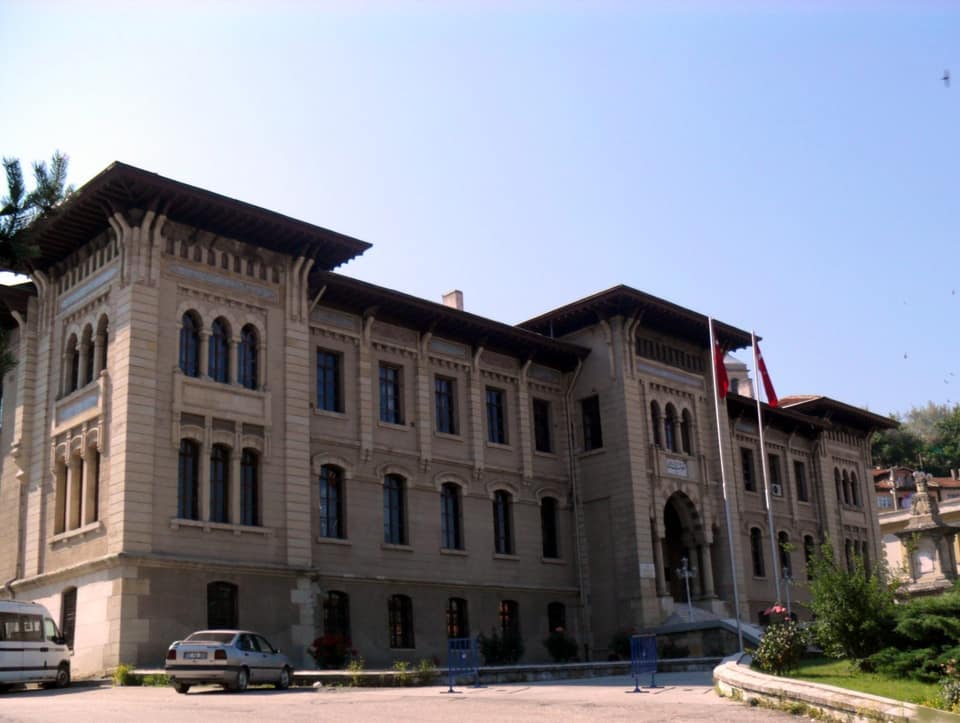
Kastamonu Government House is the stone building that occupies one side of Cumhuriyet Meydanı and has the most imposing facade in the city. The building sits at the foot of Sarayüstü Tepesi, with the Clock Tower rising behind it. Because the building is still used as the governor's office today, the visitor meets it from outside, from the square; what there is to see is the facade itself.
The link between this site and government is very old. The history pages of Kastamonu Municipality and the Governorship of Kastamonu write that, as far as can be traced in written sources, this site has housed the administrative bodies of the city and the province since the 17th century. According to the court registers, in 1675 the palace buildings on this plot, where governors and deputy governors lived and worked, were recorded as being in ruins. This record shows that those buildings had been built long before 1675. According to the registers of 1735, there was a palace complex on the site, and a pavilion and a stable had been added to it. The same sources state that a wooden government house was built in 1830 and stood until the present building came into use.
Official sources give different details about the date and builder of the present building. The municipality and the governorship write that, because the old house had worn out badly, it was decided in 1900 to demolish it and build a new one. According to these two sources, the new building was built by Architect Vedat (Tek), chief architect of Istanbul and one of the founders of the National Architecture movement, and was opened with celebrations by Governor Enis Paşa in 1901. The inventory record on Kültür Portalı, on the other hand, records that the building was commissioned by Governor Enis Paşa in 1898. The municipality's page on Cumhuriyet Meydanı writes that the opening was timed to coincide with the 26th anniversary of Abdülhamid II's accession and took place with a large ceremony in 1902. The governorship's list shows that Mehmet Enis Paşa was governor of Kastamonu between 1897 and 1906. It is therefore most accurate to read the building as a structure that rose between the last years of the 19th century and the beginning of the 20th century, during Enis Paşa's term as governor.
Architecturally, the building is one of the most interesting examples of its period. The municipality and the governorship describe it as a three storey, rectangular masonry building. In the middle of the long facade there is a pointed arch carried by two columns, and the entrance is reached through this arch by climbing a grand staircase up one floor. According to the same sources, the plan and overall mass of the building follow Western Classicism, while the wide wooden eaves, the painted ornaments on the facade and the window shapes are examples of Ottoman eclecticism. The inventory record on Kültür Portalı notes that the front and rear facades are symmetrical and that the right and left corners and the section with the main entrance project outward. According to the same record, arched windows stand out on the first and second floors, and rectangular windows on the top floor.
The building is a registered cultural property. The inventory record on Kültür Portalı shows that the structure is protected by decision number 1223 of the Ankara Regional Board for the Conservation of Cultural and Natural Heritage, dated 14 May 1990. Architect Vedat Tek's connection with the city is not limited to this building. The municipality writes that the square itself was also laid out by Vedat Tek during the term of Governor Mehmet Enis Paşa. According to the municipality, the Mimar Vedat Tek Culture and Art Centre in the city also took this name to keep alive the name of the architect of the governor's building.
To see the facade best, look from the opposite side of the square, from a point where you can see the whole building and the two-columned entrance arch at the same time. The painted decoration under the eaves and the window shapes that change from floor to floor read better as you come closer. The municipality notes that there are other historic public buildings around the square, such as the Rıfat Ilgaz Culture Centre and the military recruitment office buildings. The square also holds the Şehit Şerife Bacı Monument, which symbolises the women who carried ammunition between İnebolu and Kastamonu during the War of Independence; according to the municipality, the monument was made by the sculptor Tankut Öktem between 1985 and 1990.
Because the interior is used by a public institution, it should not be thought of as a space open to visitors; watching the building from outside, from the square, is enough. As the square is in the city centre, it can be reached on foot from anywhere, and the Archaeological Museum is a few minutes' walk away. From here you can climb the stairs behind the building to the Clock Tower to see the city from above, and then continue to Kastamonu Castle.
Comments
Loading...
Location - Kastamonu Hükümet Konağı
Venue Info
AddressCebrail Mahallesi, Cumhuriyet Meydanı, Kastamonu Merkez
VenueKastamonu Merkez, Kastamonu
TypeHistorical & Cultural Sites