

Religious & Spiritual PlacesReligious Complexes
Kasım Paşa Külliyesi (Bozüyük)
No ratings yet
Sign in to like and rate
Kasim Pasha Complex (Bozüyük)
About Venue
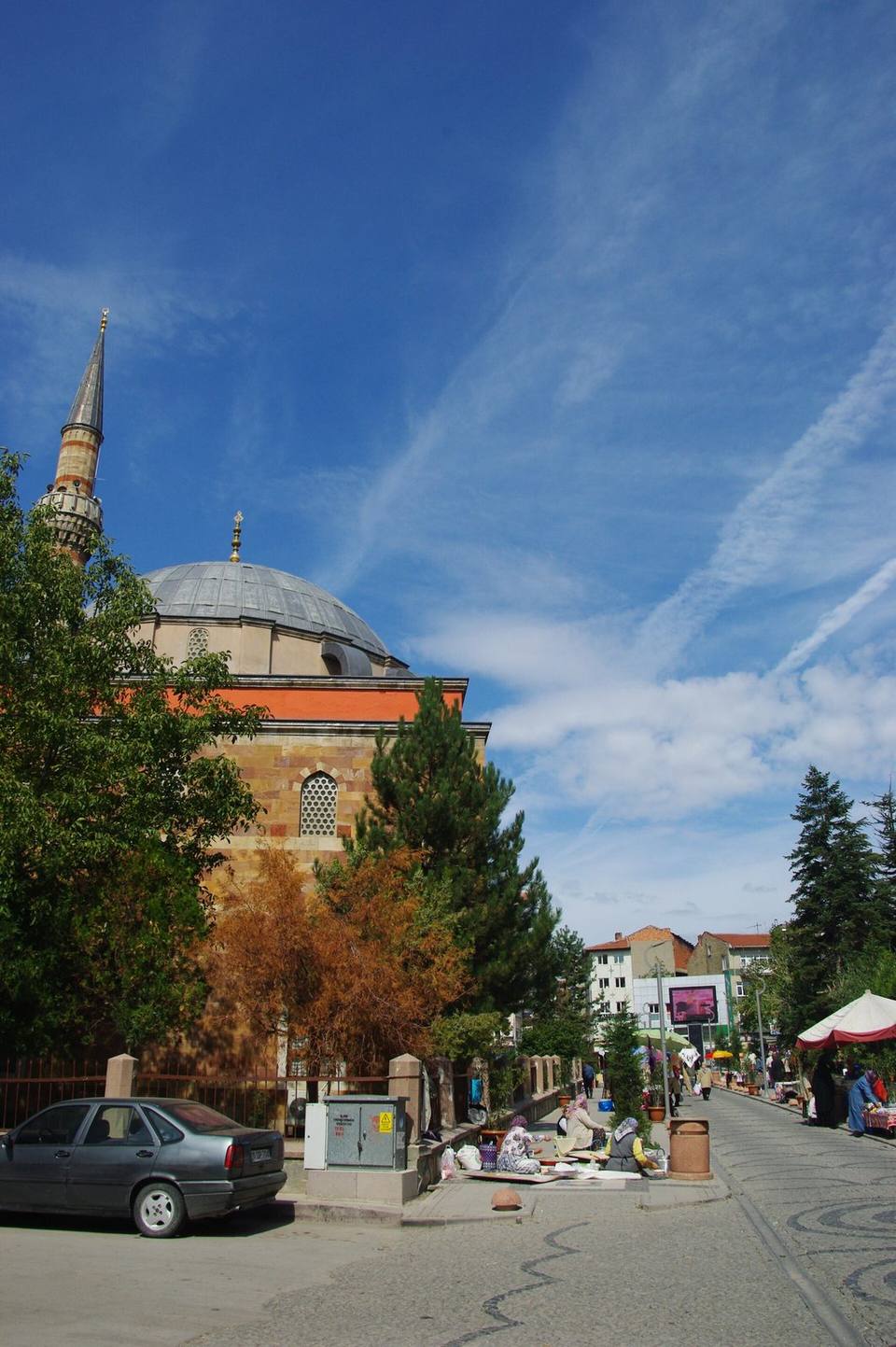
The Kasım Pasha Complex is a group of buildings from the first half of the 16th century on Hükümet Avenue in the Kasımpaşa quarter of Bozüyük town centre. It was commissioned in 1525-1528 by Güzelce Kasım Pasha, who rose from the governorship of Hama to the rank of third vizier, on his return from the Baghdad campaign. The inscription over the mosque door dates the building to 935, that is, 1528. The complex originally consisted of a mosque, a public kitchen, a madrasa, a primary school, a caravanserai and a bathhouse. Of these, the mosque, the public kitchen and a domed space with two domes belonging to the caravanserai have survived. The architect of the complex is not known for certain; the provincial directorate of culture and tourism attributes the mosque to Mimar Sinan, while the TDV Encyclopedia of Islam states that the architect is unknown. The buildings were repaired in 1895, 1940 and 1977.
The square, single domed mosque rises in a mixed masonry of red and white cut stone. The dome covering the prayer hall has a diameter of 13.80 metres, and eight round arched windows open in its drum. The portico on the north side has three domes and pointed arches of red and white stone carried by four columns with muqarnas capitals.
In contrast to the plain exterior, the interior has a rich decorative programme. The conical top, side panels and door hood of the marble minbar are covered with tiles in the cuerda seca technique, and tiles in the same technique also appear in the lunettes of the lower windows. The most studied element of the building is the set of four carved columns carrying the preaching platform in the corner of the qibla wall. These columns are not contemporary with the mosque; they were brought from Hama, which Güzelce Kasım Pasha governed between 1516 and 1520. The inscriptions on the column capitals bear the name of one of the Ayyubid sultans of Hama, and the capitals are carved with rumi scrolls, palmettes, birds and animal figures.
The public kitchen east of the mosque consists of four barrel vaulted spaces and is enlivened by red and white stonework in its door arches. The double bathhouse dated 1525 fell into ruin during the War of Independence and was later completely demolished; its tile inscription is today in the Museum of Turkish Construction and Art Works in Istanbul.
A good order for a visit is to start in the courtyard, look first at the stone arches of the portico, then inside at the minbar tiles and the preaching platform with the Hama columns. As the mosque is open for worship, visitors should stay quiet during prayer times, take off their shoes and wear clothing that covers the shoulders and knees. The complex is about 200 metres from the historic Bozüyük Railway Station, and can easily be reached on foot from the station area.
Comments
Loading...
Location - Kasım Paşa Külliyesi (Bozüyük)
Venue Info
AddressKasımpaşa Mahallesi, Hükümet Caddesi, Bozüyük
VenueBozüyük, Bilecik
TypeReligious & Spiritual Places