

Historical & Cultural SitesMuseums
Kaman-Kalehöyük Arkeoloji Müzesi
8
No ratings yet
Sign in to like and rate
Kaman-Kalehöyük Archaeological Museum
Fatih Mah. Fatih Caddesi, No:69-83-10 Çağırkan Köyü, Kaman / Kırşehir
Kaman, Kırşehir
Get DirectionsApple MapsAbout Venue
The Kaman-Kalehöyük Archaeological Museum is an archaeology museum of the Ministry of Culture and Tourism in the village of Çağırkan, in the Kaman district of Kırşehir. The Ministry's museum page introduces it as a museum built through cultural and economic cooperation between the Turkish and Japanese governments. The museum is not a stand-alone building but part of a complex. Right next to it are the Japanese Garden and the Japanese Institute of Anatolian Archaeology, and about two kilometres to the north lies the Kalehöyük excavation site. The Ministry stresses that these four parts together form a single whole.
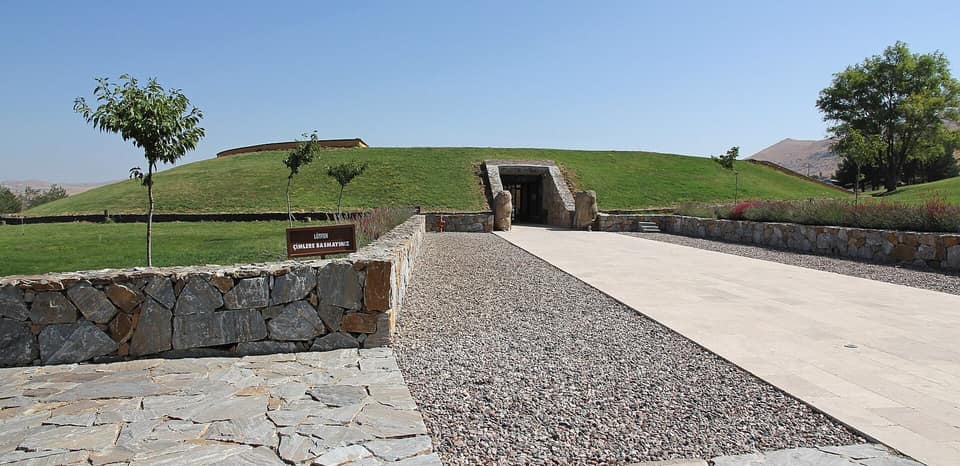
The most striking feature of the building is its shape. It was built in the form of a mound, modelled on the rounded silhouette of Kalehöyük just to the north, and its roof is covered with grass. The Ministry describes this architecture and its green fabric as the only example of its kind in the country and in the world. As you approach, you first see a green hill, and the entrance is a stone-framed doorway opening into the slope of that hill. Because of its green spaces and environmental sensitivity, the museum received the Best Green Museum award in the United States in 2011. The records of the Japanese institute state that the museum was built with the support of the Japanese Ministry of Foreign Affairs and that 51 finds from the dig were handed over to the newly opened museum at the end of the 2010 summer excavation season.
The exhibition mainly presents the finds of three excavations directed by the Japanese Institute of Anatolian Archaeology. These are Kalehöyük in Kaman, Yassıhöyük, also in Kırşehir, and Büklükale within the borders of Kırıkkale. These excavations have yielded a large number of artefacts from the communities that lived in the region between the Chalcolithic Age and the Ottoman period. At Kalehöyük, the pieces judged suitable for display are handed over to the museum at the end of each excavation season, and the institute's season reports record these handovers one by one. The display cases are therefore a collection that grows over time together with the excavation.
The museum's layout differs from that of conventional museums. The hall follows a reverse chronology system, with the artefacts arranged from the most recent period to the oldest. This order mirrors the experience of an archaeologist digging a mound, because an excavation also proceeds from the youngest layer at the top to the older layers below. The Ministry notes that the display was planned so that visitors can see excavation methods and the artefacts recovered in the dig at the same time. As you walk through the hall, look at the stratum panels beside the cases, where you can follow which layer each section belongs to. Settlement models stand among the cases as well and make it easier to grasp the plan of the excavation site.
Technological tools are also used in the displays and in museum education. Alongside its regular work, the museum gives importance to education, especially for children. Besides students, museum education sessions and drama activities are organised for different groups such as housewives and disadvantaged groups. Every summer a summer school called Arke-okul is held. The children who take part learn ancient crafts such as pottery making, coin striking, mosaic making and cuneiform writing by trying them out themselves. If you are coming with children, it is a good idea to ask the museum in advance about the dates of the summer school and how to take part.
The Traditional Japanese Garden right next to the museum is also known as the Mikasanomiya Memorial Garden. The Ministry writes that it is the largest Japanese garden outside Japan and that it was opened in 1993 with the participation of the Japanese Prince Takahito Mikasa. The garden was built by the Japan Middle East Cultural Centre to commemorate the start of the Kalehöyük excavations and to give the people of the region a place for recreation. It contains an artificial waterfall, two ponds with colourful carp brought from Japan, a Japanese lantern and artificial hillocks. Trees such as Japanese cherry, Japanese weeping willow, Japanese apple, Japanese plum and Japanese quince grow side by side with native species. Coming upon such a garden in the middle of the steppe gives you one of the calmest moments of the whole complex.
When planning a visit, the easiest approach is to fit the museum and the garden into the same half day, since the two stand side by side on the same grounds. A sensible order is to see the layers in sequence inside the museum first, then rest in the garden, and afterwards look at the mound to the north. The Japanese institute is a research body used as a working building, and no official visiting programme is published for it. Opening days, hours and entry conditions can change, so check the current information on the Ministry's museum page or by calling the museum.
The museum is in the village of Çağırkan, about three kilometres east of the Kaman district centre. According to the institute, the excavation site lies about one hundred kilometres southeast of Ankara, beside the old Ankara-Kayseri highway. The complex is most easily reached by car, and those travelling by public transport should get to the Kaman district centre and ask about local transport options from there.
Comments
Loading...
Location - Kaman-Kalehöyük Arkeoloji Müzesi
Venue Info
AddressFatih Mah. Fatih Caddesi, No:69-83-10 Çağırkan Köyü, Kaman / Kırşehir
VenueKaman, Kırşehir
TypeHistorical & Cultural Sites