

Religious & Spiritual PlacesMosques
İvaz Paşa Camii
5
No ratings yet
Sign in to like and rate
Ivaz Pasha Mosque
About Venue
İvaz Pasha Mosque stands in the centre of Manisa, about 700 metres west of the Muradiye Mosque, and dates from the end of the 15th century. Among local people and in the account of Evliya Çelebi it is also known as the Çaybaşı Mosque. According to its highly intricate Arabic inscription, the building was commissioned by İvaz bin Abdülmuin in October 1484. His father's name shows that İvaz Pasha came from the devshirme levy, but nothing more is known about his life. After the War of Independence the mosque was occupied by soldiers for a time and fell into ruin through neglect, and it was repaired and brought back into use in the 1950s.
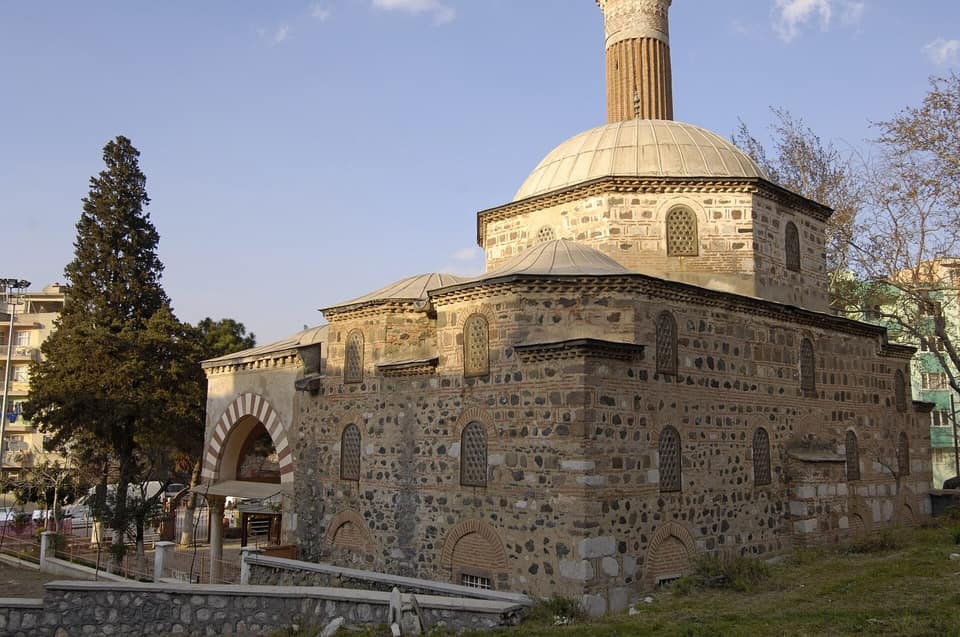
In plan it is a small version of the Üç Şerefeli Mosque in Edirne, a type that is repeated in Manisa in the Çeşnigir, Hatuniye and Sultan mosques. On the outside the building is a regular rectangle of about 18.5 by 12.7 metres, built of stone cut in different sizes and shapes together with brick. Bricks set upright between the stones and two rows of sawtooth brick courses along the eaves of the walls and the dome drum give the facades a lively appearance. The centre of the prayer hall is covered by a dome 8.20 metres in diameter, and each face of the high octagonal drum has a window. The small domed spaces on either side of the dome are separated by reused columns; the one on the right, with its fluted shaft, was brought from a building of antiquity. One of the capitals of these columns is a Byzantine capital with raised bosses, while the other is an ancient capital in the Corinthian style. The pointed arches of the four-bay portico also rest on marble columns with reused capitals. Carved Byzantine marble was used in the window frames, and the relieving arches are framed with brick chain and star motifs.
The most valuable piece in the mosque is the wooden minbar made in the kündekari technique; because it closely resembles the minbar of the Hatuniye Mosque, it is thought to be the work of the same master. Unusually, the minaret stands inside the mass of the mosque on the left and rises with a ribbed shaft from an octagonal stone base. The ribs decorating the shaft are regarded as among the last examples of a minaret tradition that goes back to Central Asia. It is a good example for anyone who wants to see how ancient and Byzantine pieces were incorporated into an Ottoman building. As it lies 600-700 metres from the Sultan and Muradiye mosques, it can be visited on the same day as the complexes in the city centre. As it is a mosque open for worship, visits should be made outside prayer times and in modest dress.
Comments
Loading...
Location - İvaz Paşa Camii
Venue Info
VenueŞehzadeler, Manisa
TypeReligious & Spiritual Places