

Historical & Cultural SitesCastles & Palaces
İskilip Kalesi
11
No ratings yet
Sign in to like and rate
Iskilip Castle
About Venue
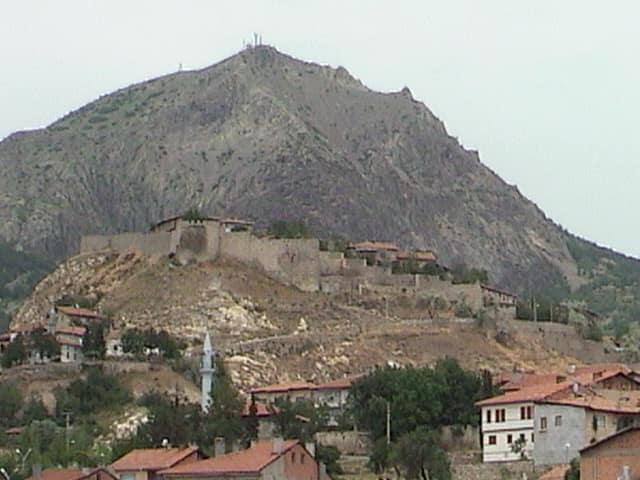
İskilip Castle was built on the top of a steep rock that rises just above the district centre, and it is the first structure you see from whichever direction you approach İskilip. According to the Çorum Provincial Directorate of Culture and Tourism, the castle was built on a natural rock one hundred metres high. Below the castle lie quarters where old houses climb the slope, and behind it stands the tall silhouette of Yivlik Hill.
The town's castle
İskilip is a district surrounded by high mountains, in the transition zone where Central Anatolia meets the Black Sea Region. The provincial directorate reports that researchers describe İskilip as a "Museum Town". According to the same source, in the second century BC the area was part of a region known as Paphlagonia and tied to Rome. İskilip remained under Byzantine rule for a long time and was conquered by Danishmend Ahmed Gazi in 1073-1075. The castle is the most easily visible witness of this long history today.
The official texts do not agree on its period. The Culture Portal and the provincial directorate's page on İskilip date the castle to the Ottoman Period. On the other hand, the provincial directorate's page on towers and castles also contains a paragraph under the same heading that links the castle to the Seljuk Period. Since the sources do not mention an inscription giving the exact date of construction, the castle's period should be treated with caution. Evliya Çelebi, who stopped in İskilip in the middle of the seventeenth century, wrote that the castle was grand and well built, as the provincial directorate reports.
The structure of the castle
According to the Culture Portal, three sides of the castle are steep rock. The sources also differ on the direction of the entrance. While the Culture Portal writes that the only way out is from the northwest, the provincial directorate's page on İskilip states that the castle is entered through the gate on the south side. The castle walls follow the shape of the rock, and from a distance the natural rock and the built wall seem to merge into one another.
Roman rock tombs
At the foot of the rock on which the castle stands there are rock tombs from the Roman period. According to the provincial directorate, the tombs are at the southern and southeastern foot of the castle. The rock tomb on the southeast has a rectangular entrance with two columns. On the column capitals, a lion sits on each of the rings. In the triangular pediment above the capitals, two winged lion figures are carved lying opposite each other. One of the reliefs is seen holding a sword. Inside the tomb chamber there are two burial benches. Looking at these tombs before climbing up to the castle shows that the rock was used long before the castle was built.
Getting there and visiting
According to the Culture Portal, there are regular vehicles from the Çorum bus station to İskilip. As the castle is in the district centre, you can reach it on foot once you arrive in İskilip. As the slope is steep, you should wear comfortable, non-slip shoes and take care in rainy weather. For the current visiting conditions of the castle, it is best to get up-to-date information from the relevant institutions in İskilip. For those who want to see the castle as a whole, the best view is from the opposite slopes of the district and from the quarters below.
Surroundings
The centre of İskilip spreads at the foot of the castle with its historic mosques, old houses and fountains. According to the provincial directorate, there are about twenty historic fountains in good condition in the district, and most of them carry the water known as Hacı Ali Suyu. The district is also known for its handmade shoes, wooden kitchenware and basket weaving. After the castle, a short walk through the old streets is enough to understand why İskilip is called a museum town.
Comments
Loading...
Location - İskilip Kalesi
Venue Info
Addressİskilip ilçe merkezi, İskilip / Çorum
Venueİskilip, Çorum
TypeHistorical & Cultural Sites