

Tourist Streets & SquaresOld Town District
İnebolu Evleri ve Konakları
9
No ratings yet
Sign in to like and rate
Houses and Mansions of İnebolu
About Venue
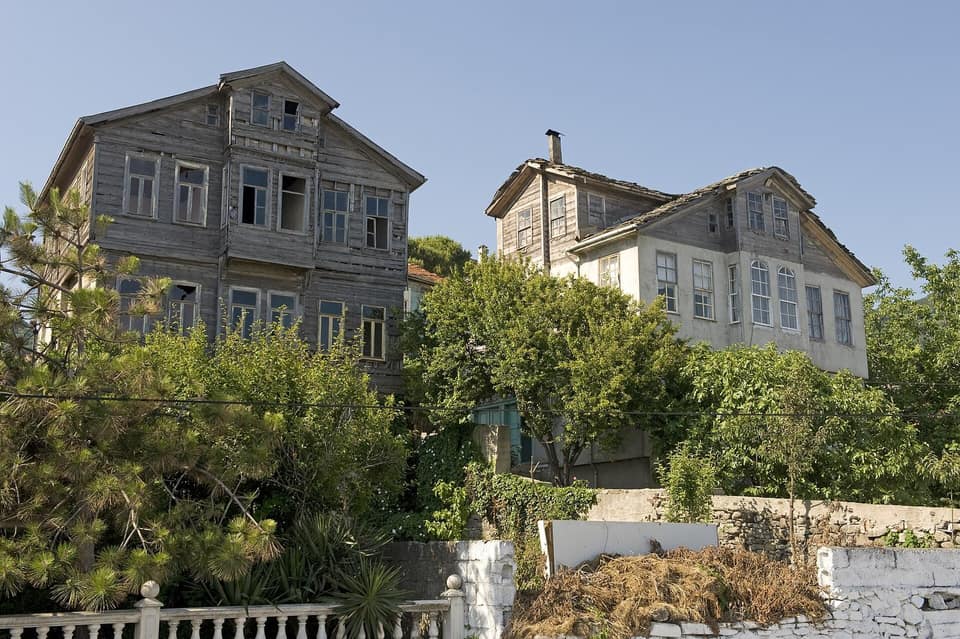
İnebolu is one of the harbour towns on the Kastamonu coast that best preserve traditional house architecture. The Culture Portal names the houses of İnebolu first among the examples that stand out for their originality within Kastamonu's variety of dwellings. You do not need to go to a particular building to see them; according to the Culture Portal, historic houses can be seen almost everywhere in the district. The town centre lies 89 kilometres north of Kastamonu, on a narrow strip of coast where the northern foothills of the Küre Mountains come down to the sea. Because the houses sit on steep slopes, the town appears to rise in layers.
The town's past goes back to ancient times. The Provincial Directorate of Culture and Tourism writes that the settlement was first called Abunoteichos, a name meaning a castle that dominates everywhere. According to the same source, the town was given the name Ionopolis in the time of the Roman emperor Marcus Aurelius, and the present name took shape in the Seljuk period. After the periods of the Candaroğulları and the İsfendiyaroğulları, the town became part of Ottoman territory. The provincial directorate records that İnebolu suffered two great fires in 1880 and 1885 and that its market quarter burned down completely. After the fires, the town's architecture was rearranged according to a plan drawn up under Abdurrahman Pasha, then governor of Kastamonu. Much of the fabric seen today bears the mark of this rebuilding.
The easiest way to recognise an İnebolu house is to look at three details. The first is the roof: according to the district governorate, roofs usually slope on four sides and are covered with wide, thin stones taken from the sea, known as marla or slate. This stone was preferred because it resists the harsh northeasterly winds and helps insulate the house. The second is colour; the outer walls of the houses are painted with aşı paint. The governorate writes that the claret colour comes from a paint made from earth dug at Aşı village and that this paint protects the timber for many years. The Culture Portal adds that blue and white were used alongside red. The third detail is the way the building relates to the slope.
Because the houses rise on steep ground, their two faces do not look alike. According to the Culture Portal, the front facades appear to have two storeys while the rear facades show the full four storeys of the mansion. The governorate explains that the houses usually have three storeys and a garden, and that the stone basement was built to protect against cold and damp. In the town centre these basements were used as shops or storerooms, and in the countryside as stables. Each floor has high ceilings and many windows, and the rooms open onto a main hall. Separate entrances to the floors allowed the house to be used like independent flats as the family grew. The gardens have plum, hazelnut, mulberry, apple and walnut trees, most houses have a water well, and there is an arbour for summer conversation.
This type of house is not unique to İnebolu. The Culture Portal states that the same architecture can be seen along the Black Sea coast in Abana, İlişi, Bozkurt and Çatalzeytin. According to the provincial directorate, the historic houses have been taken under protection within the Project to Keep İnebolu Houses Alive, run by the Ministry of Culture, the Governorship of Kastamonu and the Ankara Chamber of Architects, and many are being restored. The town's seafaring past is part of the same fabric as these houses. The provincial directorate writes that the boat known as the İnebolu boat is particular to this coast and that a complete surviving example is on display at the Naval Museum in İstanbul. The directorate's introduction also notes that during the War of Independence the İnebolu landing was one of the entry points for supplies reaching Anatolia.
The best way to explore is on foot. Starting around the landing on the shore and climbing into the narrow streets on the slope lets you see the houses from the front and the side. As most of the houses are lived in, do not enter garden gates and respect the privacy of the residents. The slopes are steep, so comfortable shoes are a good choice. For photographs, morning light brings out the colour of the facades, while late afternoon shows off the general view towards the sea. İnebolu is reached by road from Kastamonu; check current bus information with the operating companies and institutions.
Comments
Loading...
Location - İnebolu Evleri ve Konakları
Venue Info
Addressİnebolu ilçe merkezi / Kastamonu
Venueİnebolu, Kastamonu
TypeTourist Streets & Squares