

Religious & Spiritual PlacesReligious Complexes
Hüdavendigar Külliyesi
No ratings yet
Sign in to like and rate
Hüdavendigar Complex
About Venue
The Hüdavendigar Complex stands in the Çekirge district on the west side of Bursa, on a hill that looks over the Bursa Plain. Built by Murad I Hüdavendigar, the group of buildings includes a mosque, a madrasa, a soup kitchen, a fountain and a bath. It has no inscription that gives its construction date plainly; the original deed of endowment is known to have been drawn up in 1385, and a copy dated 1400 has survived. Since sources place construction between 1363 and 1366 or between 1367 and 1385, the safest statement is the second half of the 14th century.
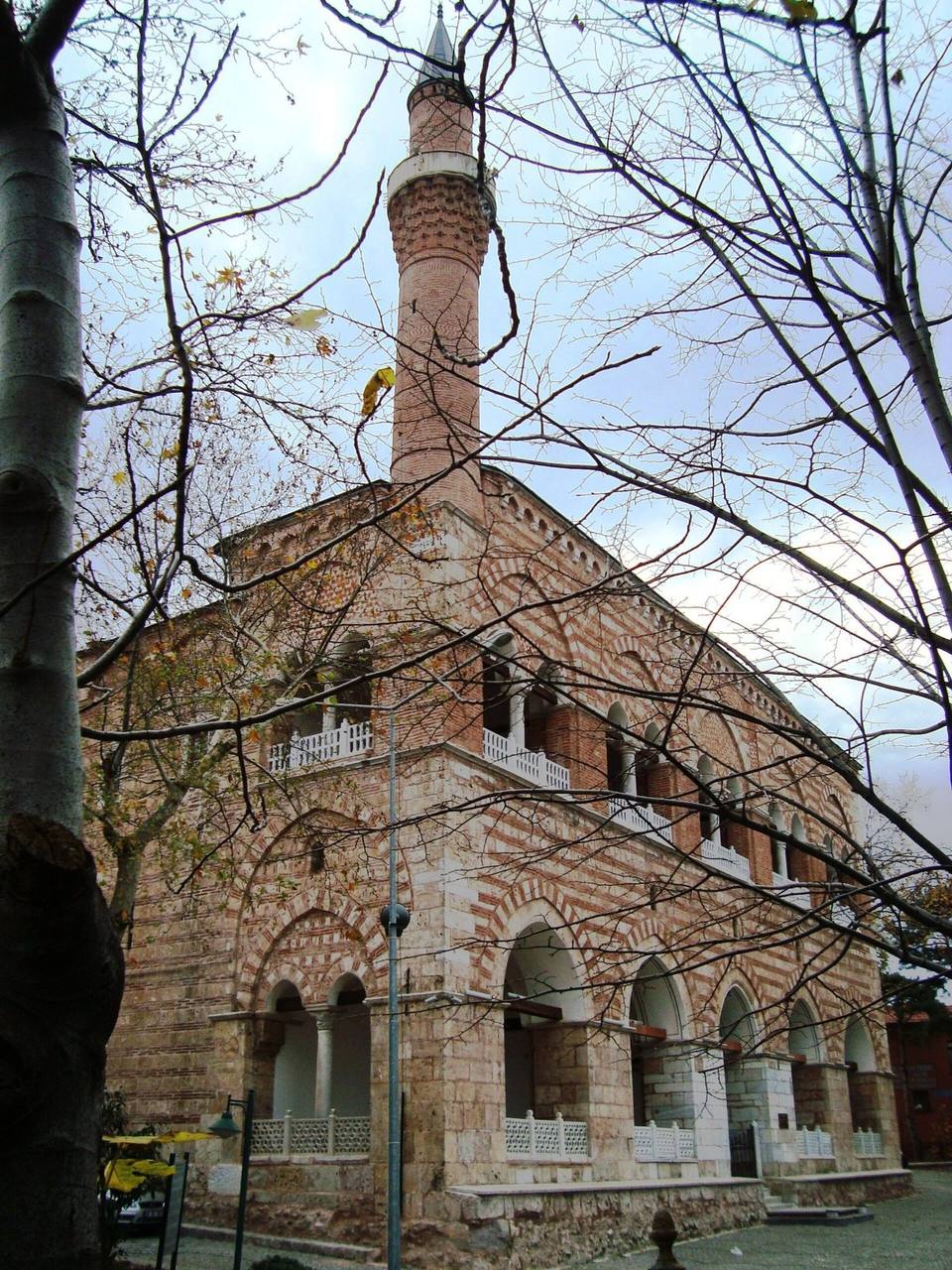
When it was built, the complex stood outside the town on a spot commanding the plain, and sources also call it the Spa Soup Kitchen because of the waters around it. Çekirge grew from the 1950s and merged with the city, so today the complex lies inside a dense settlement. The mosque, the most important part of the complex, is built on two floors in an arrangement without parallel in Turkish art: the lower floor is the mosque and the upper floor is the madrasa. The walls are laid in a mixed technique of cut stone and brick in regular courses, and in places reused material gathered from Byzantine buildings was used.
The porch, reached by a few steps from outside, has five bays, and only the central arch holds a doorway with marble jambs. The lower floor has a zaviye plan, that is, one with guest rooms, linked to the ahi organization, and travelers were lodged in the guest rooms. A skylight lantern was set on top of the covered entrance court, and a fountain basin was placed in its middle. The main hall opposite is an iwan 12.60 meters deep and 9.70 meters wide, and the mihrab sits in a five-sided projection that juts out toward the qibla.
From doors on both sides of the entrance, a pair of stone staircases cut into the thickness of the wall lead up to the madrasa on the upper floor. From the vaulted space at the top of the stairs one passes to a gallery of five openings above the porch, which offers a splendid view over the plain. The madrasa was an important teaching institution in Ottoman history; it stood at the thirty level in the early 16th century, rose to the sixty level in 1652, and thirty-seven professors taught there until the end of the 16th century.
From the 16th century on, travelers coming to Bursa noticed the building, and Evliya Çelebi also praises its unusual design. In the first half of the 19th century the French architect Charles Texier drew its plan and the views of its facade and published engravings of them. The building became better known after H. Wilde's study of 1909. More precise surveys were drawn by Sedat Çetintaş between 1935 and 1940, and Albert Gabriel and Ekrem Hakkı Ayverdi later took it up in their studies. A four-line plaque dated 30 August 1904, recording a repair made under Abdülhamid II, hangs above the main door.
The neighborhood of the complex is counted among the oldest in Bursa. Two monumental plane trees stand in front of the building. The complex lies in Hüdavendigar Mahallesi, in the area between Hamam Caddesi and I. Murad Caddesi. Çekirge is reached by minibus and bus, and the Eski Kaplıca is also found in the same district. First study the facade that faces the plain and the five-bay porch, then look out at the view from the gallery. The mosque is open for worship; enter quietly, take off your shoes and choose suitable clothing. Check the notices on site for current visiting conditions.
Comments
Loading...
Location - Hüdavendigar Külliyesi
Venue Info
AddressHüdavendigar Mahallesi, Hamam Caddesi, Osmangazi/Bursa
VenueOsmangazi, Bursa
TypeReligious & Spiritual Places