

Natural BeautiesNature Hiking Areas
Hevsel Bahçeleri
6
No ratings yet
Sign in to like and rate
Hevsel Gardens
About Venue
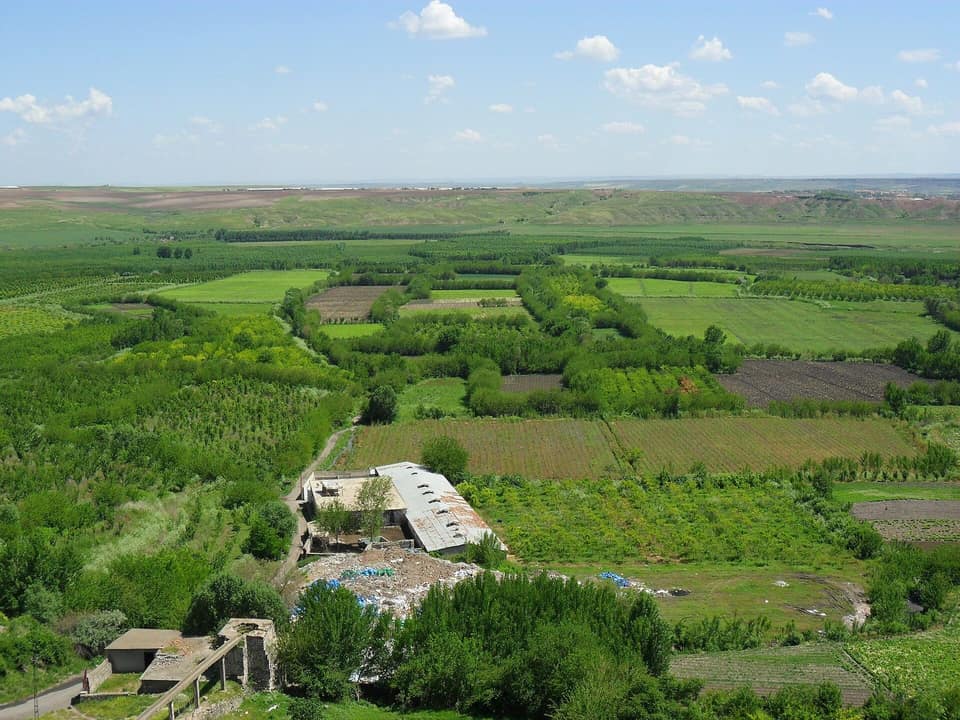
The Hevsel Gardens are the farmland stretching between the Walls of Diyarbakır and the Tigris River that has fed the city for thousands of years. The Governorship of Diyarbakır describes the gardens as a fertile oasis on the bank of the Tigris and writes that they show the ancient history of the city's farming and irrigation systems. Entering the UNESCO World Heritage List together with the walls in 2015, the area is the second main component of the Diyarbakır Fortress and Hevsel Gardens Cultural Landscape. The Culture Portal stresses that Hevsel has a distinctive value as a civic garden that has been open to public use throughout its history, in a region where garden culture is very important.
The same source states that in this region, which bears the traces of more than thirty civilisations, Hevsel has existed as a garden for about 8,000 years. According to the Culture Portal, the vital relationship between the fortress and the gardens is the most important reason why the city has lived without interruption for thousands of years. A study by Dicle University researchers published in the journal of the Faculty of Agriculture of Çanakkale Onsekiz Mart University relates that the name Hevsel first appears in an Assyrian inscription of the 9th century BC. The same study notes that the agricultural fertility of the alluvial fill left by the Tigris also played a part in the city being founded on a basalt plateau.
The history of the gardens is directly linked to the daily life of the city. According to the study, in the Ottoman period vegetables and fruit were grown at Hevsel, the plots were surrounded by mulberry groves and silk was produced. In the Republican period the mulberry groves were mostly replaced by the growing of vegetables and fruit. It is known that until the 1960s all of the city's vegetable and fruit needs were met from the Hevsel Gardens. In the account of Evliya Çelebi quoted by Boran and Aykaç, the rose gardens, vegetable plots and basil fields on both banks of the river are also described as excursion places for the townspeople.
Today, according to measurements, the gardens cover an area of about 300 hectares and continue to be used as farmland. The area lies at elevations between 591 and 625 metres, and the slope rises sharply on the banks that run down to the Tigris. The parts close to the city walls are terraced and steeper, while towards the river the land becomes flatter. The gardens consist of 28 blocks and 237 parcels, and small plots are common because land has been divided through inheritance. The area includes fields, irrigated gardens, vegetable and mulberry gardens and plots with mills.
The list of crops grown at Hevsel almost reads like a description of the city's table. The researchers list vegetables such as tomatoes, aubergines, cucumbers, courgettes, peppers, lettuce, rocket, mint, basil, beans and spinach. Among fruits, plums, walnuts, peaches, grapes, mulberries, apricots, quinces, strawberries, watermelons and melons are grown. Maize, cotton and poplar are also produced alongside them. These products are still sold in the city's local markets today and contribute to the daily food needs of the neighbourhoods close to the walled city.
The best way to see Hevsel is first to look at it from above, from the walls and from the Inner Citadel. From the eastern walls and the eastern edge of the museum complex in the Inner Citadel you can see the green patchwork of the plots, the rows of trees and the bed of the Tigris winding behind them, all at once. Because the gardens form a transition zone between the city and the river, the contrast between the black basalt of the walls and the green valley is read best from here. For photography, the first hours of the morning and the late afternoon light bring out the depth of the valley.
Those who want to go down into the gardens should remember that most of the area consists of private plots worked by farmers. Keep to clearly marked paths and do not walk into cultivated land, fields or irrigation channels. In spring and early summer the gardens are at their greenest, while at the end of summer the harvest season begins. In the hot months the valley floor also heats up a great deal, so do not forget to take water and a hat.
A visit to Hevsel can easily be combined with the view from the walls and with the Diyarbakır Archaeological Museum in the Inner Citadel. Since the gardens are thought to have existed since the founding of the city, looking out over the valley after seeing the Neolithic and Bronze Age finds in the museum strengthens this sense of continuity. For visiting conditions and any arrangements, check the latest information on the official pages of the Governorship of Diyarbakır and the Provincial Directorate of Culture and Tourism.
Comments
Loading...
Location - Hevsel Bahçeleri
Venue Info
VenueSur, Diyarbakır
TypeNatural Beauties