

Historical & Cultural SitesMuseums
Hatay Arkeoloji Müzesi
No ratings yet
Sign in to like and rate
Hatay Archaeology Museum
About Venue
Hatay Archaeology Museum is the museum that brings together, under a single roof, the finds from excavations across the province and serves under the Ministry of Culture and Tourism. According to the Ministry's museum page, the museum has welcomed visitors since 2014 in its new building, built with all the facilities of modern museum practice. Because the mosaics on display cover a total area of 3,250 square metres, the museum is known as the museum where the world's largest mosaics are exhibited. The Hatay Governorship's introduction page writes that the new building was designed by the architect Kemal Nalbant and financed by the Ministry of Culture and Tourism and the Hatay Governorship. Construction began in May 2011, and the building was placed on a plot of 53,500 square metres. According to the Governorship, the building has a footprint of 16,000 square metres and an enclosed area of about 32,750 square metres, of which 10,700 square metres are used for exhibitions. These figures tell you from the start that it is hard to give every hall the same attention in a single day, which is why planning the visit in advance matters.
The collection builds an unbroken timeline from the Palaeolithic to the Ottoman period. The Ministry page notes important works from the Neolithic, Chalcolithic, Bronze Age, Hittite, Hellenistic, Roman, Eastern Roman and Seljuk periods. Most of the works come from excavations centred on Antakya and also in İskenderun, Daphne (Harbiye), Tell Atçana, Tell Tayinat, Samandağ (Seleukeia Pieria), Erzin (Epiphaneia), Dörtyol, Altınözü, Kırıkhan and Hassa. In other words, as you walk through the museum you are really touring the whole ancient map of the province hall by hall. The architectural pieces and finds, most of them from the Roman period, show the wealth of the region in that age directly.
According to the Governorship, the exhibition opens with a reconstruction of Üçağızlı Cave in the village of Meydan in Samandağ. The Governorship stresses that the traces of human life in Hatay begin in this cave, so do not hurry through the first hall. Next comes the section on the mound cultures settled from the Neolithic to the end of the Iron Age. Structures inspired by the architecture of the Tell Kurdu, Tell Tayinat and Tell Açana mounds in the Amik Plain have been built inside the museum, and the finds from these buildings are displayed within their own spaces. The showcases hold finds from Tell Cüdeyde, Çatalhöyük and Tabal el Akrad, along with small objects from the Al Mina and Sabuniye excavations in Samandağ. At the end of the hall the architecture of Kinet Höyük in Dörtyol is shown together with its own finds.
The following section continues with the arrival of Alexander the Great in the region and the works of the states later founded by his commanders. Here you find small objects from the Sasanian, Hellenistic and Seleucid periods. The Governorship notes that this section displays statues and coins depicting Tyche, regarded from the Hellenistic period onward as the goddess of fortune of Antiocheia, with symbols specific to the city. The mythology section holds statues of the gods, goddesses and heroes of the Hellenistic and Roman periods. The Ministry page also notes separately that the museum owns a large collection of coins struck at the Antioch mint.
The museum's real fame comes from its mosaic halls. The Governorship writes that mosaics from the 2nd to the 5th centuries AD are shown here together with reconstructions of their architectural settings, so you see many of the mosaics at the scale of the room they once paved. According to the Ministry page, this collection came to light through Princeton University's research between 1932 and 1939, and part of it was dispersed to about twenty museums and private collections around the world. Among the mosaics the Ministry highlights are the Abandoned Ariadne, Yakto, Satyr and Hermaphroditos, Seasons, Birth of Venus, Artemis and Skeleton mosaics. Leaning close to see the colour transitions in the stones is just as rewarding as reading the whole composition from a distance.
Beyond the mosaics, the Ministry lists works that should not be missed: the Statue of Suppiluliuma, the Arsuz Stelae, the Assyrian Orthostat, the Statue of Tyche, the Antioch Sarcophagus and the Column Base with Twin Lions. According to the Governorship, the Sarcophagi Hall, whose display was completed in April 2018, brings together sarcophagi, urns, ostothecae and grave stelae connected with the burial customs of antiquity. This hall ends with the famous Antioch Sarcophagus, and the exhibition closes with the Medieval and Islamic Works Section.
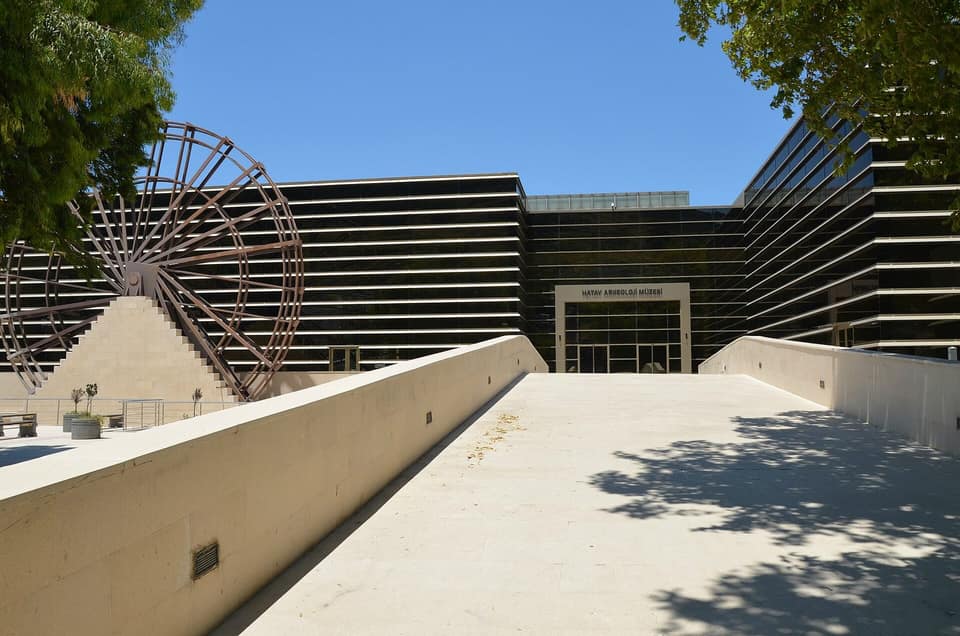
The museum stands in its new building at the northeastern entrance of Antakya, close to the Reyhanlı road. A wide ramp leads up to the entrance, and a large water wheel stands out on the left of the ramp; set aside a few minutes before going in to photograph this symbol of the Asi riverbank. The length of the visit depends on your interest, but allowing at least an hour for the mosaic halls is a good start. Wear comfortable shoes, because the exhibition area is large and the halls are linked in one long sequence. Check the visiting conditions on the official page before you go. After the museum, as the Ministry also suggests, you can add the Titus Tunnel and Beşikli Cave in Samandağ and the Necmi Asfuroğlu Archaeology Museum in the city centre to the same plan.
Comments
Loading...
Location - Hatay Arkeoloji Müzesi
Venue Info
AddressMaşuklu Mahallesi, Atatürk Caddesi, Antakya / Hatay
VenueAntakya, Hatay
TypeHistorical & Cultural Sites