

Tourist Streets & SquaresOld Town District
Harput
14
No ratings yet
Sign in to like and rate
About Venue
Harput is the historic settlement on a steep plateau north of present-day Elazığ, overlooking the Uluova plain, and it is the city's true core. The TDV Encyclopedia of Islam places Harput at 1280 metres above sea level and about 9 kilometres north of Elazığ. The Governorship of Elazığ traces the settlement's past back to the Hurrians and writes that Harput has a history of at least four thousand years. The Governorship explains that the first syllable of the name means rock and the last means castle, so that in today's language it means Stone Castle. TDV notes instead that there are different views on the origin of the name, and that it appears as Kharpote in Byzantine sources and mostly as Harpurt in Ottoman documents.
The settlement grew at the foot of the castle and in time became a city that was again surrounded by walls. According to the Governorship, after Çubuk Bey took it in 1085, Harput ceased to be only a fortified castle and became a growing city. In the Artukid period rulers such as Belek Gazi and Fahreddin Karaaslan reigned here, and the Ulu Cami was built in this period. TDV writes that in the Ottoman period Harput lay on the trade route running from Basra and Baghdad to Diyarbekir and on to Malatya and Sivas. The same source explains that the city was the industrial centre of its surroundings, where weaving, leatherworking, ironworking and copperworking were highly developed. Evliya Çelebi recorded more than six hundred shops in Harput in the middle of the 17th century. According to Şemseddin Sami, at the end of the 19th century the city had 2670 houses, 843 shops, ten madrasas, eight libraries, twelve inns and ninety baths.
The decline of Harput began when the seat of government moved down to the plain. The Governorship writes that in 1834, under Reşit Mehmet Paşa, a new city began to be built at a place on the plain known as the mezra. In the same year a hospital, barracks and an ammunition depot were built there, and the provincial seat was moved from Harput. The reasons listed by the Governorship include Harput no longer being a frontier city, lying off the main roads and becoming hard to reach in winter. In 1867 the new city was named Mamuret-ül Aziz, a name people shortened to Elaziz, which later became Elazığ. TDV records that Harput was brought within the municipal boundaries of Elazığ in 1981. On the world heritage pages of the Ministry of Culture and Tourism, the Historic City of Harput is presented with a file dated 2018.
Walking around Harput today is like reading architectural history in the open air. According to the city guide of Elazığ Municipality, the Ulu Cami was built by Fahreddin Karaaslan in 1156 and 1157, and its brick minaret is the neighbourhood's best known silhouette. Only the minaret of Ağa Camii, on the left of the main road at the entrance, still stands in its original form. The municipality writes that, according to its inscription kept in the Harput museum, the mosque was built by Pervane Ağa in 1559. Kurşunlu Cami, Sarahatun Camii and Alacalı Cami with its black and white stone minaret are also part of the fabric of the neighbourhood. The municipal guide presents the Cimşit Bey Bath next to Sarahatun Camii as a classical Ottoman building. GoTürkiye writes that the Üç Lüleli Fountain near Ağa Camii at the entrance to Harput was built in 1906. Balak Gazi Park at the entrance of the neighbourhood holds an equestrian statue of Belek Gazi and a glass viewing terrace that looks down on Harput.
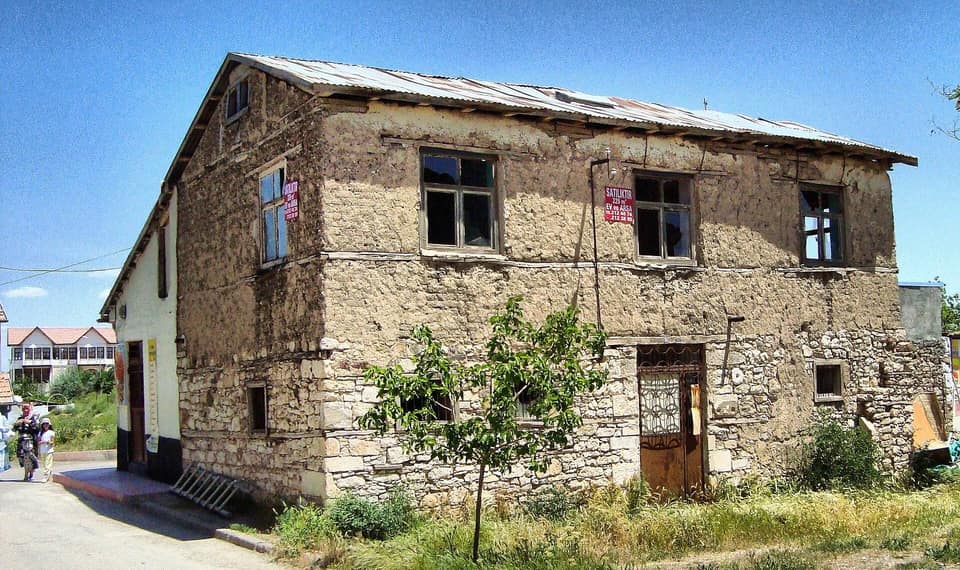
The Elazığ Provincial Directorate of Culture and Tourism writes that the most striking features of local houses are their breadth and spaciousness. The houses have wide bay windows and projections, inner and outer courtyards and double-leaf doors under stone arches. The ground floors served as stores and pantries, while the upper floors held the family quarters and the reception rooms. The Directorate also notes that most of the old mansions and houses disappeared after the city centre moved down to the plain. The easiest order is to start at the entrance on the western side of the neighbourhood and walk east towards the castle. The stone-paved lanes are steep in places, so choose comfortable shoes. You can go up to Harput from the city centre by car or by city bus, and you should check current routes with Elazığ Municipality. Summer evenings are the best time to come, for the coolness of the plateau and the view over the plain.
Comments
Loading...
Location - Harput
Venue Info
AddressHarput Mahallesi, Elazığ Merkez/Elazığ
VenueElazığ Merkez, Elazığ
TypeTourist Streets & Squares