

Historical & Cultural SitesCastles & Palaces
Güvercinada ve Kalesi
24
No ratings yet
Sign in to like and rate
Pigeon Island and its Fortress
About Venue
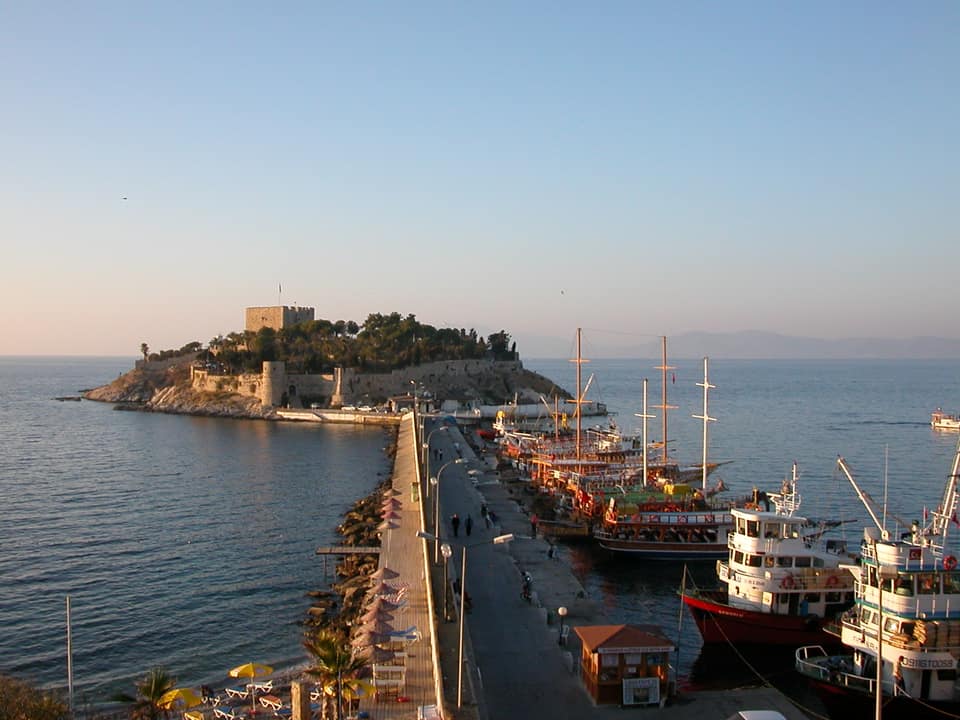
Güvercinada is a small island at the mouth of the Gulf of Kuşadası, lying just off the town centre. Turkish Wikipedia writes that the island takes its name from the pigeons that came there for shelter. The island belongs to the Hacıfeyzullah neighbourhood, and the castle on it is regarded as the symbol of Kuşadası. According to Turkish Wikipedia, the causeway between the island and the mainland was built in 1957. Thanks to it, the island can be reached on foot today.
The island is very small. Turkish Wikipedia gives its east-west length as 245 metres, its area as about 0.02 square kilometres and its highest point as 8 metres above sea level. The island has the shape of a natural cone rising from the sea with steep cliffs on three sides. The Kültür Envanteri also notes that the castle was built on a natural rock outcrop.
The sources disagree about when the castle was built. The Kültür Envanteri dates the castle to the 13th and 14th centuries and writes that it was repaired in the Ottoman period. Turkish Wikipedia attributes the first building to the Genoese who came to Kuşadası at the end of the 13th or the start of the 14th century. The Kültür Portalı, on the other hand, writes that the inner castle on the island was built by Barbaros Hayrettin Paşa and the walls surrounding the island by İlyas Ağa. It is wisest to read these accounts together: there was an older fortification on the island, and the structure was renewed and enlarged in the Ottoman period.
The Aydın book of the South Aegean Development Agency explains that in the Ottoman period the building served as a forward outpost against attacks coming from the other islands. According to the book, because the castle was used to defend the town against pirates, it is also known locally as the "Pirate Castle". The Kültür Portalı states that the walls were built during the Morea revolt to prevent attacks from the islands and the sea. English Wikipedia identifies this revolt as the Orlov Revolt of 1770.
The walls surround the island completely and are about 3 metres high. The Kültür Portalı writes that the stones used in the building were brought from Yılancıburnu. The Kültür Envanteri notes that the line of walls is a single one and that the castle has four towers. Walking along the wall, you can look out through the crenellations over the sea, the harbour and the town's shoreline.
The castle gate lies in the south of the walls. Reached by steps facing east, the gate has a round arch and is guarded by two towers. The northern tower is pentagonal and the southern one cylindrical. The empty recess above the gate shows that an inscription once stood there. The building inscription of the walls is on the wall of the northern tower; English Wikipedia writes that this four-line inscription dates to the year 1826.
The nature of the island is also protected. Turkish Wikipedia writes that tülüşah, one of the endemic plants of Kuşadası, is protected in a special area on the island. This plant, striking for its large canary yellow flowers, is also known locally as "Aydın gaşağı". The scientific name of the plant comes from the ancient name of Samsun Dağı, where the Dilek Peninsula also lies.
The castle was added to the UNESCO World Heritage Tentative List in 2020. According to a Duvar English report, the application is part of a file that brings together trading posts and fortifications on the Genoese trade route stretching from the Mediterranean to the Black Sea. The Kuşadası page of the Türkiye Tourism Promotion and Development Agency notes that Evliya Çelebi described the island as a talismanic islet that birds always visit.
The island is within easy walking distance of the centre of Kuşadası; the official promotion page gives the walk as about ten minutes. English Wikipedia notes that the historic town walls of the Kuşadası bazaar are also near the island. The sea stretches out on both sides of the causeway, and it makes a lovely walk, especially at sunset with the light over the gulf. The steps up to the castle gate and the stone ground inside are uneven, so wear comfortable shoes. Because restoration and landscaping work is carried out at the castle from time to time, check the announcements of Kuşadası Municipality before you go to see whether the interior is open.
Comments
Loading...
Location - Güvercinada ve Kalesi
Venue Info
AddressHacıfeyzullah Mahallesi, Güvercinada, Kuşadası / Aydın
VenueKuşadası, Aydın
TypeHistorical & Cultural Sites