

Religious & Spiritual PlacesReligious Complexes
Gedik Ahmet Paşa Külliyesi (İmaret Camii)
No ratings yet
Sign in to like and rate
Gedik Ahmet Pasha Complex (Imaret Mosque)
About Venue
The Gedik Ahmet Paşa Complex is a 15th-century group of Ottoman buildings set in a wide courtyard on Kurtuluş Avenue in the centre of Afyonkarahisar. It was commissioned by Vizier Gedik Ahmet Paşa, one of the statesmen of the reigns of Mehmed the Conqueror and Bayezid II. The TDV Encyclopaedia of Islam writes that the exact date of construction is not known and that the complex was built around 1470, while the pasha was governor-general of Anatolia; the municipality and the Provincial Directorate of Culture and Tourism give the year 1472 and the name of the architect Ayaz Ağa. The complex consists of a mosque, a madrasa, a primary school and a bathhouse, and it is popularly known as the İmaret Mosque.
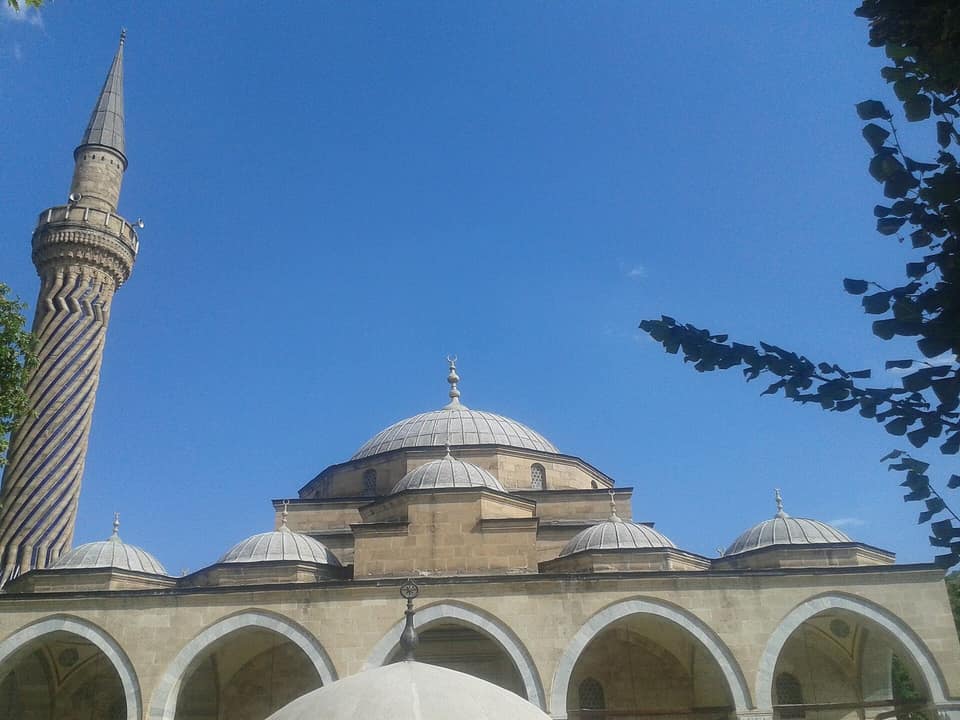
The inscription above the mosque's portal belongs to a repair carried out in 1795-1796. In 1940 the General Directorate of Foundations repaired the mosque so thoroughly that it was almost rebuilt, and it also restored the madrasa and the bathhouse; the primary school disappeared when the surroundings were cleared. Covering an area of roughly 29 by 35 metres, the mosque is considered an interesting example from the Conqueror's reign of the tabhane-type mosque that first appeared around Bursa. Two large domes stand side by side on the qibla axis, and at the entrance there is a late-comers' portico with five domes. The portal, built of alternating courses of white and grey marble, is the most striking part of the facade with its muqarnas hood.
The best-known feature of the building is its minaret with a spiral-fluted shaft; bands of dark blue tile rise in a helix between the cut-stone mouldings. The minbar is almost entirely of white marble, and some of the painted decoration in the prayer hall is among the rare examples surviving from the Conqueror's time. The door and window shutters made with the kündekari technique also date from the same period. The madrasa to the south-east of the mosque, popularly called the Taş Medrese, has an open courtyard and porticoes; its porticoes rest on reused marble columns, and the summer and winter classrooms stand on the south side of the courtyard. Today the madrasa hosts handicraft courses, cultural events and, in some sections, historical exhibitions, while the bathhouse is still in use.
From around the ablution fountain in the courtyard you can fit the domes of the mosque and its spiral minaret into a single frame. At the Kurtuluş Avenue corner of the complex there is also an arched Ottoman fountain built by Halime Kadın in 1764. The Provincial Directorate of Culture and Tourism states that the mosque can be visited at any time during the day. As the mosque is open for worship, visitors should pay attention to prayer times and choose suitable clothing. Because it is in the city centre, it can be explored on foot together with the Grand Mosque and the historic markets at the foot of the castle.
Comments
Loading...
Location - Gedik Ahmet Paşa Külliyesi (İmaret Camii)
Venue Info
AddressKurtuluş Caddesi, Afyonkarahisar
VenueAfyonkarahisar Merkez, Afyonkarahisar
TypeReligious & Spiritual Places