

Historical & Cultural SitesCastles & Palaces
Filyos (Tios) Ören Yeri ve Filyos Kalesi
No ratings yet
Sign in to like and rate
Filyos (Tios) Archaeological Site and Filyos Castle
About Venue
The ancient city of Tios lies in the town of Filyos in the Çaycuma district of Zonguldak, just east of the point where the Filyos River, known in antiquity as the Billaios, flows into the Black Sea. Strabo and the Byzantine writer Eustathios record that before Greek colonisation a Paphlagonian tribe called the Kaukones lived on these lands. The city was founded as a colony in the second half of the 7th century BC by seafarers who came from Miletos on the Ionian coast. Strabo writes that Philetairos, the founder of the Kingdom of Pergamon, was born in this city. Ruled in the 4th century BC by Herakleia Pontike, and then by Lysimachos and Queen Amastris and by the kingdoms of Bithynia and Pontus, the city minted its own bronze coins during a short period of independence. Tios came under Roman rule in 70 BC, remained under Byzantine rule in the following centuries, passed to the Genoese after 1261 and to the Ottomans at the beginning of the 15th century. In the Ottoman period the settlement turned into a small fishing village. The Ministry of Culture and Tourism presents Tios as the only Greco-Roman city on the Black Sea coast that has not been buried under a modern settlement, alluvium or sand. The fact that present-day Filyos was founded outside the ancient city has also made it easier to protect and study the remains.
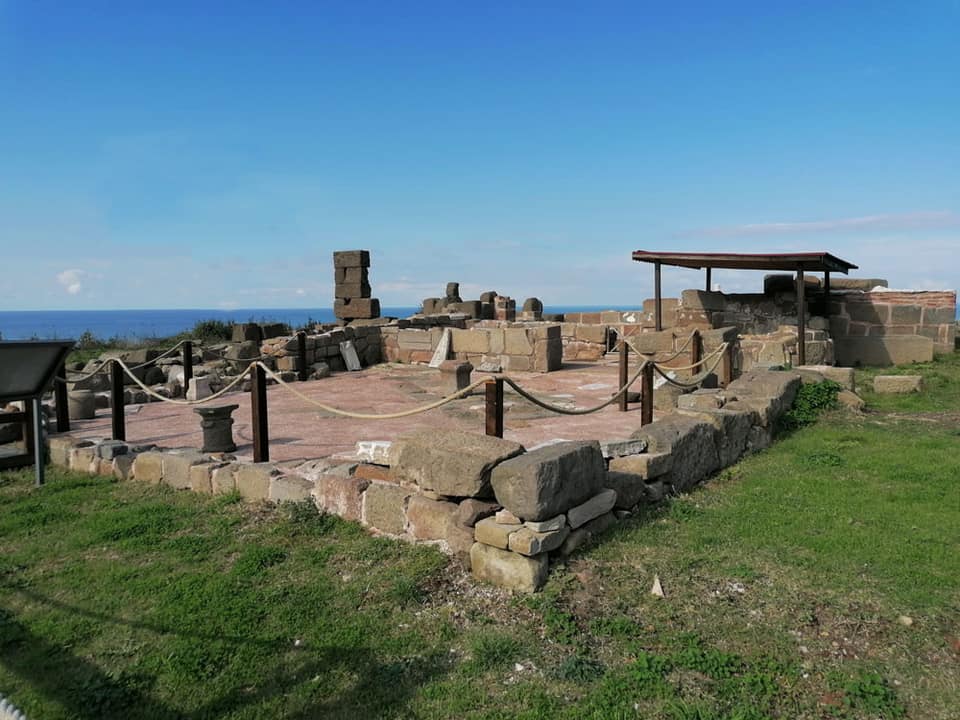
Scientific excavations at the site began in 2006 under the direction of Prof. Dr. Sümer Atasoy, and the work was later continued by the Karadeniz Ereğli Museum. The excavations uncovered building remains dated to the 6th century BC on the acropolis overlooking the sea, as well as a Roman temple of the Corinthian order. The city also has an ancient harbour with its breakwaters, a theatre dated to the Roman period, bath buildings, a structure thought to be an aqueduct, the remains of a fountain and a necropolis. City walls dated to the Hellenistic period, Roman coins and large quantities of pottery sherds show that the city was part of a wide trade network. Filyos Castle, rising on the headland north of the acropolis, was built with large stones to give the city a strong appearance from the sea. Left in ruins for a long time, the castle was restored by the Ministry of Culture and Tourism in 2003, and today it can be seen with the walls and tower remains of its medieval fortifications.
Starting the visit from the acropolis is a good choice, because from here you can see both the excavated buildings and the shore where the Filyos River meets the sea. Visitors should not enter the excavation areas marked off with rope fences, step on the remains or touch the stones. The site is under the Ministry of Culture and Tourism; since visiting days and restrictions during the excavation season may change, it is best to check the Ministry's museum page before going. Filyos can be reached from Filyos station on the Zonguldak-Karabük railway or by road along the coast. Combining the visit with the Karadeniz Ereğli Museum, which carries out the excavations, completes the story of Tios.
Comments
Loading...
Location - Filyos (Tios) Ören Yeri ve Filyos Kalesi
Venue Info
AddressFilyos beldesi, Çaycuma
VenueÇaycuma, Zonguldak
TypeHistorical & Cultural Sites