

Natural BeautiesScenic Hills
Eski Halfeti
38
No ratings yet
Sign in to like and rate
Old Halfeti
About Venue
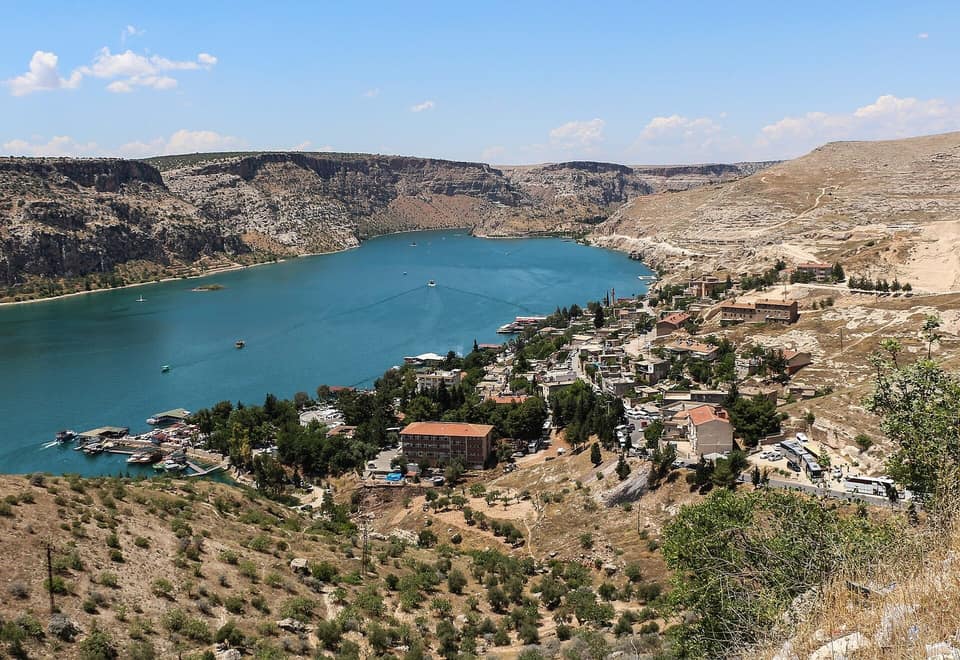
Old Halfeti is the former settlement on the banks of the Euphrates of the district of Halfeti, at the western edge of Şanlıurfa province. According to the Turkish Tourism Promotion and Development Agency, the district lies at the western end of the province on the eastern bank of the Euphrates and has a history of around three thousand years. The Ministry of Culture and Tourism states that three fifths of the town were submerged because of the Birecik Dam, completed on the Euphrates in 2000. New residential areas were built on the remaining part, and most of the population moved to New Halfeti, about 15 kilometres away. The stone houses, streets and mansions that remained at the water's edge are known today as Old Halfeti and form the most visited part of the district.
The history of the settlement has many layers. Ministry sources relate that Halfeti came under Hurri-Mitanni rule in the 2nd millennium BC and under Aramaean, Achaemenid and Seleucid rule in the 1st millennium BC. The area became one of the important towns of the Kingdom of Commagene and was attached to the Roman province of Syria in 74 BC. After the Roman period the Sasanians, Arabs, Umayyads and Abbasids ruled the area, and the Seljuks arrived in the 11th century. Halfeti and its surroundings joined Ottoman lands in the 16th century and were long known by the name of nearby Rumkale. The settlement became a separate district in 1954.
What defines Old Halfeti is its houses built of natural stone. The houses lean step by step against the slope of the canyon carved by the Euphrates, and narrow streets wind between these terraces. The Ministry's description mentions the settlement together with its stone houses, caves, streets, climate and geography. The Central Mosque, built in the 19th century, the suspension bridge known as the Halfeti necklace and the historic mansions are the best known structures of the old town. As the water rose, some houses, trees and buildings ended up partly below the surface of the lake, and this half-submerged scene can be watched from the shore. The minaret of nearby Savaşan village, rising from the water, has become the best known image of the area.
Halfeti joined the international Cittaslow network in 2013 and received the title of slow city. This title emphasises the protection of local architecture, regional produce and a slow pace of life. For visitors, the best approach is that pace itself: starting from the road along the shore, climbing the stone streets and pausing at points that look across to the opposite slope of the canyon. The view of the Euphrates winding between limestone cliffs is seen at its widest from the upper streets of the settlement. For photographs, the morning light that deepens the turquoise of the water and the evening hours that turn the cliffs golden are the most favourable times.
It is also possible to take a trip on the lake in the small boats that leave from the shore. The Ministry notes that on the route towards the villages of Çekem and Savaşan one can see submerged houses, trees, the suspension bridge and caves carved into the rocks. Rumkale, also seen on the same route, lies on the Gaziantep border. Halfeti has also been promoted for scuba diving thanks to its underwater houses and structures, and it was featured with a sunken town theme at an international water sports fair in Düsseldorf. Water sports such as water skiing, rowing and canoeing, as well as day hikes of varying difficulty, are listed among the district's possibilities.
One of the symbols of Halfeti is the black rose. The Ministry states that this rose, which adorned the gardens of Halfeti houses before the dam, grows only here in the world. The tourism agency notes that the black rose blooms in spring and autumn, and the area where the rose is grown in the district can also be visited. In the local cuisine, Halfeti kebab with aubergine and the shabbout fish of the Euphrates are the dishes that stand out. The tea gardens along the shore are good places to rest between walks while watching the lake.
Old Halfeti is reached by road from the centre of Şanlıurfa or via Birecik. Summer heat in the valley is high, so timing the trip for spring or autumn is also a good choice for catching the season when the black rose blooms. The stone streets are steep and in places stepped, so wear comfortable shoes with non-slip soles. For the current schedule of boat trips, ask the local tourism offices or the Halfeti District Governorate.
Comments
Loading...
Location - Eski Halfeti
Venue Info
AddressEski Mahallesi, Atatürk Caddesi, Halfeti, Şanlıurfa
VenueHalfeti, Şanlıurfa
TypeNatural Beauties