

Tourist Streets & SquaresOld Town District
Eski Afyon Tarihi Konaklar Bölgesi
No ratings yet
Sign in to like and rate
Old Afyon Historical Mansions District
Akmescit ve Tacı Ahmet mahalleleri, Afyonkarahisar Merkez
Afyonkarahisar Merkez, Afyonkarahisar
Get DirectionsApple MapsAbout Venue
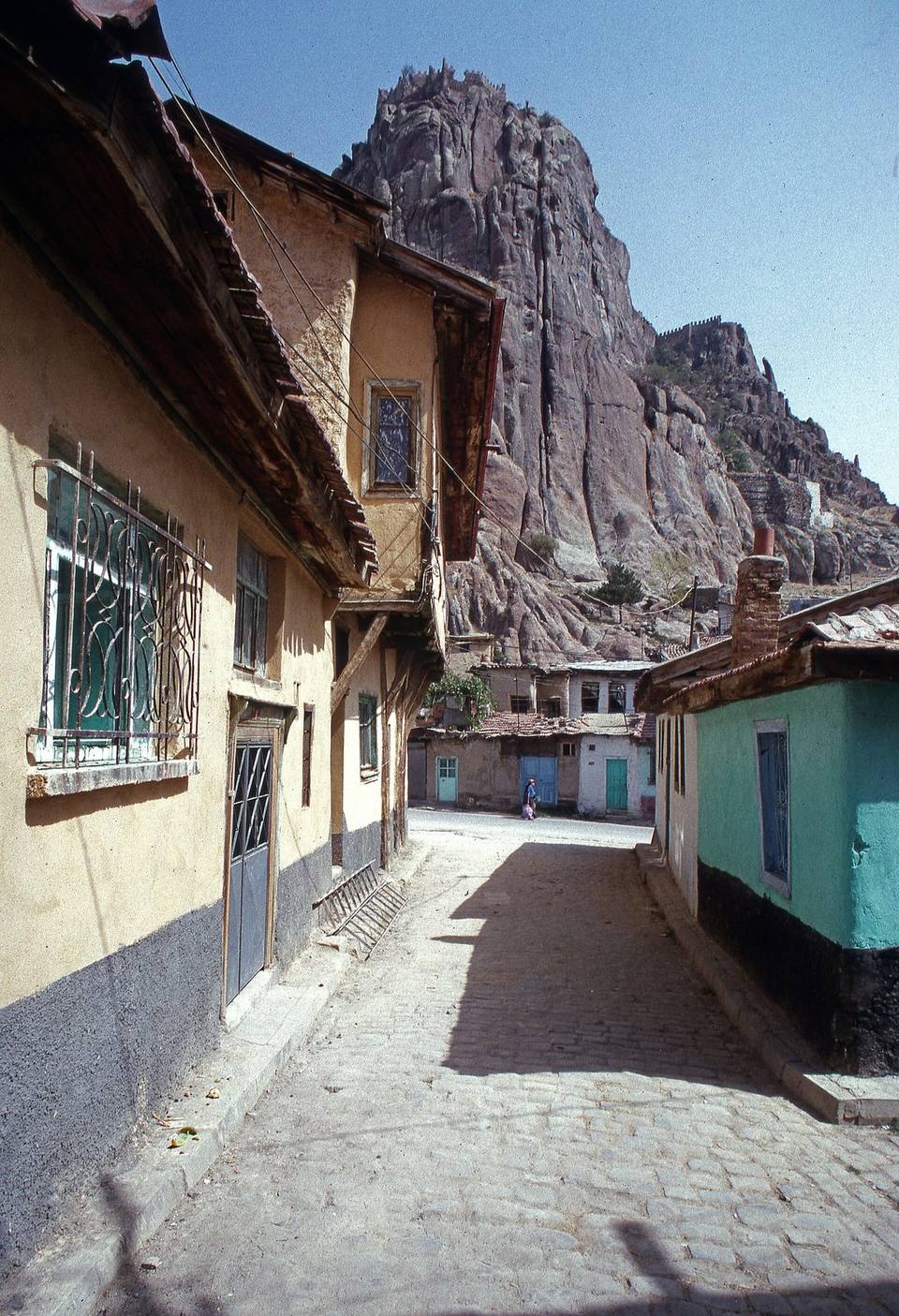
Eski Afyon, Old Afyon, is the historic residential quarter that stretches from the foot of Karahisar Castle towards Hıdırlık Hill; it is the first settled area of the city and is full of examples of traditional civil architecture. This old settlement between the castle and Hıdırlık Hill is protected as an urban conservation area. The town lived inside the castle until the middle of the 12th century, spread outside the castle and onto its southwestern slopes in the 13th century, and new neighbourhoods were founded to the south and east of the castle in the 15th and 16th centuries. Neighbourhood names that are still in use today, such as Akmescit and Tacı Ahmet, appear among the crowded quarters of the city in 16th century records.
The oldest neighbourhoods, such as Tacı Ahmet, Zaviye and Yukarı Pazar, went through a great fire in 1902 and were rebuilt within a short time. In the parts laid out after the fire the streets cross at right angles in a grid, while the parts untouched by the fire keep the older, organically grown fabric. It is recorded that the houses built after the fire were planned in six months, completed in less than three years and placed so that none blocks the view of another.
The houses are usually two storeys high, attached to one another, with wooden doors, projecting upper floors and narrow, tall windows. Many are entered through a flight of eight to ten steps covered by a portico. The low arched door beneath the stairs once opened onto a storeroom for items such as washing stones, cauldrons and copper buckets. Service spaces such as the kitchen, bathroom and laundry are on the ground floor, while the rooms of daily life, used for eating, sitting and sleeping, are on the upper floor. Some houses have a low ceilinged mezzanine used in winter; the low ceiling makes the rooms easy to heat, while the high ceilinged floor above is used in summer. The carved wooden brackets that carry the bay windows and projections are the most striking details of the houses, and the eaves are decorated with bands and wood carving. Ground floor windows are usually small and square, upper floor windows long and rectangular, and in many houses a rooftop room called a cihannüma stands out.
The streets are narrow and paved with cobblestones. In a street improvement project around the Millet Hamamı, the houses were restored true to their original form by the Governorship of Afyonkarahisar, electricity and telephone lines were moved underground and the roads were paved with stone. Some of the mansions are now open to tourism, and visitors can rest in these buildings and taste foods typical of the region. Those who climb the castle usually pass through these streets on their way down to the city centre; the walk among the colourfully painted houses links the castle with buildings such as the Grand Mosque (Ulu Camii) and the Millet Hamamı. Similar examples of civil architecture can also be found in the Mecidiye neighbourhood of the city. As people still live in many of the houses, visitors should respect the residents' privacy while walking the streets. Comfortable shoes are a good idea for the steep, stone paved lanes, and starting the walk from the Uzun Çarşı in the city centre is a good approach.
Comments
Loading...
Location - Eski Afyon Tarihi Konaklar Bölgesi
Venue Info
AddressAkmescit ve Tacı Ahmet mahalleleri, Afyonkarahisar Merkez
VenueAfyonkarahisar Merkez, Afyonkarahisar
TypeTourist Streets & Squares