

Historical & Cultural SitesCastles & Palaces
Doğubayazıt Kalesi
7
No ratings yet
Sign in to like and rate
Doğubayazıt Castle
Doğubayazıt/Ağrı
Doğubayazıt, Ağrı
About Venue
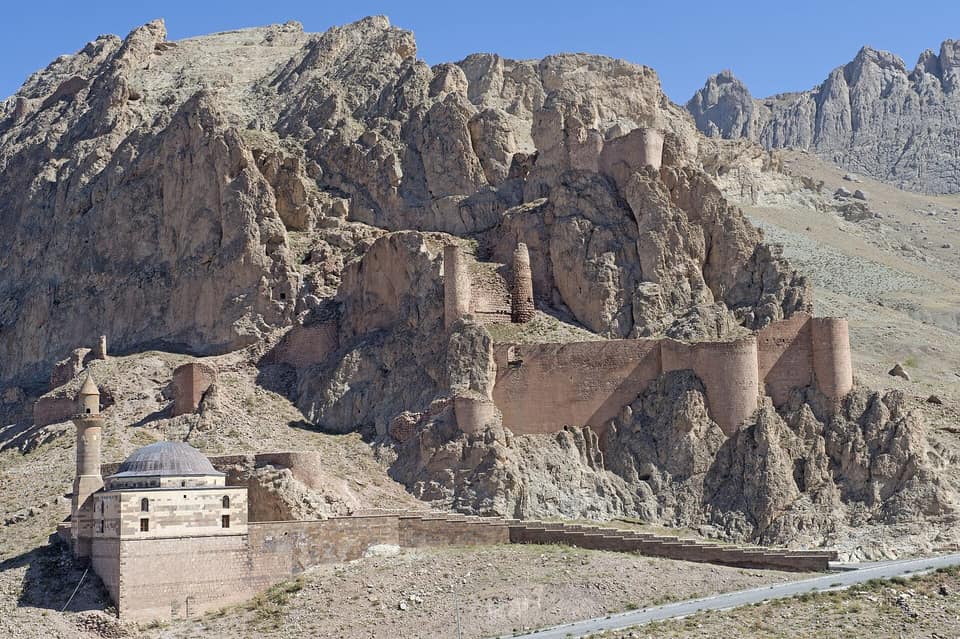
Doğubayazıt Castle stands on steep rocky heights in the Belleburç locality, to the northeast of the old Beyazıt settlement in Ağrı's Doğubayazıt district. Official sources also call it the Doğubayazıt Urartu Castle. Because sources give different distances from the district centre, the safest description is to look for it east and southeast of Doğubayazıt town. The construction date of the castle is not known with certainty, and the sources are cautious on the point. According to the official pages, the structure most probably dates to the Urartian period. The Urartians founded a powerful state centred on the Lake Van region in the 9th century BC and kept the area under their control for a long time. The Ağrı Provincial Directorate of Culture and Tourism explains that the castle was most likely built to protect the eastern borders of the kingdom, to oversee strategic zones and to secure trade routes. This purpose is the easiest way to understand why the building stands at this height and on this rocky ground. The steep cliffs gave the site a natural defence, and stone walls and watchtowers were added on top. Official sources describe the castle as a structure made up of three main parts. The first part is the defensive walls and entrance area, where high walls and watchtowers once guarded the main gate. Most of these structures are damaged today, yet some wall remains can still be made out. The walls that surrounded the castle are reported to have collapsed. In the interior there are rock tombs and water cisterns that are thought to belong to the Urartians. Since the Urartians had advanced skills in water management, rock-cut water channels and cisterns are found here as well. Caves lie in the middle section of the castle, and it is thought that they may have been used both for settlement and for defence. The governorate page also notes architectural remains from antiquity inside the castle. Because the functions of these remains cannot be settled with certainty, the best approach for a visitor is to treat them as layers of the building. Today the castle is quite ruined, so expect to see foundation traces and carved rock surfaces rather than a standing fortress wall. Begin your visit by looking at the whole rock from a distance, because the scale and position of the castle are best understood from outside. Then approach the wall remains and the marks worked into the rock, and look at the quality of the stonework. The official account stresses that Urartian stone craftsmanship and building techniques can be clearly seen here. For photography, early morning and the hours close to sunset are recommended, since the provincial directorate writes that the castle has an impressive atmosphere at these times. The high position is a good vantage point for watching the landscape around Doğubayazıt and the view of Mount Ağrı on the horizon. The same text says that the rock formations and the historic fabric offer very suitable frames for photographers. The castle can be visited together with the nearby palace, and the two structures let you see traces of different ages in the same area. Visiting hours and conditions for the palace are announced on the web page of the Ağrı Provincial Directorate of Culture and Tourism, so check there before you go. For the castle itself, you should also get current information on opening, entry conditions and access from the same official body. The Ağrı Governorate page states that shuttle services run from Doğubayazıt to the castle, but since services may change it is better to ask in the district centre for the current situation. According to the Culture Portal, the castle can be reached by local transport. The site is in the open air, so wear sturdy shoes and bring water. Weather in eastern Anatolia can change quickly, and carrying layered clothing suited to the season is wise. Stay away from the edges on the rocky slopes, do not climb on the remains and do not take any stones or fragments. Visitors who come with children should accompany them closely because of the sloping and uneven ground. If you set aside about an hour and a half, you can combine the remains, the view and a photo break without hurrying.
Comments
Loading...
Location - Doğubayazıt Kalesi
Venue Info
AddressDoğubayazıt/Ağrı
VenueDoğubayazıt, Ağrı
TypeHistorical & Cultural Sites