

Historical & Cultural SitesMuseums
Diyarbakır Arkeoloji Müzesi (İçkale)
13
No ratings yet
Sign in to like and rate
Diyarbakır Archaeology Museum (Inner Fortress)
Cevat Paşa Mahallesi, Hz. Süleyman Caddesi, No:43 İçkale, Sur/Diyarbakır
Sur, Diyarbakır
Get DirectionsApple MapsAbout Venue
The Diyarbakır Archaeological Museum is located in the Inner Citadel (İçkale) in the northeast corner of the city, within a museum complex made up of historic buildings. According to the museum page of the Ministry of Culture and Tourism, the first museum in Diyarbakır opened in 1934 in the Zinciriye or Sincariye Madrasa near the Great Mosque. The Culture Portal writes that this madrasa was built in the time of the Artuqid ruler al-Malik al-Salih Mahmud, between 1201 and 1222. In the mid 1980s the museum moved to its new building on Elazığ Caddesi and served there for many years. Today the collection is displayed in the historic buildings of the Inner Citadel, which was used for centuries as the administrative centre of the city.
The Diyarbakır Provincial Directorate of Culture and Tourism states that the museum complex in the Inner Citadel consists of fourteen registered buildings. The archaeological finds are displayed in the former courthouse and government building, which was begun under the Ottoman governor Sırrı Pasha and completed in 1888 under Hacı Hasan Pasha. In this building the objects are arranged chronologically in two halls, fifteen rooms and ninety six display cases. Thematic exhibitions are housed in a building of three halls that was built between 1887 and 1891 for a cavalry regiment. The Ministry's museum page announces that the thematic exhibition hall has been closed to visitors temporarily, so be sure to check the current situation on the official page before you go.
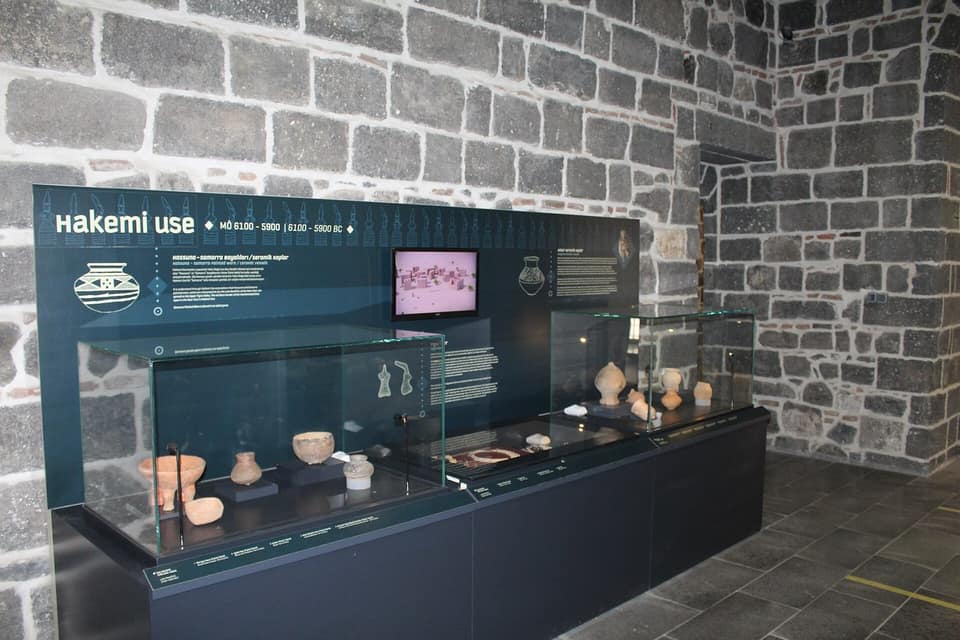
The museum's collection extends from prehistory to the Ottoman period. The Ministry page lists objects from the Early Bronze Age, Urartian, Assyrian, Hellenistic, Roman, Byzantine, Seljuk, Aq Qoyunlu and Ottoman periods, as well as Artuqid coins minted in Amida. The Culture Portal states that the collection covers works from twenty six civilisations. As of today, 29,270 objects are registered in the museum inventory. Finds from the Çayönü and Hallançemi excavations and from the Ilısu Dam rescue excavations, carried out under the museum's direction since 2000, give the collection a special place. The Culture Portal lists Byzantine sarcophagi, Roman statues, Assyrian steles in cuneiform, Urartian pottery and ornaments, and Greek, Roman and Byzantine coins among the most interesting objects.
The ethnography section tells of daily life in Diyarbakır in recent centuries. The Culture Portal highlights wooden doors, door knockers, chests inlaid with mother of pearl, carpets and kilims, and a rich collection of textiles. Silver threaded bindallı dresses, three skirted robes, women's headdresses and jewellery such as silver necklaces and belts are also part of this collection. Gravestones, Seljuk stone reliefs and terracotta vessels are among the museum's other important objects.
The Inner Citadel itself is explored almost as part of the museum. The Provincial Directorate particularly mentions the pointed arch, ten metres wide, that was built in the Artuqid period in 1206-1207 and gives access to the Inner Citadel. On both sides of the arch is the famous relief of a lion fighting a bull, carved in limestone. Excavations on the mound known as Virantepe or Amida Höyük have uncovered the remains of the Artuqid Palace from the early 13th century. The most important part of the remains is a decorated pool opening on four sides to iwans. The excavations carried out by Dicle University since 2018 suggest that the first settlements on the mound go back to around 7000 BC.
The other buildings of the complex also reveal the layered history of the Inner Citadel. A building constructed as a caravanserai in the Artuqid period in 1203 was turned into a prison in 1890 and converted into the museum's storerooms in 2014. One of the lion statues of the Lion Fountain, with its triangular pediment from the late 19th century, has been lost, and the other is kept by the museum. It is known that in the reign of Süleyman the Magnificent the Inner Citadel was enlarged with sixteen towers and two new gates.
A good plan is to begin with the archaeology hall and follow its chronological order, then walk outdoors to the Artuqid Arch and the mound. From the eastern edge of the Inner Citadel there is a wide view over the Hevsel Gardens and the Tigris valley, so keep the end of your visit for this spot. The MüzeKart is valid at the museum. Opening and closing times change with the seasons, so check the current hours and any closed halls on the Ministry's museum page. The museum is reached on foot from inside the walled city, and the visit combines easily with a tour of the Walls of Diyarbakır and the Hevsel Gardens.
Comments
Loading...
Location - Diyarbakır Arkeoloji Müzesi (İçkale)
Venue Info
AddressCevat Paşa Mahallesi, Hz. Süleyman Caddesi, No:43 İçkale, Sur/Diyarbakır
VenueSur, Diyarbakır
TypeHistorical & Cultural Sites