

Natural BeautiesNational Parks
Dilek Yarımadası Milli Parkı
7
No ratings yet
Sign in to like and rate
Dilek Peninsula National Park
About Venue
Dilek Peninsula-Büyük Menderes Delta National Park is a protected natural area that spreads across the Kuşadası and Söke districts of Aydın and was placed under protection in two separate stages. The Dilek Peninsula section was declared a national park in 1966, and the Büyük Menderes Delta adjoining the peninsula to the south followed in 1994. The peninsula section covers about 11 thousand hectares, the delta section about 16.6 thousand hectares, and the park as a whole exceeds 27 thousand hectares. The main entrance used by visitors lies on the Davutlar and Güzelçamlı side of Kuşadası.
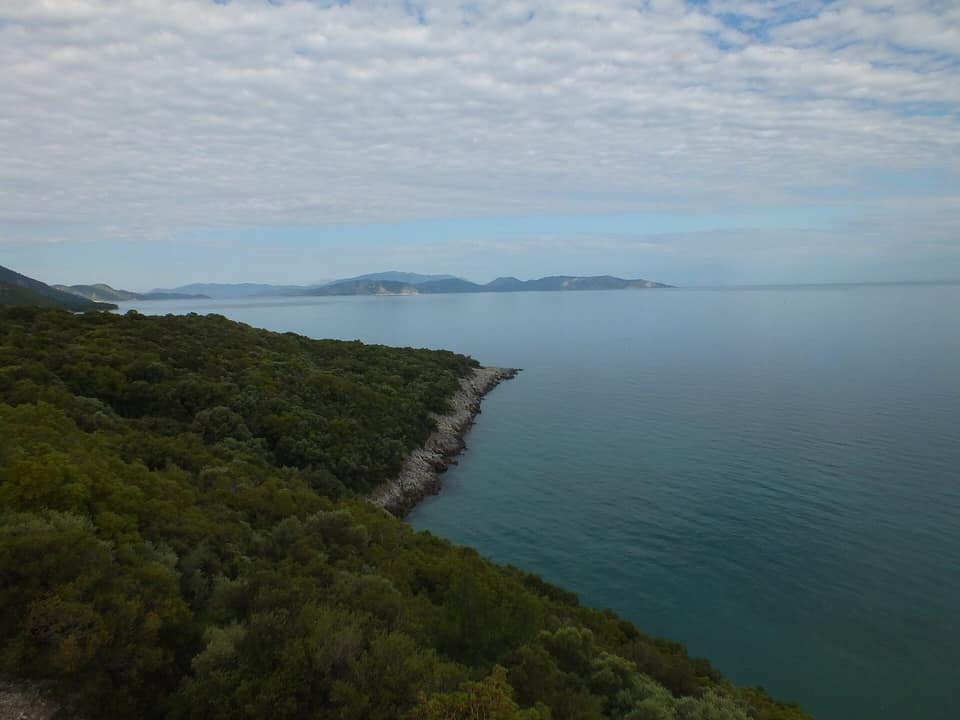
The peninsula is the final point where the Samsun Mountains reach into the Aegean Sea. Its average height is around 650 metres, and its highest point is the 1,237 metre Dilek Tepe, which gives the park its name. In antiquity the mountain was called Mykale, and the narrow strait between it and the island of Samos opposite still carries that name today. English Wikipedia notes that the strait is only about 1.6 kilometres wide at its narrowest point. The geology is made up of Paleozoic schists, Mesozoic limestones and marbles, and sediments of the Neogene period.
The most striking aspect of the park is its plant diversity. Sources record 804 plant species in the park, six of which grow nowhere else in the world. The Anatolian chestnut reaches the southernmost point of its natural range on this peninsula. Phoenician juniper, laurustinus, hybrid holm oak and Mediterranean cypress form small forest communities here. Because of this richness, the Council of Europe has recognised the peninsula as a Flora Biogenetic Reserve Area. On the northern slope almost every species of Mediterranean maquis can be seen in healthy stands.
The animal life is just as rich. Sources list 28 mammal and 42 reptile species, and the peninsula is described as the last place in the west where the Anatolian leopard was recorded. The number of bird species varies from study to study; Kuşadası Municipality and the South Aegean Development Agency mention 209 bird species, while an older academic study counts 97. The delta is one of the important breeding grounds of the endangered Dalmatian pelican and a refuge of the pygmy cormorant. The Mediterranean monk seal and sea turtles also find habitat along the park's coast.
Once through the entrance, the road follows the northern shore of the peninsula westwards. The first cove is İçmeler Koyu, one of the busiest spots because of its sandy beach and shallow water. Further west come the Aydınlık, Kavaklıburun and Karasu coves, where the shore is mostly pebbly and the water deepens quickly. From the westernmost coves the shores of Samos can be seen very close. Since the coves can fill up in summer, arriving early in the morning makes it easier to find shade and space.
A path very close to the entrance leads down to the Zeus Cave. According to an academic study, the cave formed when a small sinkhole and underground water dissolved the limestone, and its floor resembles a clear pool. Its water is described as a mix of fresh and salt water, which is said to give it its colour. The Olukdere Canyon between the Aydınlık and Kavaklıburun coves is a steep-sided valley and part of a walking route that continues towards Doğanbey. Because the last part of the forest path that runs to Doğanbey and on to ancient Karine can only be used with a permit or a guide, ask the park administration before planning the walk.
The delta section offers a completely different landscape. As the Büyük Menderes River meets the sea here, it creates lagoons, salt marshes, mud flats and cut-off meander channels. Lade, once an island in the sea, now looks like a hill standing in the middle of the plain because of the silt carried by the river. This island was the scene of the famous naval battle of Lade between the Ionians and the Persians in 494 BC.
Within the park boundaries lie the remains of the Panionion, where the Ionian cities held their joint meetings in antiquity. Great cities such as Priene and Miletus also lie within the wider surroundings of the park, so it is easy to combine a nature trip with a visit to an ancient city. Camping, lighting fires and hunting are forbidden in the park; walking, cycling, birdwatching and line fishing are allowed within the set rules. Since the entrance fee and opening hours change with the season, check the current announcements of the nature conservation and national parks authority before you go.
Regular minibuses run from central Kuşadası to Güzelçamlı, and the park entrance lies just west of Güzelçamlı. Sources give the distance between Kuşadası and the park as between 23 and 30 kilometres. Visitors arriving by car can use the asphalt road that runs out to the coves. We recommend taking water, a hat and comfortable shoes, because the distances between the coves are long on foot.
Comments
Loading...
Location - Dilek Yarımadası Milli Parkı
Venue Info
AddressDavutlar mevkii, Güzelçamlı yakını, Kuşadası / Aydın
VenueKuşadası, Aydın
TypeNatural Beauties