

Historical & Cultural SitesHistorical Sites
Dicle Köprüsü (On Gözlü Köprü)
33
No ratings yet
Sign in to like and rate
Dicle Bridge (Ten-Arched Bridge)
Mardin Kapısı dışı, Dicle Nehri üzeri, Diyarbakır
Yenişehir / Diyarbakır, Diyarbakır
Get DirectionsApple MapsAbout Venue
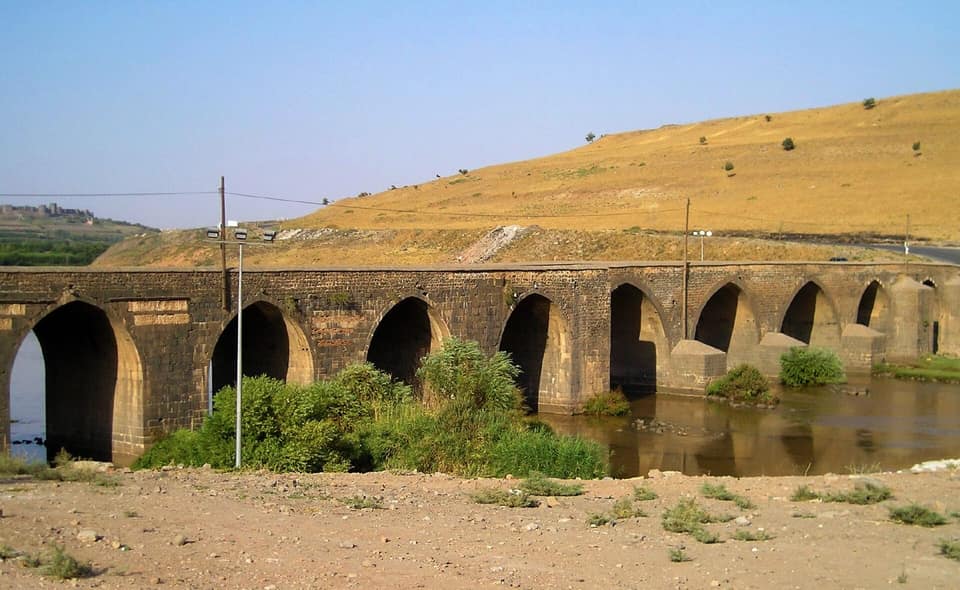
The Dicle Bridge is a historic stone bridge that links the two banks of the Tigris River south of Diyarbakır. Because it rises on ten arches, it is known in the city as the On Gözlü Köprü, the Ten-Eyed Bridge. The Diyarbakır Provincial Directorate of Culture and Tourism places it outside the Mardin Gate of the city walls, about 3 kilometres from the city. The TDV Encyclopedia of Islam also names the ten-arched bridge over the Tigris first among the notable monuments outside the walls.
The key document for the age of the bridge is the inscription on its southern face. The two lines of floriated Kufic script between the arches and the parapet record that the bridge was built in the Marwanid period, in the time of Nizamüddevle Nasr. As the Kültür Portalı relays, the inscription gives the year 1064-1065, names Kadı Ebü'l-Hasan Abdülvahid as the patron and Ubeyd as the architect. The Provincial Directorate, drawing on the same inscription, writes that the standing parts of the bridge were built in 1065 by an architect named Yusuf, son of Ubeyd. Researchers agree that this text is a repair inscription and accept that the bridge was founded at a much earlier date. The 11th-century inscription therefore marks the best-known renewal of the bridge rather than its first construction. The TDV Encyclopedia of Islam lists the repair of the city walls and the building of the Dicle Bridge among the works of the Marwanid period. According to the sources, the bridge was last repaired in 1899-1900.
Architecture
The bridge is 180 metres long and between 7 and 8 metres wide. Its pointed arches stand at almost the same level but differ in size, and the widest is the central one. On the upstream face there are cutwaters with triangular conical caps, and on the downstream face there are rectangular buttress walls with mouldings. These walls were shaped to the terrain to resist the pressure of the fast river, which bends from the east towards the south. Lime-mortared rubble was used as fill inside the body of the bridge. The facing consists of cut basalt blocks of different sizes, partly reused, laid in a staggered bond. The parapets are built of rubble and cut stone. The dark basalt gives the bridge a distinctive colour that is recognisable even from a distance.
On the southern face, where the inscription ends, there is a lion relief with its head carved facing forward. Reliefs of this kind are found especially on Artuqid and Seljuk buildings. The Kültür Portalı notes that the closest parallels are on the Harput Gate and the Mardin Gate of the Diyarbakır walls. After visiting the bridge, looking for this likeness on the walls makes for an enjoyable comparison.
How to visit
To see the inscription and the lion relief, you need to look at the southern face of the bridge, on the downstream side. It is worth first stepping back from the bank to take in the row of ten arches and the line of cutwaters as a whole. Then you can walk up onto the bridge and look closely at the stonework of the parapets and the level roadway above the arches. Because the river level changes with the seasons, the amount of the piers left exposed can look different from one visit to the next. For photographs, morning and late afternoon light bring out the texture of the dark stone and the reflections on the water. The riverbank is stony and uneven in places, so comfortable shoes are a good idea. There is little shade around the bridge, so a hat and water are needed in summer.
Surroundings and access
The TDV Encyclopedia of Islam also mentions the Gazi Köşkü, which overlooks the bridge, among the notable monuments outside the walls. Looking north from the bridge towards the city, you see the strip of gardens along the Tigris and the line of walls on the hill above. The Governorship describes the Hevsel Gardens between the walls and the river as a fertile oasis on the banks of the Tigris. The Diyarbakır Walls and the Hevsel Gardens were inscribed on the UNESCO World Heritage List in 2015, and the bridge is part of this long relationship between the city and its river. The bridge is reached by heading south from the Mardin Gate side, and since it is close to the city centre it can be combined with the walls and Hevsel on the same day. Check public transport lines and current travel options with local transport information before you go. As one of the best-known Marwanid monuments surviving in Diyarbakır, the Dicle Bridge lets you read the city's long history from the riverbank.
Comments
Loading...
Location - Dicle Köprüsü (On Gözlü Köprü)
Venue Info
AddressMardin Kapısı dışı, Dicle Nehri üzeri, Diyarbakır
VenueYenişehir / Diyarbakır, Diyarbakır
TypeHistorical & Cultural Sites