

Religious & Spiritual PlacesMosques
Çorum Ulu Camii (Murad-ı Rabi Camii)
No ratings yet
Sign in to like and rate
Çorum Grand Mosque (Murad-ı Rabi Mosque)
About Venue
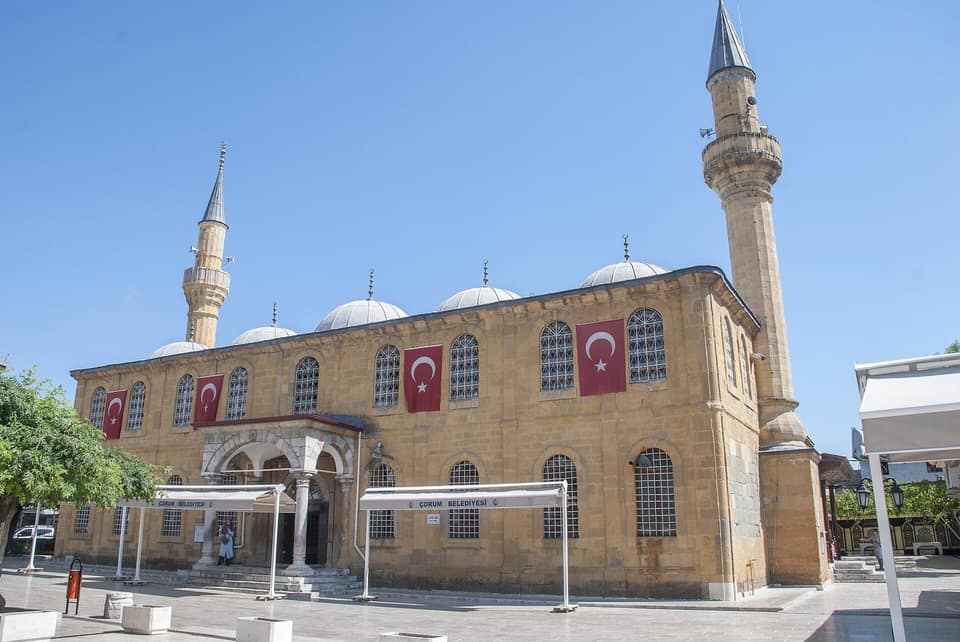
Çorum Ulu Mosque, also known as the Murad-ı Rabi Mosque, stands in the Çöplü neighbourhood in the city centre and is the best known historic mosque of Çorum. The building has no foundation inscription, and it is accepted that it was first built in the reign of the Seljuk Sultan Alaaddin Keykubat III by Hayreddin, a freed slave of the sultan. The pulpit dated 1306-1307 is the main basis for the view that the mosque was founded at the end of the Seljuk period. The mosque was ruined in a great earthquake during the reign of Bayezid II and was repaired by the architect Sinan, a repair also recorded in the Tezkiretü'l-Ebniye, the list of Sinan's works. Under Murad III it began to be called the Sultan Murad-ı Salis Mosque, and after it was repaired again during Murad IV's Yerevan campaign and medreses were added around it, it entered the foundation records as the Sultan Murad-ı Rabi Mosque.
The building seen today largely dates from the beginning of the 19th century. Damaged by earthquakes between 1789 and 1808, the mosque was rebuilt in 1810 by Abdülfettah Bey of the Çapanoğlu family in timber and with a single dome. The late-comers' portico and the upper floor were built after the proclamation of the Second Constitutional Era, and a minaret was added to the east facade. The plan consists of a rectangular prayer hall covered in the middle by a large lath-and-plaster dome and a two-storey late-comers' portico closed on three sides. The central dome of the prayer hall rests on twelve wooden columns, the columns are linked by depressed arches, and the dome is decorated with inscriptions and plant and geometric motifs.
The most remarkable piece inside is the pulpit made of ebony. According to its inscriptions, the pulpit was made on the order of Davutoğlu Ahmed by the Ankara craftsmen Davut son of Abdullah and Muhammed son of Ebubekir, and although it was painted in later years it has largely kept its original character. The lozenge-patterned lattice work and ornamented central medallions on the wooden ceilings of the late-comers' portico are also worth a close look. The courtyard is entered through gates on the east, west and north; in the courtyard by the north entrance stands an octagonal ablution fountain with a marble basin and a dome on eight wooden columns, built according to its inscription in 1758. The wooden medreses on the north and east sides of the courtyard and the masonry library were demolished in the first years of the Republic and have not survived.
As the mosque is open for worship, visitors should come outside prayer times, take off their shoes when entering and choose clothing that covers the shoulders and knees. The building is less than two hundred metres on foot from the Çorum Clock Tower; the visit can be completed on foot in the centre together with Çorum Castle, about 750 metres to the southeast.
Comments
Loading...
Location - Çorum Ulu Camii (Murad-ı Rabi Camii)
Venue Info
AddressÇöplü Mahallesi, Çorum Merkez
VenueÇorum Merkez, Çorum
TypeReligious & Spiritual Places