

Natural BeautiesLakes & Waterfalls
Cehennemağzı Mağaraları
35
No ratings yet
Sign in to like and rate
Hell's Mouth Caves
About Venue
The Cehennemağzı Caves are an archaeological site in the town of Karadeniz Ereğli made up of three caves lined up side by side in a valley known in antiquity as the Acheron Valley. The museum and archaeological site description of the Ministry of Culture and Tourism states that the caves were used in the Roman and Byzantine periods and that today they serve as an archaeological site attached to the Karadeniz Ereğli Museum Directorate. Also called the Acheron Caves in archaeological sources, the place is known as well as the caves of prophecy. The name and identity of the town are so bound up with the legend told about this valley that it is one of the first places to visit if you want to understand Ereğli.
The ministry writes that the caves are natural in that they developed within the tuffs of volcanic rocks, and artificial in that people carved them out to make them usable. The Zonguldak Coal Geopark description also classifies them as volcanic caves and relates that the stream forming the valley was called Acheron in mythological sources and later known by names such as Ayazma Çayı and Limanbaşı Çayı. According to the ministry, after expropriation, cleaning, maintenance and lighting work carried out between 2000 and 2002 the caves were opened to visitors and gained the status of an archaeological site.
The official name of the first of the three caves is the Church Cave, and it is arranged in two sections. According to the description on the Kültür Portalı, the floor of the first section is paved with an original mosaic of plant and geometric motifs. The cave holds remains such as columns, column capitals, mosaic flooring and lamp niches. The description by the Department of Archaeology at Zonguldak Bülent Ecevit University notes that in its original form the cave had a monumental appearance because of two columns opening outward. Looking closely at the mosaic motifs on the floor and at the workmanship of the capitals in this section shows the use of the place in the Roman and Byzantine age in the most concrete way.
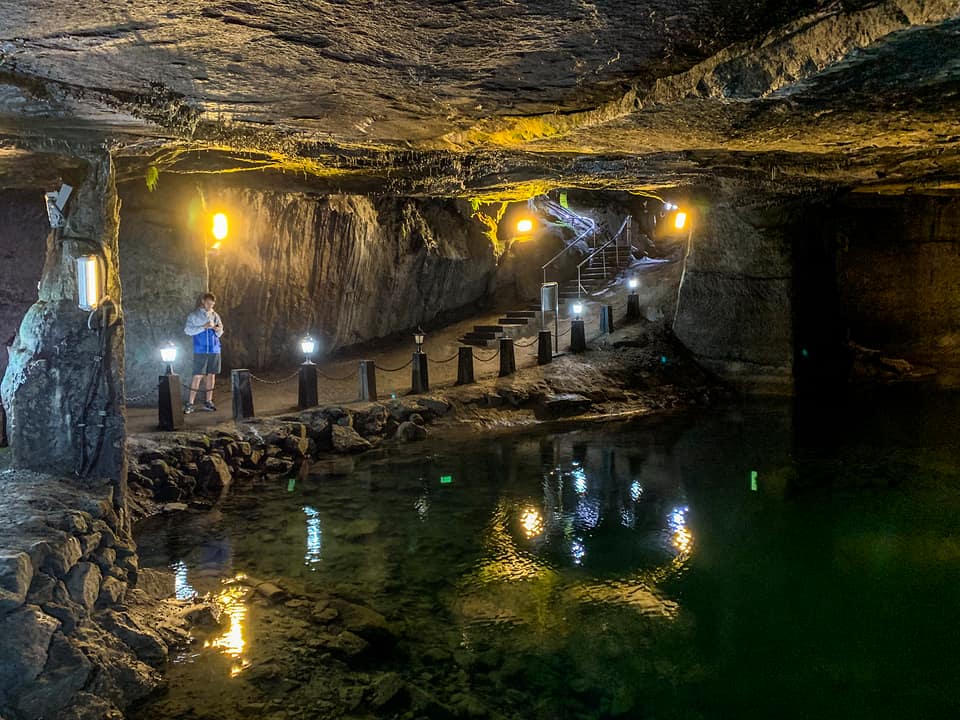
The second cave is the Herakles Cave, which gives the legend its name, and local people call it Koca Yusuf Mağarası. According to the Kültür Portalı, you pass through a narrow entrance on a slope about ten metres high beside the road and climb down a three-step vertical ladder into the cave. The cave covers an area of about 400 square metres and is supported by two massive pillars. The geopark description writes that the cave lies 11 metres below the level of the entrance, is 60 metres long and varies between 8 and 24 metres in width. According to the same source there is a lake about 4 metres deep in the middle, while the wall on the right side of the entrance is covered with dripstone.
The university description relates that this cave once ran further into the mountain, but that a rock which fell in the 1960s closed off its present limit. Traces of stone working visible on the walls also show that the cave was widened by human hands. When the light reflected on the surface of the lake and the mass of the pillars are seen together inside, it is easy to read how the natural hollow and human labour are woven into each other.
The legend told about this cave is also the source of the town's name. As the Kültür Portalı relates, in mythology Herakles carried out here the hardest of the twelve labours set for him by King Eurystheus, descending to the land of the dead and bringing up to the surface the three-headed dog Kerberos that guarded the gate of Hades. According to the legend, the poisonous plant growing in the area sprang from the foam that fell from the mouth of Kerberos as he barked in front of the cave. In the same story the town was given the name of Herakles, and to distinguish it from other towns of the same name it was called Herakleia Pontike. The description of the Karadeniz Ereğli Museum notes that the discovery of coal in Ereğli in 1829, thousands of years later, is an interesting coincidence in terms of this association with the underworld. The university description relates that in antiquity the caves were counted, together with Delphi, among the two most important centres of prophecy.
The third cave is the Ayazma Cave, and in surface area it is larger than the other two. According to the Kültür Portalı, the cave consists of two halls, groundwater covers one of them, and in the past this water was used as a cistern to meet the needs of the other two caves and the area around them. The same source writes that the space on the left side of the entrance to the Ayazma Cave is used today for classical music recitals, especially during festivals. Because the still surface of the water reflects the lighting, this hall is also the most striking part of the caves for photography.
As you move between the caves the floor is damp and stepped in places; do not hurry on the vertical ladder down into the Herakles Cave in particular, and wear comfortable shoes. In the section with the mosaic and column remains, staying inside the marked area is important for the protection of the site. Stopping at the Ereğli Museum before the visit will help you grasp the legend told about the valley and the ancient past of the town much better.
Be sure to check the official page for visiting conditions: when this text was prepared, the ministry's museums and archaeological sites page stated that the site was temporarily closed to visitors because of a risk to the safety of life and property. Before setting out, find out the current situation, opening hours and entry conditions from the official page of the Karadeniz Ereğli Museum Directorate. According to the Kültür Portalı, the caves are about 50 kilometres from the provincial centre of Zonguldak and the road to the caves from the town of Ereğli is fully asphalted. Since they are in the town centre, those staying in Ereğli can reach the caves with a short trip and fit the visit into the same day as the museum, the castle and the harbour area.
Comments
Loading...
Location - Cehennemağzı Mağaraları
Venue Info
AddressHüseyin Karadeniz Cd. Ereğli / Zonguldak
VenueEreğli / Zonguldak, Zonguldak
TypeNatural Beauties