

Natural BeautiesLakes & Waterfalls
Çayönü Tepesi ve Hilar Mağaraları
10
No ratings yet
Sign in to like and rate
çayönü Hill and the Hilar Caves
About Venue
Çayönü Tepesi is a Neolithic settlement mound in the Ergani district of Diyarbakır, near the village of Sesverenpınar (Hilar). It lies on a fertile upland 832 metres above sea level at the foot of the Taurus Mountains, beside a tributary of the Tigris. The Ergani District Governorship states that the rock-cut Hilar Caves and Çayönü are about 500 metres apart, with the mound to the north of the caves. The Hilar Caves are registered as a first-degree archaeological and natural conservation site.
The story of the excavations
Çayönü was investigated within the joint prehistoric research project that Istanbul University and the University of Chicago carried out in southeastern Anatolia. The University of Chicago's publication page introduces the project's work for the years 1963-1972 with a general review by Halet Çambel and Robert J. Braidwood. According to an article in the journal Paléorient, the excavations ran from the 1960s to the early 1990s, first directed by Braidwood and Çambel and in later years led by M. Özdoğan and A. Özdoğan. The same article describes the site as one of the main pillars of Pre-Pottery Neolithic archaeology in southeastern Anatolia. Çayönü is one of the oldest settlements where plant remains of domesticated emmer wheat have been found. Its real fame, however, comes from its succession of architectural layers and monumental buildings.
House plans
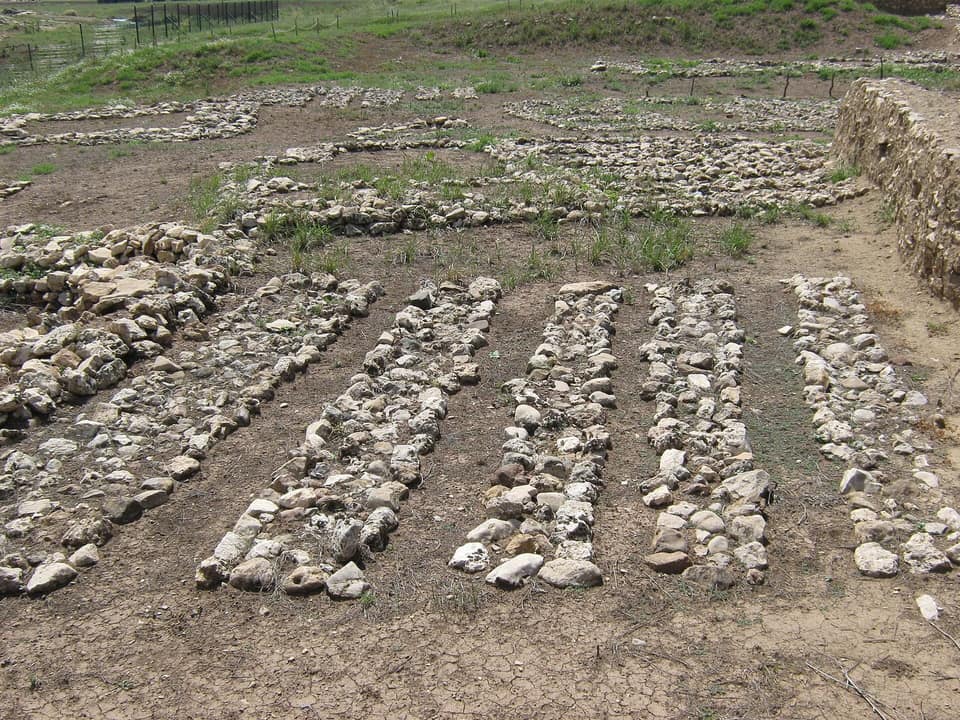
The excavators divided the Pre-Pottery Neolithic settlement into six sub-phases, each with a different house plan. These phases are known as the round buildings, the grill-plan buildings, the channelled buildings, the cobble-paved buildings, the cell-plan buildings and the large-room buildings. The grill-plan buildings take their name from the parallel, low stone foundation rows in their northern halves. These foundations raised a plastered floor off the ground and kept it dry and ventilated. In the cell-plan buildings the lower level was divided into small compartments, and the living floor was raised above them. The authors of the article argue that a unit of measurement of about 0.48 metres was used consistently in these buildings and that the plans were designed before construction. In every village phase there is, besides the houses, at least one public building that differs from them in plan, size and contents. The latest of these is the Terrazzo building, known for its polished floor with white stripes, made of stone fragments set in lime mortar. This single-room building measures about 11.75 by 9 metres on the outside and stands in the eastern part of the mound, at the edge of a large open space.
Çayönü is also a rich archive for following changes in the way people made a living. A study published in the journal TÜBA-AR examines changes in the size and age at slaughter of pig, sheep, goat and cattle bones. According to the study, the frequency of sheep and goat increases over time, markedly so in the large-room buildings phase. Intensive hunting of wild animals, however, continued throughout the Pre-Pottery Neolithic. The Ergani District Governorship also presents the area as a witness to the shift from nomadic life to settled village life, and from hunting and gathering to food production.
The Hilar Caves
The Hilar Caves belong to a completely different era. The Kültür Portalı notes that there are rock tombs and reliefs here dating from antiquity. According to the Ergani District Governorship, some of the tombs have reliefs on their fronts, some of them arranged in groups of three. Part of the reliefs are in the Roman provincial style, the clothing of the figures reflects Iranian style, and the inscriptions are in a North Syrian Semitic script. This mixture shows that in antiquity the region stood where different cultural worlds met.
How to visit
Starting at Çayönü and walking south to the rock faces of Hilar lets you compare two very different periods in a single visit. The stone foundation rows of the grill-plan buildings are visible in the open on the mound today. Because these foundations are low and fragile, stay inside the fence and the walking line, and do not step on the stones. When approaching the rock tombs, bear in mind that the ground may be stony and sloping. As the site is in open country, a hat and water are useful in summer, and shoes suited to mud after rainy days. The Ergani District Governorship notes that the caves receive visitors from Diyarbakır and neighbouring provinces, especially at weekends. The site is reached by road via the Ergani district centre, and since public transport may be limited, planning a private car is more practical. Check the current information on visiting conditions and arrangements at the site with official sources before you go.
Comments
Loading...
Location - Çayönü Tepesi ve Hilar Mağaraları
Venue Info
AddressSesverenpınar (Hilar), Ergani / Diyarbakır
VenueErgani, Diyarbakır
TypeNatural Beauties