

Historical & Cultural SitesMuseums
Çankırı Müzesi
No ratings yet
Sign in to like and rate
Çankırı Museum
Cumhuriyet Mahallesi, Atatürk Bulvarı, Belediye Meydanı, Çankırı
Çankırı Merkez, Çankırı
Get DirectionsApple MapsAbout Venue
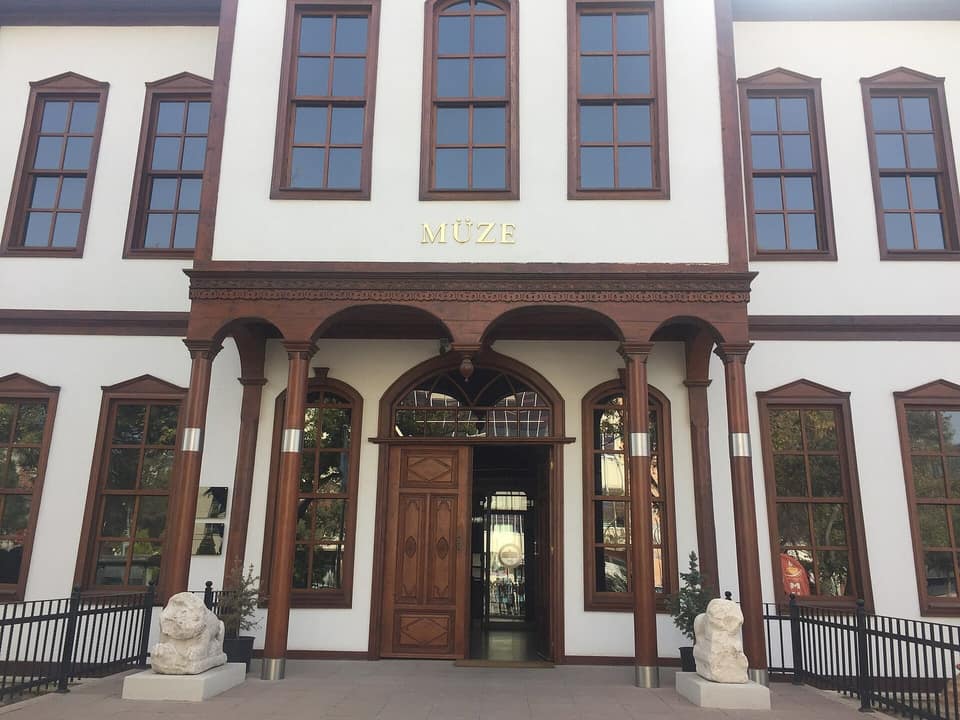
Çankırı Museum operates in a historic government building on Atatürk Boulevard in the city center. The building was constructed in 1905 as a government office and belongs to the late Ottoman period. The governorship page counts the building among the structures of the reign of Abdülhamid II. Over time the building was also used as the governorship and as a courthouse. After restoration and conversion into a museum, it opened to visitors in 2017.
Museum work in the city began long before this building. A collection of 116 items gathered from the surrounding area was displayed on the lower floor of the Halkevi building on 9 June 1972, and that is how museum activity started. When the 100. Yıl Cultural Center was built in place of the Halkevi, the collection was moved temporarily to Çankırı High School, where one classroom was used as storage. The museum reopened to visitors on 23 August 1981 on the second floor of the 100. Yıl Cultural Center. As the number of objects grew, the physical conditions of that building became inadequate, and the solution was found in restoring the old government building. Today's museum has 3,000 square meters of indoor and 600 square meters of open exhibition space.
The visit begins at the northern facade of the building. Here four wooden posts that support the projecting upper floor form a monumental entrance opening. Together with the cihannüma unit above the basement, the building has three floors. The floors consist of rooms opening onto a central hall. The basement has stone walls, while the other floors were built with the bağdadi technique using mud-brick infill. Pausing for a minute or two at the entrance to look at the timberwork of the facade helps you get to know the building before you step inside.
The museum is made up of three main halls: Natural History, Archaeology and Ethnography. In the archaeology section on the ground floor, works from the Chalcolithic and Bronze Age and from the Hittite, Hellenistic, Roman and Eastern Roman periods are displayed in chronological order in separate halls. Following the halls in sequence feels like walking along a timeline. In the central area stands a copy of the Inandık Vase, counted among the best known works of archaeological literature, together with a model of the Inandık Mound excavation where the vase was found. The glass objects group is described as one of the few such museum collections in Türkiye. The coin collection begins with the Archaic period and continues with Classical, Hellenistic, Roman and Eastern Roman coins, then reaches the first Islamic coins of the Umayyad period and the coins of Turkish Islamic states.
The natural history section of the museum tells the most striking scientific story of the province. The fossils come from the Çorakyerler Vertebrate Fossil Site, on the Yapraklı road in the Fatih neighborhood, about five kilometers from the city center. The first fossils were brought to light in 1997 in rescue excavations carried out jointly by Ankara University and the museum directorate. From 2001 onward the work was turned into a full excavation and has continued since. Magnetostratigraphic studies and comparisons of vertebrate fauna date the locality to roughly 8 to 8.5 million years ago, that is, to the Late Miocene. Among the finds are fossils belonging to families such as bovids, giraffids, rhinoceroses, equids and proboscideans. The saber-toothed cat fossil in the exhibition is presented as the only example in Türkiye, a species unique to Anatolia. More than three thousand fossil finds are kept under protection in the museum. In the exhibition hall the fossil species are introduced with digital and model reconstructions and large information panels.
The ethnography section is on the first floor and presents the sociocultural life of the region. Items from the Ottoman and Early Republican periods, made by hand before industrialization, are gathered under thematic headings. These headings include traditional kitchen life, weaving, traditional clothing, weapons, lighting, weights and measures, and the Independence Road. Various works are also presented to visitors in the open areas of the museum.
Setting aside one and a half to two hours for a visit lets you see the three sections without hurrying. Starting on the ground floor and going up to the first floor is the easy way to follow the chronological flow. Opening hours, the weekly closing day and the admission fee are not written as figures here; please check current information on the Ministry of Culture and Tourism page at muze.gov.tr. The museum stands in the Cumhuriyet neighborhood around Belediye Square on Atatürk Boulevard and can be reached on foot from the city center. The Çankırı Education History Museum is a separate place, so take care not to confuse the two when searching for an address.
Comments
Loading...
Location - Çankırı Müzesi
Venue Info
AddressCumhuriyet Mahallesi, Atatürk Bulvarı, Belediye Meydanı, Çankırı
VenueÇankırı Merkez, Çankırı
TypeHistorical & Cultural Sites