

Historical & Cultural SitesHistorical Sites
Çakırağa Konağı
5
No ratings yet
Sign in to like and rate
Çakırağa Mansion
About Venue
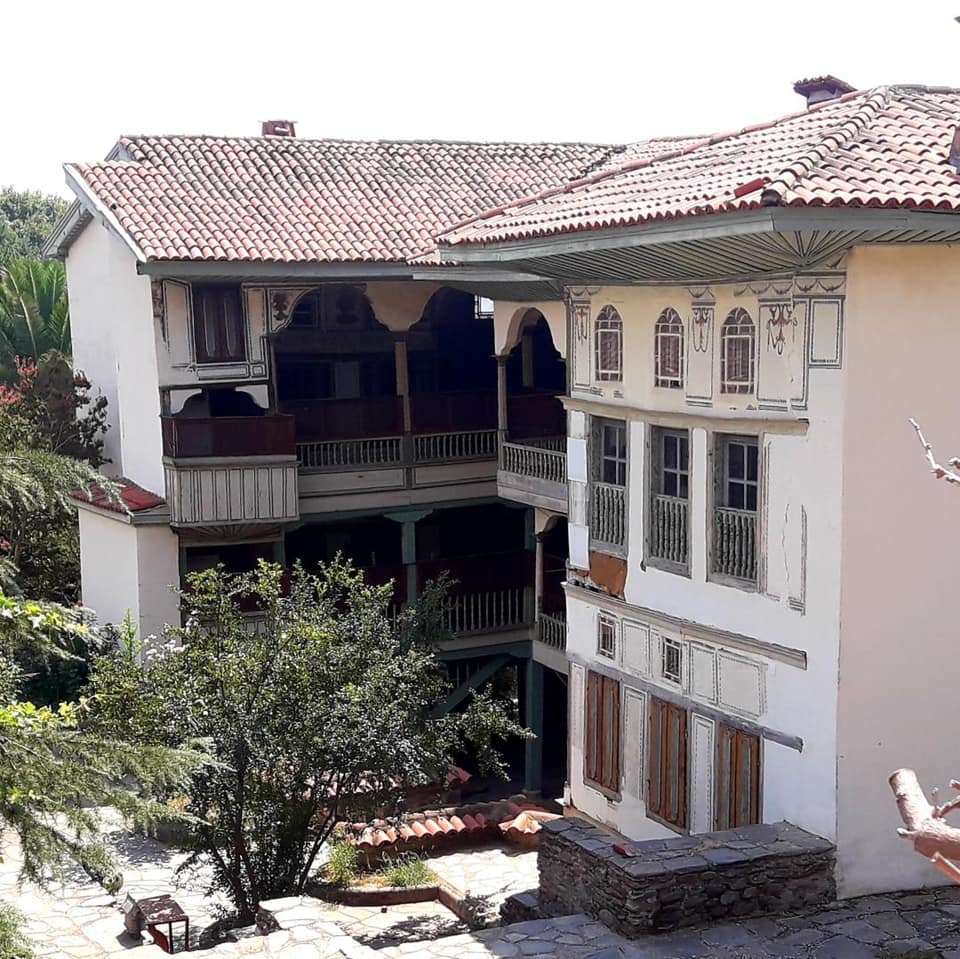
Çakırağa Konağı is a timber civil-architecture mansion in Birgi, in the Ödemiş district of İzmir, rising at the far end of a garden decorated with flowers. The mansion is protected by high walls so that it cannot be seen from the road, and it has three storeys. The building dates from the 18th century; the Culture Portal page of the İzmir Provincial Directorate of Culture and Tourism gives the year 1761 and names Şerif Aliağa (Çakıroğlu Mehmet Bey) as the man who had it built. The TDV Islamic Encyclopedia, by contrast, says the construction date cannot be fixed exactly and that, judging by its baroque details, the house may have been built under Abdülhamid I (1774-1789) or Selim III (1789-1807). Sources describe the builder as a wealthy merchant in Birgi, a town where the leather trade was thriving.
The part that survives is the harem section, which formed the main body of the mansion; the selamlık and service buildings, thought to have stood in the rear garden, have disappeared. The harem section is gathered into a U-shaped mass and follows a design with an outer sofa, iron-like eyvans and twin kiosk rooms. The foundation and ground floor are of rubble stone, while the rest of the mansion is built of timber in the bağdadi technique, with brick filling between the timber frames. From the street to the south, a modest rectangular door leads to the ground floor, which holds a stone-paved hall, a kitchen, a stable and a guest waiting room, together with resting benches. The middle floor was reserved for winter rooms, is plain in decoration and is more sheltered. All rooms open onto a wide sofa and were heated by fireplaces, and the guest rooms have washing corners.
The upper floor, reached by lifting a stair hatch, is the summer floor; it has a high ceiling, is brighter and is richer in painted decoration. Around the sofa of this floor, four rooms are arranged symmetrically with three eyvans between them. In the rooms you will see sedirs, carved and painted timber door leaves, cupboards with curving lines and painted work divided into rectangular panels on the ceilings. The best-known detail of the house is the wall paintings in the kiosk rooms: panoramas of Istanbul and İzmir are painted on the surfaces between the cupboards and the ceiling, which bulge cylindrically toward the corners. According to local tradition, the owner married two women, one from İzmir and one from Istanbul, and a view of each city was commissioned for the rooms so that the women would not miss their home towns. These paintings are considered important both for showing how the cities looked at the time and for the history of painting, and the TDV also finds them interesting as late folk painting.
On the street front, the projecting kiosk rooms and the double rows of windows resting on curved brackets give movement to the facade. The lower windows are fitted with timber shutters and lattices, and the segmental-arched upper windows with coloured-glass plaster windows. The first-floor walls are painted over plaster to imitate ashlar masonry, giving the impression of a fortress wall, and above it the upper floor with coloured painted decoration looks more splendid. Blue, yellow and dark green dominate the decoration; oval medallions, garlands, flower bunches and vases, together with depictions of trees, houses and wells, fill these surfaces. After standing in ruins for many years, the mansion was restored in the early 1990s and turned into a museum. The TDV writes that the repair and the expropriation were carried out through the efforts of Mutahhar Başoğlu, a lawyer from Ödemiş.
The Culture Portal states that the mansion is open every day of the week except Monday; check the official page for current days and hours. The mansion stands on Şehit Gürol Madan Caddesi in Birgi, and according to the Culture Portal you reach Birgi ten kilometres after Ödemiş. The whole of Birgi is a protected area, so after visiting the mansion you can explore the sloping streets of the town on foot.
Comments
Loading...
Location - Çakırağa Konağı
Venue Info
AddressBirgi, Şht. Gürol Madan Cd., 35750 Ödemiş/İzmir
VenueÖdemiş, İzmir
TypeHistorical & Cultural Sites