

Historical & Cultural SitesMuseums
Cahit Sıtkı Tarancı Müzesi
8
No ratings yet
Sign in to like and rate
Cahit Sıtkı Tarancı Museum
Camii Kebir Mah. Cahit Sıtkı Tarancı Sok. No:3 Sur/Diyarbakır
Sur, Diyarbakır
Get DirectionsApple MapsAbout Venue
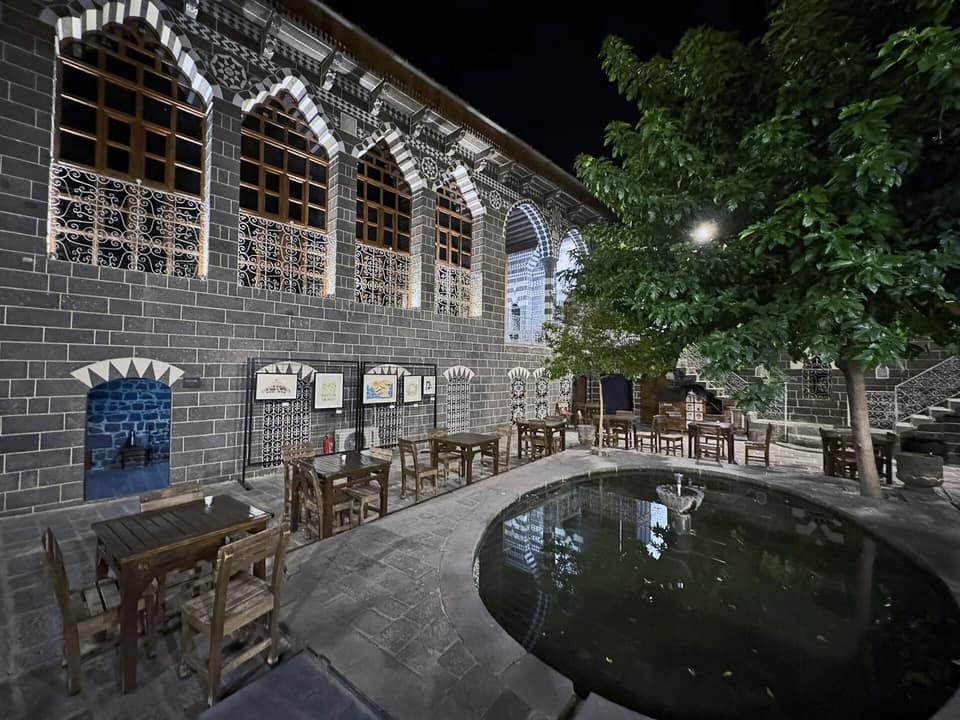
The Cahit Sıtkı Tarancı Museum is the traditional Diyarbakır house where Cahit Sıtkı Tarancı, one of the best loved names of Turkish poetry, was born and spent his childhood. The Diyarbakır Provincial Directorate of Culture and Tourism writes that the house was built in 1733 and bears all the features of the city's traditional domestic architecture. The house consists of four wings arranged around a central courtyard and was built entirely of basalt stone, with a ground floor and one upper floor. The building was originally constructed with harem and selamlık sections, but the selamlık has been demolished and the harem section has survived to the present day. The Provincial Directorate lists the museum under the name Cahit Sıtkı Tarancı House Ethnography Museum.
The plan of the house is arranged according to Diyarbakır's climate. According to the Provincial Directorate, the house consists of a summer section on the south, a winter section on the north, a spring section on the east and an autumn section on the west. This arrangement shows the logic of the traditional courtyard house, in which the family lived by moving from one wing to another according to the season. Decorative elements called cas are used with great skill on the facades facing the courtyard. In the words of the Provincial Directorate, these decorations lighten the heaviness given by the basalt and bring movement to the building. The TDV Encyclopedia of Islam also explains that old Diyarbakır houses were built with special arrangements so that the summer heat and winter cold would be felt as little as possible, and that a pool was added to each inner courtyard.
Cahit Sıtkı Tarancı was born in this house on 2 October 1910. According to the TDV Encyclopedia of Islam, his real name was Hüseyin Cahit, and he was the son of Bekir Sıtkı Bey of the Pirinççizade family, one of Diyarbakır's long established families. He attended primary and middle school in Diyarbakır, then moved to the Saint-Joseph Lycée in Istanbul and from there to the Galatasaray Lycée. Here he met the poet Ziya Osman Saba, with whom he formed a lifelong friendship. He later went to Paris to continue his studies, and after returning to Turkey he worked as a translator in Ankara. According to the TDV Encyclopedia of Islam, his first poems appeared in magazines in the 1930s, and three articles that Peyami Safa wrote about his poetry in 1932 played a large part in making him known. In his early poems he was influenced by French Symbolist poets such as Baudelaire, Verlaine and Rimbaud and paid close attention to metre, form and sound. In 1945 he won first prize in a poetry competition with his poem Otuz Beş Yaş, Thirty Five Years, and his fame quickly spread. The encyclopedia writes that alongside the themes of loneliness and death, the joy of living is also clear in his poems, and that he was loved by a wide readership thanks to his plain, fluent and harmonious language. The poet died on 12 October 1956 in Vienna, where he had gone for treatment, and was buried in Ankara.
According to the Provincial Directorate, the house was bought by the Ministry of Culture and Tourism in 1973 and restored. The museum opened to visitors on 19 October 1973, in the fiftieth year of the Republic, to keep the poet's memory alive. Inside, personal belongings of Cahit Sıtkı Tarancı are displayed, such as his pen, comb, comb case, cufflinks and passport. These small objects offer a close and simple glimpse into the poet's daily life. The TDV Encyclopedia of Islam notes that very few old Diyarbakır houses have survived in their original form and that this house is one of them. For this reason the museum preserves not only the memory of a poet but also an example of the city's fading tradition of domestic architecture.
When you enter the museum, first stop in the courtyard and take in the four wings and the pool together. Then look closely at the cas decorations and arched openings on the facades, which are best seen from the middle of the courtyard. Inside, studying the display cases with the poet's belongings and matching the wing you are in with the plan makes it easier to understand the seasonal arrangement of the rooms. Reading one of the poet's poems before or after your visit gives a special meaning to the childhood years spent in the courtyard of this house.
The museum is in the walled city, in the Camii Kebir neighbourhood, on the street that bears the poet's name. The Great Mosque and the Hasan Paşa Hanı are close by, so the museum easily becomes a stop on a walk through the walled city. Since visiting hours change with the seasons and the weekly closing day differs between summer and winter, check the latest information on the official page of the Provincial Directorate of Culture and Tourism before you go.
Comments
Loading...
Location - Cahit Sıtkı Tarancı Müzesi
Venue Info
AddressCamii Kebir Mah. Cahit Sıtkı Tarancı Sok. No:3 Sur/Diyarbakır
VenueSur, Diyarbakır
TypeHistorical & Cultural Sites