

Historical & Cultural SitesCastles & Palaces
Boyabat Kalesi
34
No ratings yet
Sign in to like and rate
Boyabat Castle
About Venue
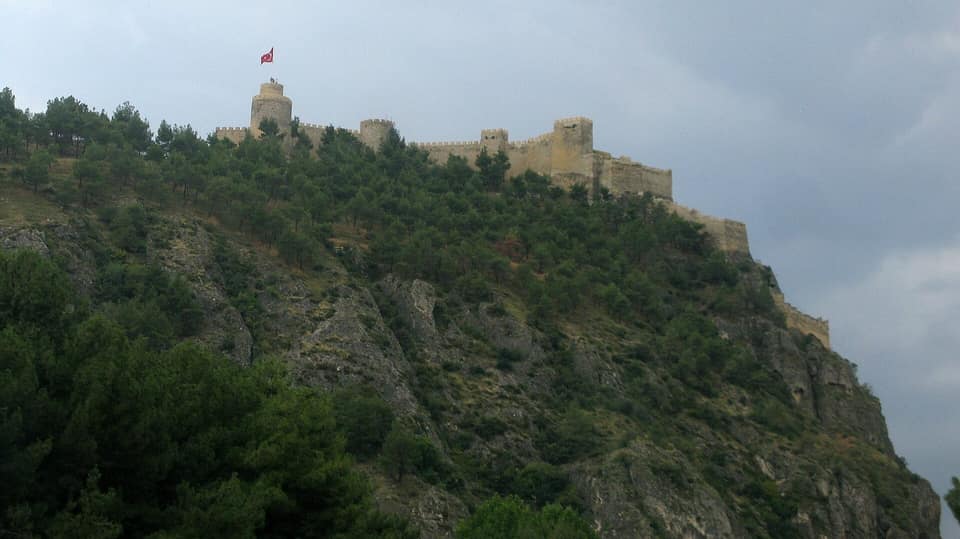
Boyabat Castle stands on a steep rocky hill above the Gökırmak Valley in the inland district of Boyabat in Sinop Province. Kültür Portalı writes that the castle was built on one of two steep rocky hills facing each other across the valley, shaped to follow the natural form of the rock. The promotional page of the Boyabat District Governorship states that the castle lies west of the modern town of Boyabat, on the southern of these two hills. Looking up from the foot of the hill, you notice how the walls curve along the edge of the crag, so that rock and masonry almost read as a single mass.
The castle's history has several layers, and the sources date them in different ways. Kültür Portalı writes that the foundations of the old castle were laid at the beginning of the 6th century BC in the time of the Paphlagonians; the research cited on the district governorship page also states that the castle, with its rock cut tunnel and hollows, goes back to the Paphlagonian period. The assessment on the same page, based on pottery from the surface datable to the 11th and 12th centuries, suggests that the present castle was built by the 11th century at the latest and probably took its final form in the second half of the 15th century. Kültür Portalı notes that Roman and Byzantine pieces appear in parts of the inner walls, showing that the castle was in use from the Late Roman period to the Ottoman period. Its present walls, towers and building materials clearly point to an Ottoman castle. Because no inscription has been found, the exact construction date is not known. For this reason Kültür Portalı writes that it is possible to treat the castle in two parts, an old castle and a new castle. According to the research cited on the district governorship page, the lower parts of the parallel walls on the east and the lower walls of the section called the garden on the north belong to the Roman and Byzantine periods.
Some of the towers between the curtain walls are rectangular and some are round, with stairs on the inside leading up to them. According to Kültür Portalı, the castle is entered through a small gate beside the large round tower at the southeast corner. The district governorship page writes that the outer wall on the east consists of two parallel walls with a 6 metre gap between them. The gate tower is built of rubble stone, its jambs are formed of cut stones set one on top of another, and it is topped by a round arch of brick and stone. Small niches line both sides of the passage between the two gates. The most carefully built of the towers on the eastern wall is the northern one; rounded on three sides, it has a further round section on top and is climbed by a stair from inside. According to the assessment on the district governorship page, the eastern wall is about one metre thicker than the others because this side was seen as more exposed to attack. The same assessment notes that the general form of the gate tower recalls the silhouette of the Istanbul fortresses.
On top of the castle hill is a level area about 100 metres long and 30 to 40 metres wide. According to the district governorship page, this area holds a water cistern built of mortared rubble stone, divided in two by a central wall and measuring 12 by 6 metres. The same source describes a ditch dug in front of the castle gate as a defence against attack, and an old tunnel cut into the rock on the northern terrace. The same page writes that water was brought to the castle from the direction of Döme Mountain through channels known as avgın, and that traces of these old water channels can still be found here and there. According to information based on the researcher R. Leonhard, in 1830 there was a neighbourhood of thirty households on top of the castle. Because the southern face was considered more important for defence, the strongest walls and towers are concentrated on that side. The district governorship page also notes that a repair was carried out in 1991 and that the upper parts of the southern, western and eastern walls took their present appearance from that repair.
To reach the castle you climb the stairs, evidently built in recent times, that lead up from the foot of the hill, and the trees along the stairs form a small grove. As the climb is steep, comfortable shoes help, and on hot summer days the cooler hours are the better choice. Once at the top, the edges of the level area open onto a wide view of the Gökırmak Valley, the town centre and the rocky hill opposite. Kültür Portalı notes that finds from the Late Roman and Early Byzantine periods are also displayed at the castle. The castle can be reached on foot from the centre of Boyabat, and Boyabat itself is reached by road from the town of Sinop. Check current visiting conditions with the Boyabat District Governorship or the Sinop Provincial Directorate of Culture and Tourism.
Comments
Loading...
Location - Boyabat Kalesi
Venue Info