

Historical & Cultural SitesCastles & Palaces
Birecik Kalesi
36
No ratings yet
Sign in to like and rate
Birecik Castle
About Venue
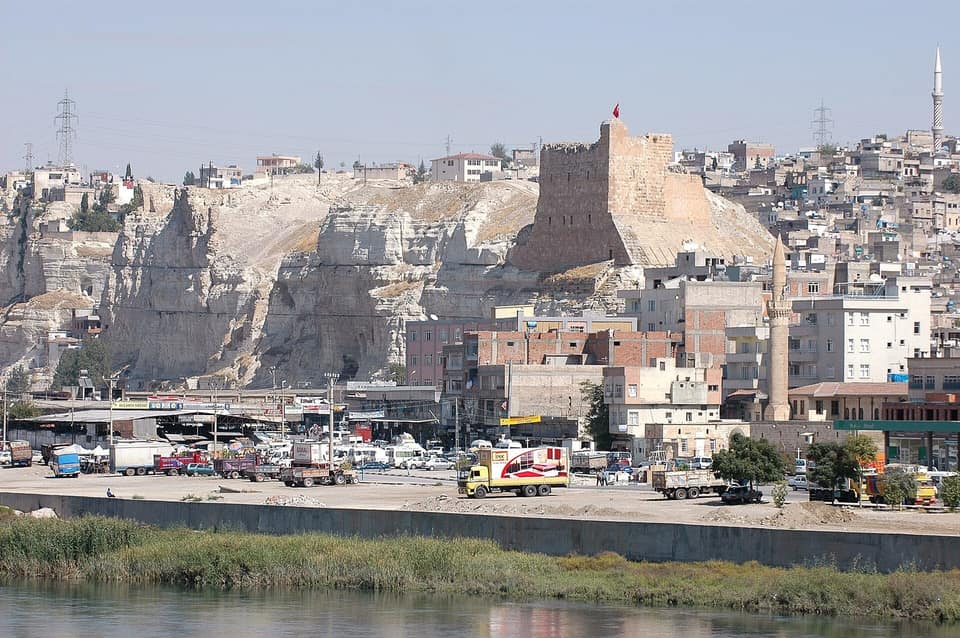
Birecik Castle stands on a high rock mass rising beside the Euphrates in the centre of the district of Birecik. The Ministry of Culture and Tourism notes that the castle occupies a position that commands the Euphrates crossing and the Birecik Plain. Because of the pale limestone on which it stands, it is locally called the White Castle and appears in older sources as Kale-i Beyda. Art history studies emphasise that the castle rises in the northwest of the town and crowns the medieval city.
The original construction date of the castle is not known for certain. Ministry sources relate that the area was ruled by the Assyrians, Hittites, Romans, Arabs, Artuqids, the Crusader County and the Ottomans, and that the castle was repaired in every period. Academic studies state that although the exact construction date of the city walls is unknown, they are attributed to Alexander the Great or to the Byzantine Emperor Anastasius I. The castle also gave its name to the area: because of it the Arabs called the place Bireh, and the Ottomans called it Birecik, meaning little castle.
The Mamluk period holds a decisive place in the history of the castle and walls. The Ministry states that the surviving inscriptions show that part of the walls was built by the Mamluk Sultan Qaitbay. A master's thesis on Birecik relates that the castle holds six Arabic inscriptions from the Mamluk period, some belonging to Sultan Berke Khan and the others to the reign of Sultan Qaitbay. The town joined Ottoman lands in 1516. In the Ottoman period, and especially in the 16th century, Birecik was the river port of Aleppo and Baghdad, a settlement where ship timber, weapons, ammunition and trade goods were stored. For centuries it also kept its role as an important junction on the route that carried caravans from the east to the Mediterranean ports.
The castle is built of cut stone and, in the Ministry's words, has lost much of its former state. Most of the walls that once surrounded the town from end to end have collapsed. The walls are known to have had four gates, named Meydan, Urfa, Meçan and Bağlar; only the Urfa Gate and the Meçan Gate have survived. In the Ministry's source the second gate appears as the Mercan Gate. A study by Mustafa Güler of Harran University states that the inner castle is abandoned today and that almost all of the city walls are in ruins.
The Urfa Gate stands in the eastern wall, in today's Sancak neighbourhood, and gives entry to the town from the direction of Urfa. The front faces of its stones are neatly dressed along all four edges, while their centres are left projecting. Its eastern facade carries muqarnas brackets, lobed arches, shell-shaped niches, rosettes and palmettes. A band of inscription in large letters running along the facade records that this section of the wall was completed on 16 October 1483 during the reign of the Mamluk Sultan Qaitbay. The inscription also records that the work was carried out under the supervision of Yunus al-Sharafi, deputy governor of Birecik. The Meçan Gate in the southeast is partly ruined, and the band inscription on it shows that its construction was completed in the last days of the year 1484.
Over the centuries the castle drew the attention of travellers passing through Birecik. The thesis prepared at Mardin Artuklu University relates that from the 17th to the 20th century many travellers from England, Germany and Iran visited the town, and that their accounts focused mostly on the castle, the Euphrates and transport by kelek rafts. Evliya Çelebi described the castle as a strong, six-cornered stone structure and wrote that birds of prey nested in the hollows of the rocks. Helmuth von Moltke, a Prussian officer in the region in the 19th century, described its ruined state as the most remarkable building he had seen in his life. The French traveller Olivier noted that the castle had been built to guard the river crossings.
The foot of the castle is the heart of Birecik's old urban fabric. The Great Mosque stands at the southern foot of the castle, and according to an art history study it was repaired in 1855 with stones brought from the castle square. The Ministry's engraving archive also includes an engraving of Birecik Castle from the magazine L'Illustration, published in Paris in 1857. You see the castle's present silhouette best from the opposite bank of the Euphrates; from there the rock mass, the cut-stone walls and the town below fit into a single frame. The decorated eastern facade of the Urfa Gate, on the other hand, is a stop inside the town that can be examined up close.
The castle's current visiting status and the conditions for going up to the inner castle are not given in official sources, so check the current situation with the Birecik District Governorate or the Şanlıurfa Provincial Directorate of Culture and Tourism before you go. Because the edges of the rock mass are steep, use only open and maintained paths around the castle. Birecik lies on the Euphrates in the west of Şanlıurfa province, and Halfeti lies in the same valley. The castle can therefore be planned as the first stop of a day trip in the Euphrates valley that also takes in Halfeti. Since summer heat is very high, visiting the castle and the city gates early in the morning is more comfortable.
Comments
Loading...
Location - Birecik Kalesi
Venue Info
AddressBirecik, Şanlıurfa
VenueBirecik, Şanlıurfa
TypeHistorical & Cultural Sites