

Historical & Cultural SitesArchaeological Sites
Bin Tepe Lidya Tümülüsleri
11
No ratings yet
Sign in to like and rate
Bin Tepe Lydian Tumuli
About Venue
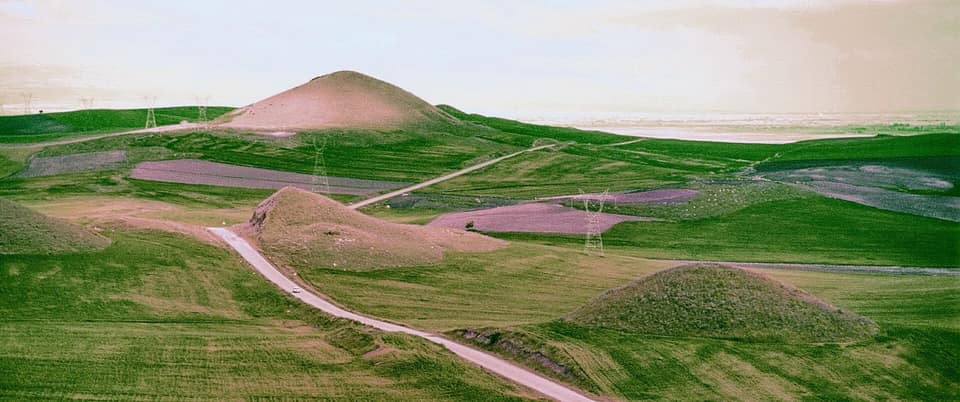
Bin Tepe is the Lydian royal and aristocratic cemetery that spreads across the hilly plain north of the Gediz River, between Sardis and Lake Marmara. The Kula-Salihli UNESCO Global Geopark writes that the tombs lie 8 to 10 kilometres north of the Gediz, along the Salihli-Akhisar road. The Manisa Provincial Directorate of Culture and Tourism places the cemetery about 5 kilometres north of Sart. Seen from afar, the soft-shaped hills rising from the plain are in fact monumental tombs covered with earth and stone.
Sources give different numbers for the tombs. The geopark page mentions 119 tumuli, while a recent news item of the provincial directorate states that there are more than 120 monumental tombs in an area of about 75 square kilometres. The Sardis excavation team writes that about 115 tumuli survive today, while at least 149 were counted in the 1940s. According to the team, the reason for the difference is that many tombs were destroyed by farming. The excavation team describes Bin Tepe as the largest tumulus cemetery in Turkey, perhaps in the world.
The largest structure in the cemetery is the tumulus accepted as that of the Lydian king Alyattes. The excavation team calls this tumulus by its present name, Koca Mutaf Tepe, and gives its diameter as about 355 metres and its height as 63 metres. These measurements are very close to the values Herodotus gave for the royal tomb. Herodotus says that in Lydia there was no monument larger than this except those in Egypt and Babylon. The excavation team reports a calculation that the tumulus contains more than 785,000 cubic metres of earth and stone. According to the same calculation, the mound could have been raised in two and a half years with about 2,400 workers and 600 draught animals.
The burial chamber of the Alyattes tumulus is built of carefully worked blocks, and its ceiling is carried by limestone beams weighing more than 16 tonnes. As in most Lydian tombs, the chamber was placed away from the centre of the mound to make it harder for looters to find. When the Prussian consul Ludwig Peter Spiegelthal found the chamber in the 19th century, it had already been plundered in antiquity.
The middle one of the three giant tumuli on the ridge is Karnıyarık Tepe. The excavation team gives its diameter as 230 metres and its height on the south face as 53 metres, and notes that its base covers as much ground as the Great Pyramid at Giza. The team began work in 1962 with geophysical survey, continued with tunnels between 1964 and 1966, and dug tunnels again in 2012 in a joint project with the Manisa Museum. Inside the tumulus an unfinished limestone ring wall was found, belonging to an earlier and smaller tomb about 85 metres in diameter. Marks on the stones of the wall show that at least seven separate teams of masons worked on different sections. Researchers also came across narrow tunnels about 70 centimetres wide and 1.8 metres high, dug by Roman treasure hunters. Despite more than half a kilometre of modern tunnels, the burial chamber of Karnıyarık Tepe has not yet been found.
The geopark page writes that the three largest tumuli are thought to belong to Gyges, Alyattes and Ardys. The excavation team, however, notes that the pottery in the fill of Karnıyarık Tepe does not allow the structure to be dated before 600 BC. Because Gyges died around 644 BC, the team believes this tomb cannot be his and leaves open the question of whom it was built for. For this reason the safest statement about the owners of the tumuli is that they belonged to the Lydian royal family and nobility.
The geopark also counts Bin Tepe as a striking example of landforms changed by human hands. Bin Tepe is on the UNESCO World Heritage List together with Sardis. The Ministry of Culture and Tourism has set up a centre that watches the area with night-vision drones against illegal digging.
Bin Tepe has no single entrance like an archaeological site; the tumuli stand scattered across the plain and among the fields. The large tombs that are easiest to see show themselves around the highway between Salihli and Akhisar. These monuments are protected, so do not climb on them, and when driving onto field tracks avoid damaging cultivated land. In spring, when the crops are green, the shape of the mounds reads most clearly, and the side light of late afternoon sharpens the shadows. Seeing Bin Tepe before or after Sardis lets you understand the link between the Lydian capital and its cemetery on the same day.
Comments
Loading...
Location - Bin Tepe Lidya Tümülüsleri
Venue Info
AddressSalihli-Akhisar yolu çevresi, Salihli / Manisa
VenueSalihli, Manisa
TypeHistorical & Cultural Sites